
Main Courses
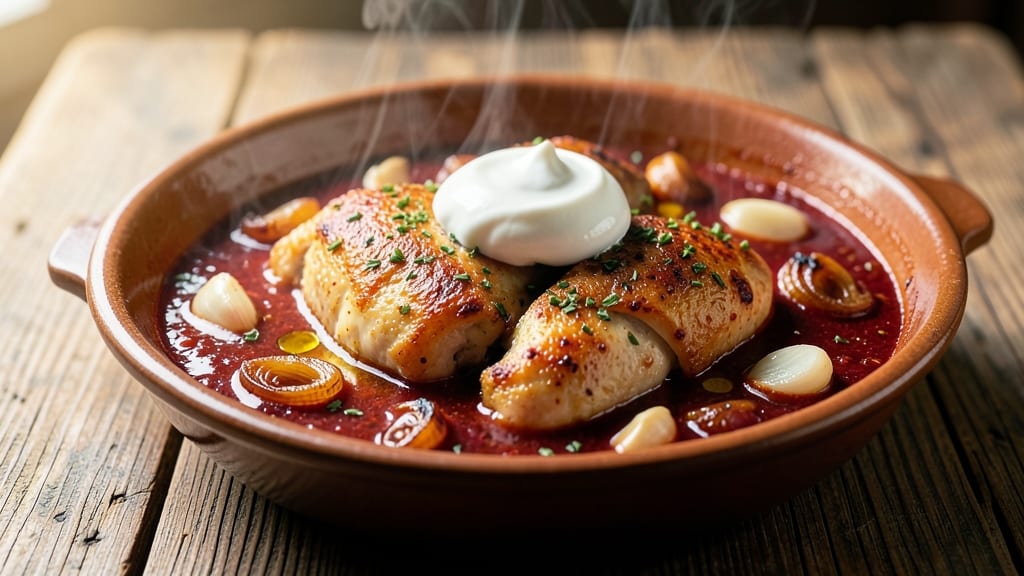
This traditional Hungarian chicken paprikash recipe delivers the rich, smoky depth of authentic Hungarian cuisine in one comforting pot. 💛 I first discovered it while researching Central European classics, and the balance of sweet paprika, sour cream, and tender chicken never fails to impress.
The dish is as much about technique as it is about ingredients—slow-cooked until the sauce thickens and the flavors meld into perfect harmony.
What sets this recipe apart is the use of genuine Hungarian sweet paprika, which provides that signature smoky aroma and vibrant color. Unlike quicker versions, this method calls for browning the chicken first to develop deep, caramelized flavors before simmering it in the paprika-infused sauce.
The result is a dish that tastes like it’s been simmering for hours, even though it comes together in under 90 minutes.
The dish serves four to six people generously, making it ideal for family dinners or gatherings where hearty, flavorful meals are the star. Each bite combines tender chicken, creamy sour cream, and a sauce that’s both rich and subtly sweet.
The traditional pairing of egg noodles or crusty bread completes the experience, soaking up every last drop of that luscious paprikash.
This recipe stays true to its Hungarian roots while being accessible for home cooks. Whether you're serving it for a special occasion or a cozy weeknight meal, the technique ensures restaurant-quality results every time. Let’s get cooking!
Ingredients for traditional hungarian chicken paprikash
Sixteen ingredients. One unforgettable Hungarian flavor experience.
| Ingredient | Amount | Notes |
|---|---|---|
| Boneless Chicken Thighs 🍗 | 2 ½ lb | Skin-on preferred for flavor |
| Hungarian Sweet Paprika 🌶️ | 3 tbsp | Authentic brand for true flavor |
| Sour Cream 🥛 | 1 cup | Full-fat for creaminess |
| Onion 🧅 | 1 whole | Yellow, medium size |
| Garlic Cloves 🧄 | 4 cloves | Freshly minced |
| Tomato Paste 🍅 | 2 tbsp | High-quality, no sugar added |
| Chicken Broth 💧 | 2 cups | Low-sodium preferred |
| All-Purpose Flour 🌾 | 1 tbsp | For thickening sauce |
| Bay Leaves 🌿 | 2 whole | Fresh for best aroma |
| Salt 🧂 | 1 ½ tsp | Kosher or sea salt |
| Black Pepper 🌶️ | ½ tsp | Freshly ground preferred |
| Egg Noodles 🍝 | 1 lb | Wide, traditional shape |
| Extra-Virgin Olive Oil 🫒 | 2 tbsp | For browning chicken |
| Fresh Parsley 🌿 | ¼ cup | Chopped, for garnish |
The Hungarian sweet paprika is non-negotiable here—Rajka or Paprika Plus brands deliver that authentic smoky depth. Look for vibrant red color and a rich aroma (no dusty old jars!). The chicken thighs should have visible fat marbling for moisture and flavor. Local butchers or Hungarian specialty stores often carry the best quality. If you can't find authentic paprika, smoked paprika at one-third the amount works in a pinch, but it won't be the same. The sour cream needs to be full-fat—Kryzanowski or Trader Joe's brands are excellent choices.
No Hungarian paprika? Substitute smoked paprika plus 1 tsp sugar for color, but expect less complexity. Fresh parsley out of season? Dried parsley at one-quarter the amount works, though fresh is ideal. The tomato paste can be swapped for 1/4 cup crushed tomatoes, but paste gives better thickening. For the chicken broth, low-sodium is crucial—you don't want to over-salt the dish. The egg noodles should be wide and sturdy—Barilla or De Cecco brands hold up best to the rich sauce.
This dish tastes even better the next day as flavors meld. Store leftovers in an airtight container for up to 4 days in the fridge. For longer storage, freeze portions for 3 months. The sauce thickens as it cools, so you can safely reheat it with a splash of broth or water. Garnish with fresh parsley just before serving to keep it vibrant. Leftovers reheat beautifully—simmer gently on low heat to preserve that creamy texture.
Why You'll Love This Recipe
- One-Pot Magic: I swear by this recipe because it’s literally one pot—no fussing with multiple pans or dishes. Toss the chicken, onions, and paprika in a deep skillet, let it simmer, then stir in the sour cream at the end. The onions caramelize right there, and cleanup? Zero. Just a spatula and a satisfied sigh.
- Paprika Perfection: That deep, smoky-sweet Hungarian paprika is the star—it turns ordinary chicken into something ridiculously good. The garlic cloves roasted right in the sauce? They melt into the mix, leaving behind this warm, earthy depth that makes every bite feel like a hug. (Yes, even on a Tuesday night.)
- Leftovers That Win: This dish begs to be made extra. The flavors only get better the next day—more tender, more cohesive—so you’re basically getting two meals for the price of one. My freezer’s always stocked with portions because reheating it is just dumping into a pan and stirring.
- Budget-Friendly Comfort: Chicken thighs are cheap, onions are cheap, and a jar of paprika lasts forever. Yet it tastes like you slaved over it for hours. Honestly, I make this when I’m broke or when I’m feeling fancy—same result, zero guilt. Plus, the sour cream stretches it further, making it feel indulgent without breaking the bank.
Step-by-step instructions for traditional Hungarian chicken paprikash
Master this iconic dish with smoky depth and velvety texture—every step preserves its authentic soul.
🍳 Step 1: Brown the Chicken for Rich Flavor
Heat the 2 tablespoons extra-virgin olive oil in a large, heavy pot over medium-high heat. Pat the 2.5 lb boneless chicken thighs completely dry with paper towels—this ensures maximum browning. Working in batches if needed, add the chicken and cook undisturbed for 4-5 minutes per side until deeply golden brown. You want crispy, caramelized edges that will form the flavor base.
Don't overcrowd the pot or the chicken will steam instead of brown. Once golden, transfer the chicken to a plate and set aside. Leave the browned bits in the pot—they're packed with flavor that will dissolve into the sauce.
👨🍳 Step 2: Build the Paprika Base
In the same pot, reduce heat to medium and add the 1 whole onion, sliced into thin half-moons. Cook for 5-6 minutes until softened and translucent. Add the 4 cloves garlic cloves, minced, and cook for 30 seconds until fragrant—don't let them brown or they'll turn bitter.
Stir in the 2 tablespoons tomato paste and cook for 1 minute to deepen its flavor. Sprinkle the 3 tablespoons Hungarian sweet paprika over the mixture and stir constantly for 1-2 minutes until the raw paprika smell disappears and you see a deep red cloud forming. This is where the magic happens—the paprika releases its aromatic oils.
🥘 Step 3: Deglaze and Simmer the Sauce
Pour in the 2 cups chicken broth and scrape up all the browned bits from the bottom of the pot with a wooden spoon. This deglazing step captures all the concentrated chicken flavor. Add the 2 whole bay leaves, 1.5 teaspoons salt, and 0.5 teaspoon black pepper. Return the chicken to the pot and bring to a gentle simmer.
Cover partially and cook for 25-30 minutes on medium-low heat, stirring occasionally, until the chicken is tender and the sauce has thickened slightly. You'll know it's ready when the chicken easily pulls apart with a fork and the sauce coats the back of a spoon. The chicken should register 165°F internally.
🍳 Step 4: Finish with Sour Cream and Noodles
Remove the chicken from the pot and set aside. Stir the 1 tablespoon all-purpose flour into the sauce and cook for 1 minute to remove any raw flour taste. Slowly whisk in the 1 cup sour cream until fully incorporated—this will create the signature creamy texture. Return the chicken to the pot and warm through.
Meanwhile, cook the 1 lb egg noodles in salted boiling water until al dente (about 8-10 minutes). Drain and add them directly to the paprikash pot. Toss gently to coat the noodles evenly with the sauce. The noodles will absorb some of the liquid, so they should be slightly undercooked before adding.
🍽️ Step 5: Serve with Fresh Garnish
Remove the 2 bay leaves and adjust seasoning if needed—this dish should be rich but balanced. Ladle the paprikash into serving bowls and garnish immediately with the 0.25 cup fresh parsley, chopped. The parsley adds a bright contrast to the deep, smoky flavors and prevents the sour cream from curdling.
Serve immediately with crusty bread on the side to soak up every last bit of that velvety sauce. The dish tastes best right away when the noodles are still warm and the flavors are at their peak. For extra authenticity, serve with a simple green salad dressed lightly with lemon.
Pro Tips For Making Traditional Hungarian Chicken Paprikash
- Bloom the Paprika: Toast the paprika in a dry pan for 30 seconds before adding liquid—it deepens the flavor and prevents clumping. I learned this the hard way after tasting bland sauce from skipping it; the nutty aroma is non-negotiable for real Hungarian flavor.
- Sear the Chicken First: Get those thighs golden-brown in batches before adding onions—this locks in moisture and builds depth. Crowding the pan? You’ll steam the chicken instead of sear it, and that’s a fast track to dry paprikash.
- Simmer Low and Slow: After adding the paprika mixture, reduce to a gentle simmer and cover partially—too much heat burns the paprika, turning it bitter. I used to rush it, and the sauce always tasted off afterward.
- Stir in Sour Cream Late: Fold the sour cream into the sauce off the heat in the last 2 minutes—direct heat can curdle it. My grandmother swore by this, and she was right: the sauce stays silky, not grainy, even when reheated.
Make-ahead tips for leftovers
Prep Ahead Sauce
Make the paprikash sauce 2 days ahead for deeper flavor development. After simmering the chicken and building the paprika base (Step 3), let it cool completely, then store in an airtight container in the fridge.
The sauce will thicken further and intensify in flavor—just reheat gently on the stove with ½ cup chicken broth to loosen it before adding chicken and noodles. This method builds layers of complexity that fresh prep can't match. 💛
Noodle Prep Shortcut
Cook the 1 lb egg noodles ahead of time and store them in the fridge for up to 2 days. Keep them in a ziplock bag with a paper towel to absorb moisture.
When ready to serve, reheat them in the sauce for 3-4 minutes—they'll soak up the flavors beautifully. I often prep noodles the night before so I can focus on finishing the dish quickly on serving day.
Chicken Browning Hack
For make-ahead convenience, brown the chicken up to 3 days ahead and refrigerate it in a sealed container. When ready to assemble, simply reheat the chicken in the pot with the onions and garlic (Step 2) for 5 minutes before adding the paprika and broth.
This preserves the crispy texture and saves you time on cooking day. Just be sure to pat it dry again before reheating.
Complete Meal Prep
Assemble the entire dish except noodles up to 2 days ahead—cook the chicken, make the sauce, and store it all together in a large oven-safe dish.
When ready to serve, cook the noodles fresh, add them to the pot, and warm everything through for 5-7 minutes on low heat. This is perfect for busy weeknights when you want to serve a restaurant-quality meal with minimal effort. ✨
Freezer-Friendly Version
For long-term storage, freeze the fully assembled paprikash (without noodles) for up to 3 months. Use a freezer-safe bag with 1 inch headspace for expansion. Thaw overnight in the fridge, then reheat gently on the stove with ¼ cup broth to restore creaminess.
Add fresh parsley and cooked noodles just before serving to keep everything vibrant. The flavors hold up beautifully in the freezer!
Portion Control Tips
Divide the finished paprikash into individual portions before storing to make reheating easier. Use glass meal prep containers with snap-on lids—they keep the dish fresh longer than plastic. When reheating, cover the container with a damp paper towel to prevent the sauce from drying out.
Each portion serves 1.5-2 people, making it perfect for meal prep lunches or quick dinners. 🍽️
Nutrition facts
Frequently asked questions
What makes Hungarian sweet paprika different from regular paprika?
Hungarian sweet paprika is made from dried, ground sweet peppers and has a distinct smoky, slightly sweet flavor with vibrant red color. Regular paprika is milder and lacks that signature depth. For authentic paprikash, use Rajka or Paprika Plus brands—they're specially cultivated for Hungarian cuisine.
Can I use chicken breasts instead of thighs?
Chicken breasts will work, but thighs are preferred for their richer flavor and juiciness. If using breasts, pat them very dry and cook at 350°F for 10-12 minutes before adding to the sauce to prevent drying out. The skin-on thighs add extra flavor that breasts can't match.
Why does my paprikash sauce turn out too thin?
Sauce thinning usually happens from overcooking or insufficient thickening. Simmer uncovered for the last 5 minutes to reduce, or stir in 1-2 teaspoons cornstarch mixed with water to thicken. Always cook noodles separately and add them last—they absorb liquid quickly.
What's the best way to reheat leftovers?
Reheat gently on the stove over low heat with 2-3 tablespoons broth or water to restore creaminess. Avoid microwaving—it makes the sauce watery. For extra richness, stir in 1 tablespoon sour cream at the end. Leftovers keep for 4 days in the fridge.
Can I make this dish in an Instant Pot?
Yes! Sauté chicken and aromatics first, then add all ingredients except sour cream. Pressure cook on high for 12 minutes, then quick-release. Stir in sour cream and noodles at the end. The Instant Pot version cooks 30% faster but may need extra broth to prevent drying out.