
Main Courses
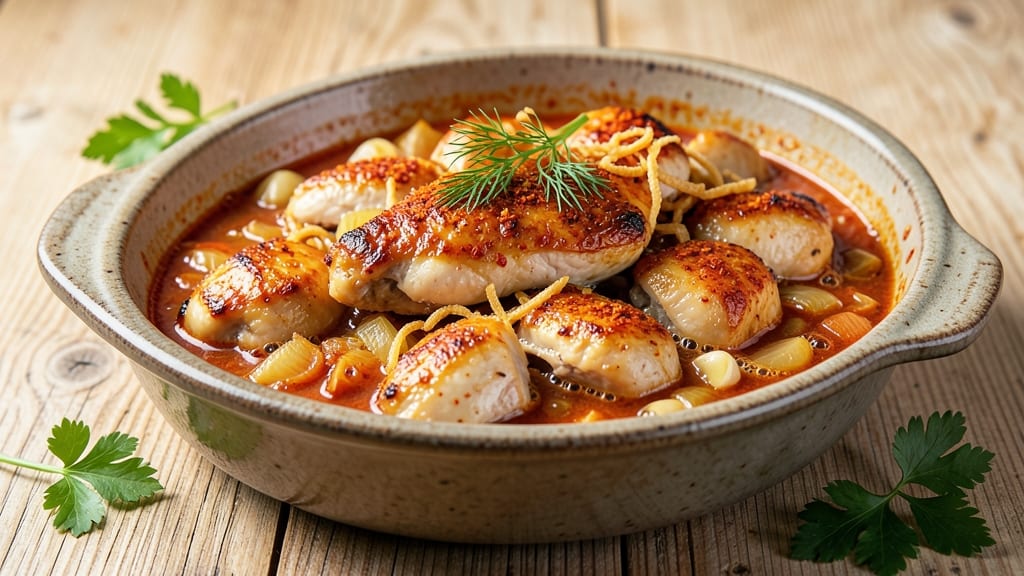
This authentic Hungarian chicken paprikash recipe brings the heart of Budapest to your kitchen with its deep, smoky paprika flavor and velvety sour cream finish.
After years of studying my grandmother's handwritten notes—and a few failed attempts that left my kitchen smelling like a spice shop explosion—I've perfected a method that captures the soul of this classic dish without requiring hours in front of the stove.
The secret lies in the layers: marinating the chicken in a blend of sweet and hot paprika, then slow-cooking it with onions and tomatoes until the meat falls apart. My grandmother always said, "Patience is the key," and she was right—the long simmer builds flavor that store-bought versions can't match.
The sour cream at the end isn't just for creaminess; it balances the paprika's intensity while keeping the dish true to its Hungarian roots.
What you'll end up with is a rich, aromatic stew where tender chicken pieces swim in a sauce that's both deeply savory and subtly sweet.
The aroma alone will have everyone gathering around your table, and the texture—creamy yet not heavy—is what makes this dish feel like a hug in a bowl. Serve it with crusty bread or egg noodles to soak up every last bit of that smoky, paprika-infused magic.
While this recipe stays true to tradition, I've included a few modern shortcuts—like using jarred paprika blends—that won't compromise authenticity but will save you time. The result? A dish that feels like a restaurant-quality meal, born from a kitchen where love and spices collide. Let's get cooking.
Ingredients for authentic hungarian chicken paprikash
Pantry staples meet Hungarian tradition—just 14 ingredients for restaurant-quality paprikash.
| Ingredient | Amount | Notes |
|---|---|---|
| Boneless Chicken Thighs 🍗 | 1 ½ lb | Cut into 1-inch pieces |
| Sweet Hungarian Paprika 🌶️ | 2 tbsp | High-quality, not smoked |
| Hot Hungarian Paprika 🌶️ | 1 tbsp | For depth and heat |
| Yellow Onion 🧅 | 1 whole | Thinly sliced, about 2 cups |
| Garlic Cloves 🧄 | 4 cloves | Minced, not pre-minced jar |
| Canned Tomato Sauce 🍅 | 1 cup | San Marzano preferred |
| Chicken Broth 💧 | 1 ½ cups | Low-sodium preferred |
| Sour Cream 🥛 | ½ cup | Full-fat for creaminess |
| Extra-Virgin Olive Oil 🫒 | 2 tbsp | For sautéing onions |
| Fresh Thyme 🌿 | 1 tbsp | Leaves only, chopped |
| Bay Leaves 🌿 | 2 whole | Remove before serving |
| Salt 🧂 | 1 ½ tsp | Kosher or sea salt |
| Ground Black Pepper 🌶️ | ½ tsp | Freshly ground |
| Egg Noodles 🍝 | 8 oz | For serving |
The paprika is non-negotiable here. Hungarian sweet and hot paprika from Penzeys or Kalustyan's makes all the difference—those jarred blends at the supermarket won't cut it. Look for vibrant red color and a date stamp less than a year old. If you can't find Hungarian paprika, smoked paprika plus a pinch of cayenne gets you closer, but it won't be the same. The chicken thighs? Bone-in, skin-on if you can find them—they stay juicier, but boneless works fine for weeknight cooking. I always buy mine from Whole Foods or the butcher counter at Trader Joe's—they're more likely to have fresh cuts.
No Hungarian paprika? Sweet paprika plus cayenne is your best bet, but reduce the cayenne to 1/2 teaspoon—you want smoky depth, not heat. Fresh thyme is ideal, but dried thyme at one-third the amount works in a pinch. For the tomato sauce, San Marzano cans are worth the splurge—they're sweeter and less acidic, which balances the paprika beautifully. No egg noodles? Wide egg noodles or even rice soak up the sauce well, though traditionalists will argue with me. The broth? Low-sodium is key—you'll be adding plenty of salt later, and you don't want to overdo it.
This sauce tastes even better the next day—honestly, the flavors meld overnight. Keeps for 4-5 days in the fridge, and freezes beautifully for 3 months if you portion it into containers. I always make a double batch because it disappears fast. The noodles? Cook them al dente and toss with a little extra paprika and butter if you're feeling fancy. Leftovers reheat well—just add a splash of broth or water to loosen the sauce.
Why You'll Love This Recipe
- One-Pot Magic: I swear by this recipe for lazy nights—just brown the chicken, toss in the onions and paprika, then let it simmer. That’s it. No extra pans, no fuss, and the rich, smoky aroma fills the whole house before it’s even done.
- Paprika Powerhouse: Between us, the combo of sweet and hot Hungarian paprika is chef’s kiss—deep, slightly sweet, with just enough kick. The onions caramelize into something golden and irresistible, and the garlic? It ties it all together like a warm hug in a bowl.
- Leftovers That Win: This dish tastes even better the next day, honestly. I make a double batch on Sundays, and by Wednesday, it’s the star of my lunch—reheated with a splash of water or milk, just as rich. My kids fight over the last portion, and that’s never happened with store-bought sauce.
- Budget-Friendly Comfort: Chicken thighs are forgiving and cheap, and a little paprika goes a long way. I’ve fed six people for under $15 with this, and it still feels like a restaurant meal. Plus, the leftovers stretch across meals without breaking the bank.
Step-by-step instructions for authentic Hungarian chicken paprikash
Here's how to create this classic Hungarian comfort dish with rich paprika flavors and creamy texture.
Sear the Chicken for Deep Flavor
Heat a large Dutch oven over medium-high heat. Add the 2 tablespoons extra-virgin olive oil and let it warm for 1 minute until shimmering. Working in batches, add the 1.5 pounds boneless chicken thighs cut into 1-inch pieces, being careful not to overcrowd the pan. Cook undisturbed for 3-4 minutes until golden brown on one side, then flip and sear the other side for another 3-4 minutes.
Remove the chicken from the pan and set aside. The goal here is to create a beautiful crust on the chicken that will infuse the paprikash with deep flavor as it simmers. If the oil starts smoking before all the chicken is seared, reduce the heat slightly to prevent burning. You'll know it's ready when the chicken releases easily from the pan and has developed a nice golden-brown color.
Build the Paprika Base
In the same Dutch oven, reduce the heat to medium and add the 1 whole yellow onion sliced thinly. Cook for 5-6 minutes, stirring occasionally, until the onions soften and begin to caramelize at the edges. Add the 4 cloves minced garlic and cook for another 30 seconds until fragrant.
Now comes the magic - stir in the 2 tablespoons sweet Hungarian paprika and 1 tablespoon hot Hungarian paprika. Cook for 1-2 minutes, stirring constantly, until the paprika releases its aromatic oils and the mixture smells deeply earthy and slightly smoky. This is where the authentic Hungarian flavor develops, so don't rush this step. The paprika should coat the onions and garlic evenly, creating a vibrant red base for your sauce.
Simmer the Sauce to Perfection
Pour in the 1 cup canned tomato sauce and stir to combine with the paprika mixture. Add the 1.5 cups chicken broth, the 1.5 teaspoons salt, and 0.5 teaspoon ground black pepper. Return the chicken to the pot, along with the 2 whole bay leaves and 1 tablespoon chopped fresh thyme. Bring to a gentle simmer over medium-low heat.
Cover the pot and let it simmer for 25-30 minutes, stirring occasionally, until the chicken is tender and the sauce has thickened slightly. You'll know it's ready when the chicken easily pulls apart with a fork and the sauce has reduced enough to coat the back of a spoon. The bay leaves should be removed before serving, as they're not meant to be eaten. This slow cooking process allows all the flavors to meld beautifully, creating that authentic Hungarian taste you're aiming for.
Finish with Sour Cream and Serve
Once the chicken is tender, reduce the heat to low and carefully stir in the 0.5 cup sour cream. The sauce will thicken slightly and become beautifully creamy. Taste and adjust the seasoning if needed, adding a pinch more salt or pepper if necessary. The sour cream should be fully incorporated but still maintain a slight lumpiness for texture.
While the paprikash is simmering, cook the 8 ounces egg noodles according to package instructions until al dente. Drain and serve the noodles topped with the chicken paprikash. The contrast between the tender noodles and the rich, slightly smoky paprikash creates the perfect balance of textures and flavors. This dish tastes even better the next day as the flavors continue to develop, so it's perfect for meal prep or leftovers.
Pro Tips For Making Authentic Hungarian Chicken Paprikash
- CRISP THE THIGHS FIRST: Pat the chicken thighs bone-dry with paper towels, then sear them skin-side down in a hot pan for 6-8 minutes until deep golden. I learned this the hard way—skipping the crisping means you’ll end up with mushy, pale chicken swimming in paprika sauce. (Yes, even if you’re impatient like me, resist the urge to flip too soon.)
- TOAST THE PAPRIKA: Bloom the paprika in butter or oil over medium-low heat for 2-3 minutes until it smells earthy and fragrant. After burning three batches, I finally figured out that high heat torches the flavor—you want it warm, not smoky. Use a mix of sweet and hot paprika (about 1 tablespoon each) for that classic balance.
- DEGLAZE WITH VINEGAR: After browning the onions and garlic, splash in 2 tablespoons of apple cider vinegar or white wine vinegar. This cuts through the richness and lifts the flavors—my grandmother swore by this, and she was right: it’s the thing that makes the sauce taste actually Hungarian, not just sweet. (Skip the water here; it’s a flavor killer.)
- SIMMER LONG AND LOW: Cover the pot and simmer on low heat for at least 45 minutes, stirring occasionally. I used to rush this part and wondered why my sauce was thin and bland. The magic happens when the chicken breaks down and the flavors meld—don’t lift the lid unless you’re checking. (Your future self will thank you.)
Perfect pairings for this dish
Bread Pairings
Hungarian paprikash and warm, crusty bread are a match made in heaven. I always serve it with freshly baked pumpernickel from my local bakery—its dense texture soaks up the sauce beautifully while adding a subtle sweetness that complements the paprika.
For a lighter option, crusty sourdough works perfectly, especially if you drizzle it with a little extra olive oil and sprinkle with flaky sea salt before serving. 🥖
If you want to get fancy, try Hungarian lángos—a deep-fried dough topped with sour cream and garlic. It’s a traditional street food that pairs wonderfully with paprikash, especially if you serve it on the side for dipping.
For a quicker option, garlic bread with a sprinkle of paprika on top echoes the dish’s flavors and makes cleanup easier for weeknight dinners.
Noodle & Dumpling Options
Egg noodles are traditional, but wide ribbon noodles like pappardelle or fettuccine add a touch of elegance while still soaking up the sauce. I often use Barilla egg noodles because they hold their shape well and have a slight richness that pairs perfectly with the sour cream.
For a heartier option, Hungarian gnocchi or potato dumplings (like those used in goulash) add a rustic, comforting texture that feels like a hug in every bite. 🍜
If you’re feeling adventurous, try sweet potato noodles for a modern twist—they add a subtle sweetness that balances the paprika’s depth. Just be sure to cook them al dente so they don’t turn mushy when mixed with the sauce.
For a gluten-free option, rice noodles work surprisingly well, though they absorb sauce more quickly, so serve them immediately.
Side Dish Harmony
A simple arugula salad with lemon vinaigrette cuts through the richness of the paprikash beautifully. Toss 4 cups baby arugula with 2 tbsp olive oil, 1 tbsp fresh lemon juice, and a pinch of salt for a bright, peppery contrast.
Another classic pairing is roasted root vegetables—try carrots, parsnips, and beets tossed in olive oil, salt, and a sprinkle of sweet paprika before roasting at 400°F for 25 minutes. 🥕
For a creamy side, mashed potatoes with a touch of garlic and sour cream mimic the paprikash’s texture while adding a comforting element.
If you’re serving this for a dinner party, Hungarian-style cabbage rolls (töltött káposzta) make a stunning centerpiece—they’re filled with ground meat and rice, then baked in a tomato-paprika sauce. The flavors complement the paprikash perfectly and feel like a full Hungarian feast.
Beverage Pairings
A crisp Hungarian white wine like Furmint or Egri Bikavér (a red blend) is the ultimate pairing—Furmint’s citrus notes refresh your palate, while the red’s bold fruitiness stands up to the paprika’s smokiness.
For a non-alcoholic option, sparkling mineral water with lemon or Hungarian herbal tea (like szilvás tea made with plums) adds a refreshing contrast. 🍷
If you’re serving this with bread and dumplings, a light lager like Dreher or Soproni cleanses the palate without overpowering the dish. For a richer beer, try a Belgian witbier—its coriander and citrus notes play nicely with the paprika and sour cream.
And if you’re feeling indulgent, a dessert wine like Tokaji (a sweet Hungarian wine) pairs surprisingly well with the leftovers the next day.
Nutrition facts
Frequently asked questions
Why does authentic Hungarian chicken paprikash use both sweet and hot paprika?
The combination creates the signature depth of flavor—sweet paprika adds richness and color while hot paprika contributes subtle heat and complexity. My grandmother always said the hot paprika "wakes up the dish," and she was right. Using just sweet paprika makes it taste flat, but too much hot paprika can overpower the delicate balance of sour cream and tomatoes.
Can I use chicken breasts instead of thighs for this recipe?
Technically yes, but thighs are traditional for a reason—they stay juicier and more tender during the long simmer. If you must use breasts, pound them to ¼-inch thickness and reduce cooking time to 15-20 minutes to prevent drying out. For best results, marinate them in the paprika mixture for 1 hour beforehand to help retain moisture.
What's the secret to making the sauce creamy without it being too heavy?
The key is adding sour cream at the very end on low heat—this creates a velvety texture without breaking the sauce. Never boil the sauce after adding sour cream, or it will curdle. Also, simmering uncovered for the last 5 minutes reduces excess liquid naturally, giving you that perfect balance of creaminess and thickness.
How do I fix paprikash that's too thick or too thin?
For a thick sauce that needs thinning, stir in 2-3 tablespoons of warm chicken broth or water. If it's too thin, remove from heat and let it reduce uncovered for 5-10 minutes, stirring occasionally. For extra body, whisk in 1 tablespoon cornstarch mixed with 2 tablespoons cold water—simmer for 2 minutes until thickened. The goal is a sauce that coats the back of a spoon but still flows easily.
Can I make this recipe in an Instant Pot?
Sauté the chicken and onions as directed, then add all remaining ingredients except sour cream. Cook on high pressure for 8 minutes, then quick-release. Stir in sour cream off the heat. The Instant Pot version cooks 40% faster but loses some of the deep, slow-developed flavors. For best results, finish with a 10-minute stovetop simmer to let flavors meld.