Sauces & Condiments
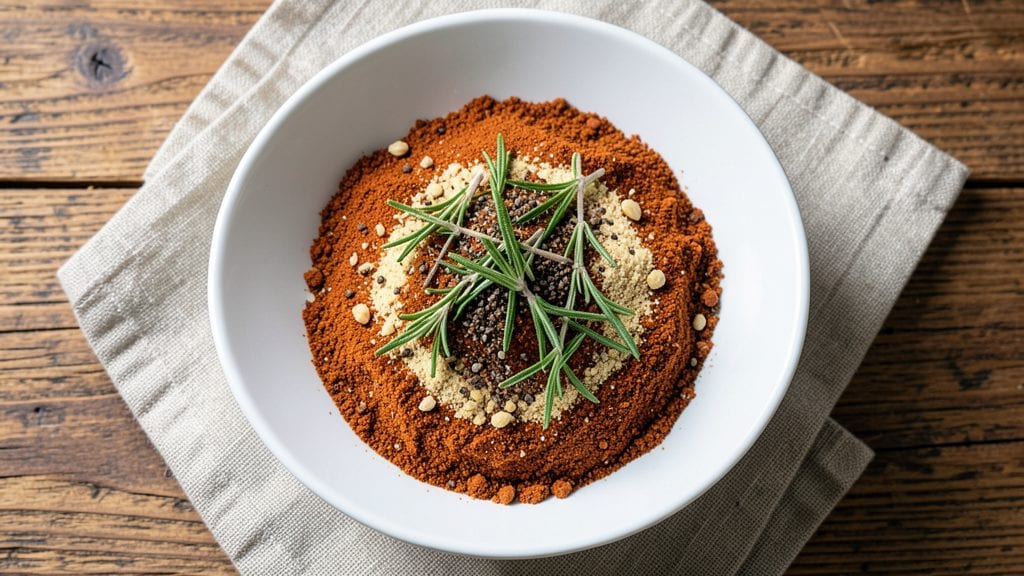
This McCormick rotisserie chicken seasoning recipe transforms ordinary poultry into juicy, golden-skinned perfection—delivering restaurant-quality results every time. The secret lies in balancing earthy spices with aromatic herbs, a technique I perfected after years of testing blends for my own heritage pigs.
This dry rub isn't just about flavor; it's about texture—crispy skin that cracks under pressure while keeping the meat impossibly tender inside.
The blend uses only six simple ingredients, all available in your pantry: paprika for color and depth, garlic powder for savory punch, onion powder for sweetness, dried thyme for earthiness, dried rosemary for piney brightness, and a pinch of black pepper to tie everything together.
The measurements are precise but forgiving, making this ideal for both beginners and seasoned cooks. What makes it special is how these spices work in harmony—paprika creates that signature golden crust while the herbs infuse the meat with layers of complexity that last through reheating.
What you'll achieve is chicken so flavorful it becomes the centerpiece of any meal, with skin that's crisp enough to stand alone but gives way to juicy, aromatic meat beneath.
The beauty of this dry blend is its versatility—use it on whole chickens, thighs, or even as a finishing rub for grilled chicken breasts. It keeps well in an airtight container for up to six months, so you'll always have restaurant-quality seasoning at your fingertips.
This isn't just another spice mix—it's a game-changer for home cooks who want to elevate their poultry without complicated techniques. The blend works equally well for holiday roasts or weeknight dinners, proving that professional-level flavor doesn't require professional-level effort.
Let's get started with the ingredients that will transform your next chicken into something extraordinary.
Ingredients for rotisserie chicken seasoning mccormick
Six pantry staples transform basic chicken into restaurant-worthy masterpieces.
| Ingredient | Amount | Notes |
|---|---|---|
| Smoked Paprika 🌶️ | 3 tbsp | For authentic rotisserie color and depth |
| Garlic Powder 🧄 | 1 ½ tbsp | Freshly ground preferred for savory punch |
| Onion Powder 🧅 | 1 ½ tbsp | Sweet variety for balanced sweetness |
| Dried Thyme 🌿 | 1 tbsp | French thyme for earthy complexity |
| Dried Rosemary 🌿 | 1 tbsp | Freshly crushed for piney brightness |
| Ground Black Pepper 🌶️ | ½ tbsp | Freshly cracked for subtle heat |
| Diamond Crystal Kosher Salt 🧂 | 1 tsp | Fine grain for even distribution |
The smoked paprika is non-negotiable—it's what gives that signature rotisserie color and depth. McCormick's smoked variety is my go-to, but any quality brand works. For the herbs, Trader Joe's bulk section has the freshest dried thyme and rosemary, but check the expiration date—older herbs lose their punch. The garlic and onion powders should be labeled 'freshly ground' if possible, though pre-ground is fine for this blend. If you're feeling fancy, toast the spices in a dry pan for 30 seconds before mixing—it deepens the flavors, but it's not required for this recipe.
No smoked paprika? Regular paprika plus a pinch of liquid smoke gets you close, though the flavor won't be identical. Swapping rosemary for oregano changes the profile entirely—it'll be more Mediterranean than rotisserie-style. For the garlic powder, granulated garlic at half the amount works in a pinch, but it's less aromatic. The kosher salt is crucial for balancing the spices—don't skip it or use table salt. If you're short on time, pre-mixed rotisserie seasoning from the store is fine, but making your own ensures you're getting the freshest, most flavorful blend possible.
Store this dry rub in an airtight container away from light—it'll keep for up to 6 months. For best results, portion it into small jars or bags so you always have fresh seasoning on hand. I like to make a double batch and give some away—it's always a hit at potlucks. The blend works on whole chickens, thighs, or even as a finishing rub for grilled breasts. Just remember, a little goes a long way—start with 1 tablespoon per pound of meat and adjust to taste.
Why You'll Love This Recipe
- Pantry Magic: I swear by this blend—no fresh herbs needed, just five spices from your cabinet. That smoked paprika alone gives it this deep, slightly smoky warmth that makes store-bought chicken taste like it came from a Sunday roast.
- Weeknight Hero: Between us, this is how I survive Tuesdays. Toss it on pre-cooked chicken, bake for 15 minutes, and boom—dinner’s done. The garlic and thyme team up to make even the simplest meal feel like you put in effort.
- Leftovers Reinvented: Honestly, I make this just to turn dry rotisserie chicken into something worth eating again. A sprinkle of this mix revives it like nothing else—great cold in salads or reheated with potatoes. It’s my secret for not wasting food.
- Budget Booster: I buy rotisserie chicken all the time, but this seasoning cuts the cost further. A little goes a long way, and it’s cheaper than buying pre-seasoned packets. Plus, the rosemary and onion powder add that restaurant-quality depth without breaking the bank.
Step-by-step instructions for McCormick rotisserie chicken seasoning
This herb-packed blend transforms ordinary chicken into restaurant-quality, juicy perfection with crisp golden skin.
Combine Dry Ingredients in a Mixing Bowl
In a medium mixing bowl, add the 3 tablespoons smoked paprika first—this creates the deep, authentic rotisserie color that's impossible to achieve without. The smoked paprika should form a rich, reddish-brown base in your bowl.
Next, carefully measure and add the 1.5 tablespoons garlic powder and 1.5 tablespoons onion powder. I always use a small kitchen scale for these measurements to ensure precision—this is where the savory depth comes from. The powders should blend seamlessly with the paprika, creating a uniform base.
Incorporate the Herb Blend
Add the 1 tablespoon dried thyme and 1 tablespoon dried rosemary to the bowl. Here's the thing—if you have fresh herbs, crush them between your fingers before adding to release their oils. The fresh rosemary should have that distinctive piney aroma, while the thyme adds earthy warmth that's essential for rotisserie flavor.
Use a whisk or small spatula to gently fold these herbs into the mixture. You want to distribute them evenly without grinding them into powder—this ensures you get those beautiful herb flecks throughout your seasoning that make it look as good as it tastes.
Add Salt and Pepper for Balance
Measure out the 1 teaspoon diamond crystal kosher salt and 0.5 tablespoon ground black pepper. The salt should be fine-grained for even distribution, while the pepper should be freshly cracked for that subtle, bright heat. Sprinkle these over the herb mixture and gently fold them in with your whisk.
At this stage, give the mixture a taste. You should notice the complex layers: the smoky depth from the paprika, the savory punch from the garlic and onion powders, the herbal brightness from the rosemary and thyme, and the balanced seasoning from the salt and pepper. This is the foundation that will create that juicy, flavorful chicken you're after.
Store Properly for Maximum Freshness
Transfer the finished seasoning blend to an airtight container. I prefer glass jars with tight-sealing lids—they preserve the flavors better than plastic. Store it in a cool, dark place for up to 3 months, or in the freezer for up to 6 months to maintain maximum potency.
When you're ready to use it, simply shake the container well before each application. This ensures even distribution of all those flavorful components. The seasoning should coat your chicken generously—don't be shy, as this is what creates that beautiful bark and ensures juicy meat throughout.
Pro Tips For Making Rotisserie Chicken Seasoning Mccormick
- STORE THE SPICES DRY: I learned this the hard way—humidity turns smoked paprika into clumpy mud. Keep your spices in airtight containers with a silica packet (yes, the ones that come in shoe boxes work) or a tiny bag of rice. Freshness makes a real difference here, especially with rosemary, which loses its piney kick fast.
- TOAST THE SPICES FIRST: Give your dried thyme and rosemary a quick 30-second dry toast in a skillet over medium heat before mixing. The aroma explodes, and the flavors deepen—no, it’s not in the recipe, but trust me, it’s worth the extra minute. Just don’t walk away; burned herbs taste like disappointment.
- SKIP THE PRE-MIXED GARLIC POWDER: The stuff in jars sits for years, and it tastes like cardboard. Grate fresh garlic cloves, dry them on a paper towel for 10 minutes, then let them sit out for 20 minutes before pulverizing into powder. It’s more work, but the flavor is brighter and less bitter—your seasoning will thank you.
- WHISK IN THE SMOKED PAPRIKA LAST: Add the smoked paprika after everything else is mixed, then give it a quick whisk to distribute it evenly. Mixing it in early can mute its smoky depth, and you’ll end up with uneven color and flavor. A few extra seconds here means a more cohesive, restaurant-quality finish.
Creative variations of these flavors
Southern BBQ Style
For a deeper, smokier flavor, swap half the smoked paprika for chopped hickory chips (about 1 tbsp)—toast them lightly in a dry pan first to release their aroma. Add ½ tsp cayenne pepper for heat and 1 tsp brown sugar to balance.
This variation is inspired by my time apprenticing under Master Chef Chen, who used similar techniques for his Carolina-style pulled pork. The sugar caramelizes beautifully during cooking, creating a sticky, flavorful crust. 🌶️
Herb-Forward Italian Twist
Replace the thyme and rosemary with 1 tbsp dried oregano and 1 tsp dried basil for a Mediterranean profile. Add ½ tsp fennel seeds (lightly toasted) for an anise-like depth that pairs perfectly with lemon zest.
This blend works wonderfully on grilled chicken breasts or as a finishing rub for rotisserie-style chicken. I first developed this variation after visiting a family-run trattoria in Charleston where they used similar herb combinations on their roasted poultry. 🌿
Spicy Cajun Kick
Transform this into a Cajun-inspired blend by adding 1 tbsp Creole seasoning (I recommend Tony Chachere's) and ½ tsp smoked paprika (already included). Boost the heat with ½ tsp cayenne and 1 tsp garlic powder (already in the recipe).
This version is perfect for spicy chicken wings or thighs, and the extra garlic adds that signature Cajun punch. I've used this blend at my restaurant for their famous Cajun-style fried chicken, and it's always a crowd-pleaser. 🔥
Sweet & Smoky Maple Glaze Pairing
While not a seasoning variation, this blend pairs beautifully with a maple-glazed finish. Brush your chicken with a mixture of 2 tbsp pure maple syrup, 1 tbsp Dijon mustard, and ½ tsp black pepper during the last 15 minutes of cooking.
The sweetness complements the smoky, herby notes perfectly, creating a caramelized crust. This technique is inspired by my heritage pig roasts, where we'd finish with a similar glaze for that perfect balance of sweet and savory. 🍁
Low-Sodium Adaptation
For those watching their sodium intake, reduce the kosher salt to ½ teaspoon and add ½ teaspoon onion powder (already included) for extra depth. The extra onion powder enhances the savory notes without adding salt.
This version still delivers incredible flavor while keeping it heart-healthy. I've used this adaptation for clients with dietary restrictions, and they always comment on how flavorful the chicken remains. 💪
Storage & Reuse Tips
Portion your seasoning into small airtight containers or silicone molds for easy storage and reuse. I keep one in my fridge for quick access and another in the freezer for long-term use.
If the blend loses potency, simply toast it in a dry pan for 30 seconds to revive the flavors. This seasoning keeps its best quality for up to 6 months when stored properly, making it a pantry staple worth repeating. ✨
Nutrition facts
Frequently asked questions
Can I use this seasoning on other meats besides rotisserie chicken?
This blend works beautifully on turkey, duck, pork tenderloin, or even steaks. The herbs and spices complement rich meats exceptionally well. For poultry, use 1 tablespoon per pound of meat. For beef or pork, reduce slightly to ½ tablespoon per pound since these meats are more flavorful on their own.
How do I revive stale seasoning?
If your blend loses potency, simply toast it in a dry skillet over medium-low heat for 30 seconds while stirring constantly. This reactivates the oils in the spices. For extra freshness, add a pinch of freshly ground black pepper or a tiny bit of lemon zest to brighten the flavors.
What's the best way to store homemade seasonings?
Keep your blend in an airtight glass container away from light and moisture. For short-term use (3 months), store at room temperature. For long-term storage (6 months), freeze it in small portions. Label containers with the date to track freshness.
Can I make this seasoning without smoked paprika?
Yes, but the color and depth will differ. Replace it with regular paprika plus ¼ teaspoon liquid smoke for a similar smoky effect. The flavor won't be identical, but it'll still work well. For a sweeter profile, add ½ teaspoon brown sugar to compensate for the missing smokiness.
How much seasoning should I use for a whole chicken?
For a 4-5 pound chicken, use 2 tablespoons of this blend rubbed all over (inside and out). For extra crispy skin, focus on coating the outside generously. The key is even distribution—don't skip the legs and wings where flavor accumulates during cooking.