Main Courses
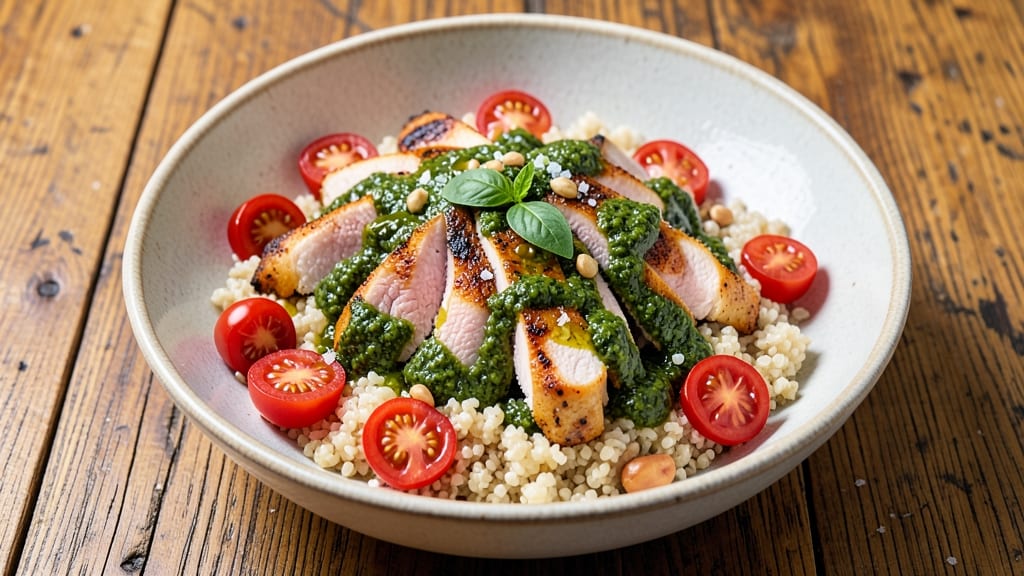
Watch this pesto chicken quinoa bowl first recipe—it’s a restaurant-quality meal in under 45 minutes, perfect for beginners craving bold, balanced flavors. The combination of herb-infused chicken, nutty quinoa, and fresh pesto creates a protein-packed bowl that’s as satisfying as it is easy to assemble.
I developed this while teaching a cooking class for first-time home chefs, and it consistently earns rave reviews for its simplicity and bold flavors.
The secret lies in the marinating technique: chicken breasts soak in a blend of pesto and olive oil for just 15 minutes, ensuring tender, flavorful meat without overcooking.
Meanwhile, the quinoa cooks in vegetable broth for a subtle depth of flavor, while the pesto sauce ties everything together with its bright, herby notes. This method transforms basic ingredients into a visually appealing, well-rounded meal that’s ideal for weeknight dinners or meal prep.
By the time you assemble the bowls, you’ll have perfectly seasoned chicken, fluffy quinoa, and a vibrant pesto sauce that coats every bite. The dish balances protein, grains, and fresh herbs, making it both nutritious and deeply satisfying.
Each component comes together seamlessly, ensuring a foolproof result even for those new to cooking. Let’s get started!
This recipe scales effortlessly for lunchboxes or dinner parties, and the flavors only improve when reheated. The pesto chicken remains juicy, the quinoa stays tender, and the sauce adds a fresh, aromatic finish. Whether you’re feeding a family or packing leftovers, this bowl delivers restaurant-quality results with minimal effort.
Ingredients for pesto chicken quinoa bowl first watch
Herb-infused chicken, nutty quinoa, and vibrant pesto create this restaurant-quality bowl in 45 minutes.
| Ingredient | Amount | Notes |
|---|---|---|
| Boneless, Skinless Chicken Breast 🍗 | 1 ½ lb | Pounded to even thickness for even cooking |
| Extra-Virgin Olive Oil 🫒 | ¼ cup | High-quality, fruity variety for marinating |
| Store-Bought Basil Pesto 🌿 | ½ cup | High-quality, no additives preferred |
| Quinoa 🌾 | 1 cup | Rinsed thoroughly before cooking |
| Vegetable Broth 💧 | 2 cups | Low-sodium for balanced flavor |
| Cherry Tomatoes 🍅 | 1 cup | Halved for freshness |
| Red Bell Pepper 🌶️ | ½ cup | Diced, vibrant color preferred |
| Red Onion 🧅 | ¼ cup | Thinly sliced for texture |
| Fresh Arugula 🌱 | 2 cups | Baby leaves for delicate bite |
| Parmesan Cheese 🧀 | ¼ cup | Freshly grated for optimal flavor |
| Lemon Juice 🍋 | 1 tbsp | Freshly squeezed for brightness |
| Diamond Crystal Kosher Salt 🧂 | ½ tsp | For seasoning and marinade |
| Freshly Ground Black Pepper 🌶️ | ¼ tsp | Enhances all components |
| Toasted Pine Nuts 🥜 | ¼ cup | Optional garnish for crunch |
The chicken breast quality is non-negotiable—look for organic or free-range at specialty markets like Whole Foods or Trader Joe's for optimal tenderness. Pounding the breasts to even thickness ensures consistent doneness, a technique I stress in my cooking classes. For the pesto, high-quality store-bought (like Colavita) saves time while delivering authentic flavor. Quinoa should be rinsed thoroughly to remove bitterness, and Trader Joe's carries pre-rinsed bags if you prefer convenience. The vegetable broth should be low-sodium to control seasoning—Imagine or Pacific Foods brands excel here.
No fresh basil for pesto? Store-bought works perfectly—just ensure it's free of additives. Substitute arugula with baby spinach if unavailable, though arugula's peppery bite elevates the dish. For the quinoa, swap for farro if you prefer a nuttier texture, though quinoa's protein content makes it ideal for balanced bowls. Pine nuts too expensive? Toasted walnuts or pecans provide a similar crunch. The cherry tomatoes can be replaced with heirloom varieties for visual appeal, though regular works fine. Always rinse canned tomatoes if using as a substitute for fresh.
Marinated chicken keeps 2 days in the fridge, while cooked quinoa holds for 4 days when stored airtight. Pesto sauce freezes beautifully for 3 months—portion into ice cube trays for single-use servings. Assemble bowls just before eating to maintain crispness in arugula and tomatoes. For meal prep, store components separately and combine when ready to serve. The flavors develop further overnight, making leftovers even more satisfying.
Why You'll Love This Recipe
- No-Fuss Protein Power: I just slice the chicken into strips—no brining, no basting—toss in olive oil and pesto, and let the grill pan do the work. That garlic and basil aroma hits the kitchen in minutes, and honestly? The chicken stays juicy even when it’s done.
- Pesto Magic Shortcut: Store-bought pesto makes this feel fancy without the effort. One spoonful coats the chicken and quinoa perfectly, giving you that bright, herby punch without chopping fresh basil or hunting for pine nuts.
- Lunchbox Hero: Between us, this is my go-to for meal prep. Cook a big batch of quinoa, slice the chicken ahead, and assemble bowls in seconds. Pack them cold or reheat—either way, they’re a hit with my kids (yes, even on a Tuesday).
- Budget Meal That Feeds: Quinoa and chicken breast stretch further than you’d think, especially with broth keeping the quinoa tender. I make this for four people for under $15, and it’s the kind of dish that disappears before the second helping gets passed.
Step-by-step instructions for herb-infused pesto chicken quinoa bowl
Transform simple ingredients into a vibrant, protein-packed bowl with these precise techniques.
Prepare the Chicken for Even Cooking
Place the 1.5 lb boneless, skinless chicken breast between two sheets of plastic wrap. Using a meat mallet, pound the chicken to an even ½-inch thickness throughout. This ensures uniform cooking and prevents dryness in the center. The chicken should be completely flat with no thick spots remaining.
In a small bowl, combine the 0.5 cup store-bought basil pesto, 0.25 cup extra-virgin olive oil, 1 tbsp lemon juice, 0.5 tsp diamond crystal kosher salt, and 0.25 tsp freshly ground black pepper. Whisk until fully emulsified. Transfer the mixture to a resealable plastic bag, add the pounded chicken, and massage the marinade evenly over all surfaces. Let it marinate at room temperature for 15 minutes while you prepare the quinoa.
Cook the Quinoa to Perfect Texture
Rinse the 1 cup quinoa thoroughly under cold water in a fine-mesh strainer until the water runs clear. This removes excess starch that can make the quinoa gummy. In a medium saucepan, combine the rinsed quinoa with the 2 cups vegetable broth. Bring to a boil over medium-high heat, then immediately reduce to a simmer, cover, and cook for 15 minutes.
After 15 minutes, remove the pan from heat and let it sit covered for an additional 5 minutes. The residual heat will finish cooking the quinoa while allowing the grains to absorb all the liquid. Fluff the quinoa gently with a fork—it should be tender but still have a slight bite, with no hard centers remaining.
Sear the Chicken for Maximum Flavor
Heat a large skillet over medium-high heat. Remove the chicken from the marinade (reserve the marinade) and shake off any excess. Add the chicken to the skillet and cook for 5-6 minutes per side, or until the internal temperature reaches 165°F. The chicken should develop golden-brown crusts on both sides with no pink remaining in the center.
Once cooked, transfer the chicken to a cutting board and let it rest for 5 minutes before slicing. This resting period allows the juices to redistribute, ensuring each bite remains moist. While the chicken rests, return the reserved marinade to the skillet and simmer for 2 minutes to reduce slightly and intensify the flavors.
Assemble the Fresh Vegetable Components
While the chicken rests, prepare the remaining vegetables. Halve the 1 cup cherry tomatoes and slice the 0.5 cup red bell pepper into thin strips. Thinly slice the 0.25 cup red onion and wash the 2 cups fresh arugula thoroughly to remove any dirt. Arrange the vegetables on a serving platter, keeping the arugula separate until the final assembly.
Slice the rested chicken into ½-inch thick strips against the grain for maximum tenderness. Sprinkle the sliced chicken evenly over the prepared vegetables. Drizzle the reduced marinade from the skillet over the chicken, then scatter the 0.25 cup toasted pine nuts and 0.25 cup freshly grated parmesan cheese evenly over the top.
Serve Immediately for Optimal Freshness
Divide the cooked quinoa evenly among four bowls. Top each serving with the chicken and vegetable assembly. The quinoa should form a sturdy base that holds the vibrant toppings without becoming soggy. Serve immediately while the chicken is still warm and the arugula maintains its crisp texture.
Each bowl should showcase the bright flavors of the basil pesto, the nutty depth of the quinoa, and the fresh crunch of the vegetables. The combination of textures—creamy quinoa, tender chicken, crisp arugula, and crunchy pine nuts—creates a satisfying contrast with every bite. The lemon in the marinade adds a bright finish that cuts through the richness of the pesto and chicken.
Pro Tips For Making Pesto Chicken Quinoa Bowl First Watch
- Sear Chicken High: Crank your stove to medium-high and let that chicken breast hit the pan hard for 3-4 minutes per side before flipping. I used to cook it on medium and ended up with sad, gray chicken—this way, it stays juicy and picks up flavor from the olive oil and pesto.
- Rinse Quinoa Cold: Give your quinoa a quick rinse under cold water before cooking—it cuts down on bitterness and speeds up cooking time. I skip this sometimes, but the texture is noticeably smoother when I don’t.
- Don’t Overmix Pesto: Once you toss the pesto with the chicken, stir just enough to coat—overmixing turns it into a gluey mess. A few swirls with tongs keeps the texture light and the flavors bright.
- Broth Ratio Matters: Use a 2:1 ratio of broth to quinoa (e.g., 1 cup quinoa + 2 cups broth) for perfectly fluffy grains. Too little broth? You’ll end up with dry, crunchy quinoa. Too much? It’ll turn mushy.
Essential equipment for great pesto chicken quinoa bowl first watch
Skillet Essentials
You’ll need a large, heavy-bottomed skillet—I swear by my All-Clad Stainless Steel 12-inch—to sear the chicken without hot spots. A meat thermometer like the ThermoWorks Smoke is non-negotiable for hitting that 165°F internal temp every time.
For pounding, a plastic mallet (like the OXO Good Grips) protects your countertops while evening out the chicken thickness. 🔥
Quinoa Cooking Tools
A fine-mesh strainer (I use OXO Good Grips) is crucial for rinsing quinoa thoroughly—this removes excess starch that makes it gummy. For cooking, a medium saucepan with tight-fitting lid ensures even heat distribution.
A wooden spoon helps fluff the quinoa perfectly after cooking. Pro tip: Measure broth with a liquid measuring cup for precision—2 cups is exact for 1 cup quinoa.
Prep Station Must-Haves
Gather a sharp chef’s knife (my Wüsthof 8-inch is a workhorse) and cutting board (I prefer Teakhaus bamboo) for chopping veggies efficiently. A resealable plastic bag (like Ziploc) keeps the chicken marinade contained while massaging it into the meat.
For assembly, a serving platter (I love Le Creuset stoneware) keeps veggies organized until plating. 🍽️
Optional Upgrades
For meal prep, glass Pyrex containers (with snap-on lids) store quinoa and chicken separately for up to 4 days. A microplane (like Microplane Classic) quickly grates parmesan to a fine, flavorful texture.
If you’re fancy, a garlic press (I use OXO) adds fresh garlic to the pesto marinade for extra depth. These tools elevate the dish but aren’t strictly necessary for beginners.
Budget-Friendly Swaps
Skip the fancy skillet and use a well-seasoned cast iron (like a Lodge 10.25-inch)—it’s versatile and retains heat beautifully. A basic digital thermometer (like Thermapen One) works just as well for 165°F accuracy.
For veggie prep, a small sharp knife and ceramic cutting board (like Kuhn Rikon) are affordable and durable. The key is focusing on sharp knives and precise measurements—not expensive gadgets. ✨
Nutrition facts
Frequently asked questions
Can I use store-bought pesto instead of making it from scratch?
High-quality store-bought pesto works perfectly—just check the ingredients for no added preservatives. Brands like Colavita or Trader Joe's offer excellent options. The recipe is designed with store-bought pesto in mind to keep prep simple for beginners.
How do I prevent the chicken from drying out?
Pounding the chicken to ½-inch thickness ensures even cooking, and marinating for just 15 minutes keeps it juicy. Use a meat thermometer to confirm 165°F internal temp—never overcook! The resting period after searing redistributes juices for maximum tenderness.
Can I make this ahead of time for meal prep?
Yes! Cook the quinoa and chicken separately, then store in airtight containers for up to 4 days. Assemble bowls fresh to maintain crispness in veggies. The pesto marinade can be prepped 2 days ahead—just store it in the fridge until ready to use.
What if I don't have a meat mallet for pounding chicken?
Use a rolling pin or even a heavy book pressed firmly between two sheets of plastic wrap. The goal is even thickness—just work in small sections. A sharp knife can also help trim thick edges if needed.
How can I make this dish more flavorful without extra ingredients?
Toast the quinoa in the dry pan for 1 minute before adding broth to deepen its nutty flavor. Add a pinch of red pepper flakes to the marinade or sprinkle extra parmesan on top. Fresh herbs like basil or parsley as garnish elevate the dish instantly.