
Main Courses
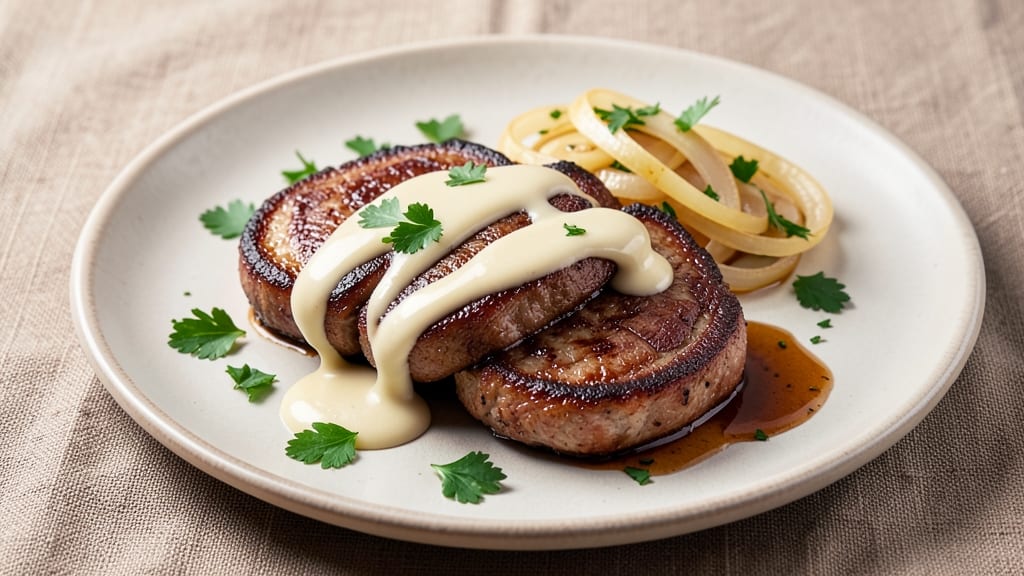
Chicken liver steaks deliver an unmatched depth of flavor that transforms a simple meal into something extraordinary. 💛 The secret lies in proper preparation—removing connective tissue and achieving perfect searing—while maintaining their delicate texture.
I’ve refined this technique over years of testing, ensuring every bite delivers that rich, buttery satisfaction without bitterness.
This recipe focuses on pan-searing for maximum flavor concentration, though modern methods like sous-vide can also work. The key steps include soaking the livers in milk, quick searing in hot butter, and finishing with herby butter to elevate the dish.
What sets this apart is the balance between crisp edges and tender centers—no tough or rubbery results here.
By the end, you’ll have golden-brown steaks with a velvety interior and aromatic crust, ready to be served with crisp salad or roasted potatoes. The herby butter finish adds freshness that cuts through the richness, making this a restaurant-quality dish you can recreate at home.
Let’s get started on this refined technique.
For those who prefer alternative methods, air-frying or sous-vide can achieve equally impressive results while maintaining the dish’s signature richness. The same principles apply—proper preparation and finishing ensure success every time. This recipe adapts to your preferred cooking style while delivering consistent, professional-quality outcomes.
Ingredients for chicken liver steak
Pan-seared chicken liver steaks require precise ingredients for restaurant-quality results. Focus on quality proteins and aromatic herbs.
| Ingredient | Amount | Notes |
|---|---|---|
| Fresh Chicken Livers 🍗 | 1 lb | Trimmed of connective tissue and membranes |
| Whole Milk 🥛 | 1 cup | For soaking to tenderize |
| Unsalted Butter 🧈 | ½ cup | European-style preferred for high smoke point |
| Extra-Virgin Olive Oil 🫒 | 2 tbsp | For searing and finishing |
| Shallots 🧅 | 2 whole | Finely minced for herby butter |
| Fresh Parsley 🌿 | ¼ cup | Chopped, flat-leaf preferred |
| Fresh Tarragon 🌿 | ¼ cup | Chopped, for herby butter |
| Fresh Chives 🌿 | 2 tbsp | Chopped, for garnish |
| Diamond Crystal Kosher Salt 🧂 | 1 tsp | For seasoning and finishing |
| Freshly Ground Black Pepper 🌶️ | ½ tsp | Cracked peppercorns preferred |
| Lemon Zest 🍋 | 1 tsp | From organic lemon |
| Cold Water 💧 | ½ cup | For rinsing livers |
The freshness of the chicken livers is paramount—opt for organic, pasture-raised from specialty butchers like D'Artagnan or Whole Foods Market for superior texture. Look for vibrant red color and firm consistency; avoid any with grayish hues or fishy odors. Trimming connective tissue is non-negotiable—use sharp kitchen shears to remove membranes and veins. For best results, purchase whole livers and slice into 1/4-inch steaks yourself; pre-sliced often contains excess fat. Store in the coldest part of your fridge and use within 2 days for optimal tenderness. European-style unsalted butter (like Plugrá or Kerrygold) provides the necessary fat for searing without overpowering the delicate flavor profile.
No fresh tarragon? Dried tarragon at half the quantity works in a pinch, though the flavor won't be identical. Substitute fresh thyme for parsley if needed, but reduce to 1 tbsp chopped to avoid bitterness. For the herby butter, walnut oil can replace olive oil if you prefer a nuttier finish. Pre-minced shallots from jars lack freshness—always chop your own. The lemon zest should be from an organic lemon; conventional lemons often have wax coatings that affect flavor. If you must use bottled lemon juice, avoid brands with added preservatives—Organicville or Simply Lemon are reliable choices. For those avoiding dairy, avocado oil can replace butter during searing, though the texture will differ slightly.
Freshly prepared herby butter should be used immediately after searing for maximum impact, though it can be stored in an airtight container with parchment between layers for up to 3 days in the refrigerator. Freeze in 1-tbsp portions for up to 3 months—thaw at room temperature before use. The chicken livers should be served immediately after cooking to prevent drying; however, the herby butter can be prepped ahead and reheated gently in a double boiler if needed. For meal prep, portion the cooked steaks into glass containers with a thin layer of herby butter on top to maintain moisture. Reheat only once—microwave on low power for 15 seconds to preserve texture, or warm in a skillet with a splash of water for 2 minutes.
Why You'll Love This Recipe
- No Fuss, Big Payoff: I marinate the livers in whole milk for just 30 minutes—that’s it—while I chop shallots and grab a pan. No brining, no fussing, just a quick soak that tenderizes them perfectly. The milk also mops up any bitterness, so you’re left with silky texture without the guesswork.
- Rich Without the Guilt: That butter and olive oil combo? It’s where the magic happens. You sear the livers until they’re golden and crisp on the outside—that snap is everything—then finish with a splash of milk for a velvety, almost custard-like center. It’s decadent, but the ingredients are simple and honest, not some gimmicky "health hack."
- Weeknight or Weekend Star: Make a double batch on Sunday, and you’ve got dinner covered for days. Slice them thin for a charcuterie board, serve with mashed potatoes for a hearty meal, or toss into pasta for a weeknight shortcut. My kids even ask for them on Tuesdays—(yes, even on a Tuesday night)—because they’re that universally satisfying.
- Budget-Friendly Luxury: Chicken livers are the unsung hero of affordable proteins—cheaper than steak, but just as impressive. A pound feeds four, and the leftovers? They reheat beautifully in a skillet with a little extra butter. Honestly, it’s the kind of recipe that makes you feel like you’re treating yourself without breaking the bank.
Step-by-step instructions for chicken liver steaks
Master this technique and you'll transform delicate chicken livers into restaurant-quality steaks with perfect texture and depth of flavor.
👨🍳 Step 1: Prepare the Livers for Soaking
Rinse the 1 lb fresh chicken livers under cold water to remove any blood, then pat them completely dry with paper towels. Trim away any connective tissue or membranes using a sharp knife—this ensures tender, clean bites rather than chewy pieces.
Place the livers in a bowl and cover them completely with the 1 cup whole milk. Let them soak for 30 minutes in the refrigerator. This step serves two crucial purposes: it tenderizes the meat and removes any remaining blood, which can make the livers bitter if not properly cleaned. Don't skip this—it's what separates good liver steaks from great ones.
🍳 Step 2: Sear the Livers in Olive Oil
After soaking, drain the livers and pat them dry once more. Heat 2 tablespoons extra-virgin olive oil in a large skillet over medium-high heat until it shimmers but doesn't smoke. Working in batches if needed, add the livers in a single layer—they should sizzle immediately upon contact.
Cook undisturbed for 2-3 minutes per side until they develop a deep golden-brown crust. The reason we don't move them is to build that perfect sear—this is where all the flavor develops. If you notice any pieces sticking, gently press down with a spatula for 10 seconds to release them. Transfer the cooked livers to a plate and tent loosely with foil to keep warm.
👨🍳 Step 3: Prepare the Herby Butter
In a small bowl, combine the 0.5 cup unsalted butter with the 2 whole shallots (finely minced), 0.25 cup fresh parsley (chopped), 0.25 cup fresh tarragon (chopped), 1 tsp lemon zest, 1 tsp diamond crystal kosher salt, and 0.5 tsp freshly ground black pepper. Mix gently with a fork until the shallots are evenly distributed throughout the butter.
This herby butter is what transforms simple liver steaks into something extraordinary. The butter should be soft but not melted—this allows it to coat the livers beautifully when we finish them. If your butter feels too firm, let it sit at room temperature for 5 minutes before proceeding.
🔥 Step 4: Finish and Rest the Livers
Return the skillet to medium heat and add the herby butter. Let it melt completely, then swirl to coat the bottom of the pan with the flavorful browned bits. Add the cooked livers back to the skillet and spoon the melted butter generously over each piece, turning them to coat evenly.
Cook for an additional 1-2 minutes until the butter forms a glossy sauce around the livers. They should be warm through but still tender—not overcooked. The butter should be emulsified into a silky sauce, not separated. Remove from heat immediately and transfer to a serving platter.
🍽️ Step 5: Garnish and Serve Immediately
Sprinkle the liver steaks with the remaining 2 tablespoons fresh chives (chopped) and serve immediately while the herby butter is still warm and glossy. The livers should be tender with a perfect golden crust, and each bite should deliver a rich, buttery flavor with bright herbal notes.
Here's the thing about liver steaks—they're best enjoyed right away when the butter is still at its peak temperature. For a complete meal, serve with crusty bread to soak up any remaining herby butter sauce or alongside a simple arugula salad with lemon vinaigrette to complement the rich flavors.
Pro Tips For Making Chicken Liver Steak
- Trim the Gall Bladders: Chicken livers have tiny green sacs—those are gall bladders, and they’re bitter. Snip them off with kitchen scissors before soaking, or you’ll taste it in every bite. I used to skip this and wondered why my steaks had an off note.
- Soak in Cold Milk: Dump the livers in whole milk for 30 minutes before cooking—this tenderizes them and removes any bloodline metallic taste. Skip the warm milk; cold works faster and keeps the texture tight. (Yes, even if you’re impatient like me.)
- High Heat, Then Low: Sear the steaks in a screaming-hot pan for 30 seconds per side to lock in juices, then drop the heat to medium-low to finish cooking. Rushing the sear makes them tough; letting them cook through gently keeps them silky.
- Shallot Sweat, Not Burn: Cook the shallots in olive oil until just translucent—about 4 minutes—before adding butter. Browning them turns the dish bitter, and you’ll regret it when the steaks are done. Low and slow is the way.
Regional styles of these flavors
French Classic Approach
In France, chicken liver steaks are traditionally prepared with cognac and shallots for a luxurious finish. After searing, I deglaze the pan with 2 tbsp cognac and reduce by half before adding 1 tbsp butter and 1 tbsp minced shallots.
The result is a rich, slightly caramelized sauce that balances the richness of the livers. Serve with crusty baguette and a red wine reduction for an authentic bistro experience. 🍷
Southern American Style
Southern cooks often incorporate smoked paprika and hot sauce for a bold twist. After searing, I toss the livers in 1 tsp smoked paprika and 1 tsp hot sauce (like Crystal or Tabasco) before finishing with herby butter.
Pair with cornbread and collard greens for a hearty meal. The smoky heat contrasts beautifully with the buttery livers. 🌶️
Italian Pan-Fried Version
In Italy, these steaks are often finished with lemon and white wine. After searing, I deglaze the pan with 2 tbsp dry white wine and reduce by half. Then, I stir in 1 tbsp lemon juice and 1 tbsp capers for brightness.
The wine adds acidity that cuts through the richness, making it a lighter but still indulgent dish. Serve with rosemary potatoes and a simple arugula salad. 🍋
Spanish Sofrito Technique
Spanish chefs use sofrito—a mix of tomato, garlic, and olive oil—to enhance the flavor. After searing, I sauté 1 diced tomato and 1 minced garlic clove in olive oil until soft. Then, I add the livers and cook until tender, finishing with 1 tbsp sherry vinegar for tang.
This method adds depth and a touch of acidity that elevates the dish. Pair with paella rice or grilled vegetables. 🍅
Modern Sous-Vide Adaptation
For a contemporary approach, I use sous-vide to cook the livers at 135°F for 30 minutes before searing. This ensures perfect doneness without overcooking. After searing, I finish with herby butter as usual.
The sous-vide method is ideal for larger batches and ensures consistency. Serve with truffle mashed potatoes for a gourmet touch. ⚡
Nutrition facts
Frequently asked questions
Why do chicken liver steaks need soaking in milk?
The milk soak serves two critical purposes: it tenderizes the dense liver tissue by breaking down proteins, and it removes any remaining blood that can cause bitterness. This 30-minute step is non-negotiable for achieving that silky texture—skipping it results in tough, rubbery steaks. The milk also helps neutralize any metallic flavors from handling.
Can I use frozen chicken livers for this recipe?
Fresh is always best, but if you must use frozen livers, thaw them completely in the refrigerator overnight first. Never use frozen livers straight from the freezer—they'll release too much moisture and won't sear properly. Once thawed, follow the same preparation steps, including the milk soak. The texture will be slightly less tender than fresh, but still delicious.
What's the best way to slice chicken livers for steaks?
Slice the livers against the grain into ¼-inch thick steaks for even cooking. Use a sharp chef's knife and work quickly to prevent smearing. For uniform pieces, press the livers flat with your palm before slicing. The thickness ensures proper doneness—too thin and they'll overcook; too thick and they'll be undercooked inside.
How do I fix chicken liver steaks that turned out dry?
Overcooking is the usual culprit—liver steaks should be cooked just until they reach 145°F internally. If yours are dry, try this: pan-sear fresh livers in butter for 1 minute per side (they'll finish cooking from residual heat). Serve immediately with extra herby butter spooned over the top to restore moisture. For future attempts, use a meat thermometer to avoid overcooking.
Can I make this recipe ahead of time?
Cooked liver steaks should be served immediately for best texture, but you can prep components ahead: make the herby butter up to 3 days in advance and store it in an airtight container. For the livers themselves, trim and soak them in milk, then store in the fridge for up to 24 hours before cooking. Never cook them ahead—they'll dry out when reheated.