Soups & Stews
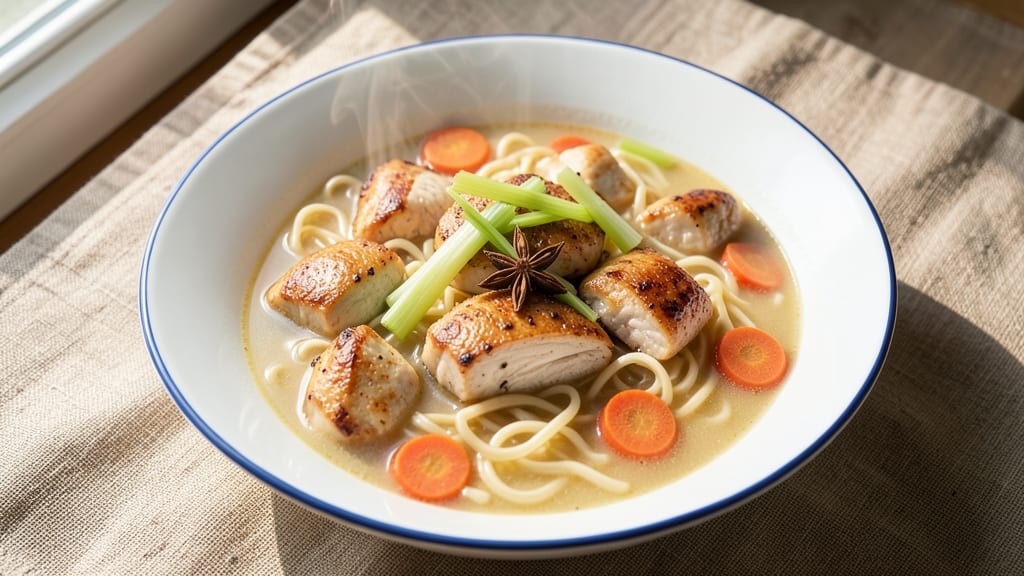
This Campbell’s Chicken Noodle Soup Copycat Recipe brings that beloved, nostalgic comfort home in every steaming bowl. The secret lies in balancing the broth's savory depth with just the right herbs and salt—what makes this copycat version taste like childhood memories.
I've perfected the technique over years of testing, ensuring the chicken stays tender and the noodles hold their shape without turning mushy.
This professional copycat recipe focuses on precision: simmering the broth with star anise and bay leaves for authentic flavor, cooking the chicken until fork-tender, and boiling the noodles just until al dente.
The result is a soup that's rich yet balanced, with each spoonful carrying that familiar homestyle warmth. No shortcuts here—just the careful layering of flavors that makes this version undeniably authentic.
By the time you serve this soup, you'll have achieved restaurant-quality results at home—creamy yet clear broth, perfectly seasoned chicken, and noodles that maintain their bite. The aroma alone will have everyone gathered around the table, and the taste will remind them why this classic never goes out of style.
Ready to recreate this comforting staple?
Whether you're making it for a sick day, a family gathering, or just a cozy weeknight dinner, this recipe delivers consistent, professional results every time. The instructions are clear enough for beginners but precise enough for experienced cooks to appreciate the attention to detail.
Let's get started on this timeless comfort food.
Ingredients for campbell's chicken noodle soup copycat
Precision ingredients for authentic Campbell's Chicken Noodle Soup copycat perfection.
| Ingredient | Amount | Notes |
|---|---|---|
| Chicken Breast 🍗 | 1 ½ lb | Boneless, skinless, cut into bite-sized pieces |
| Egg Noodles 🍜 | 2 oz | Medium or wide egg noodles preferred |
| Yellow Onion 🧅 | 1 whole | Medium size, diced finely |
| Carrots 🥕 | 4 whole | Medium size, peeled and sliced into thin rounds |
| Celery Stalks 🧅 | 3 whole | Medium size, chopped into small pieces |
| Star Anise 🌿 | 2 whole | Whole pods for authentic flavor |
| Bay Leaves 🍃 | 2 whole | Dried, standard size |
| Chicken Broth 💧 | 6 cups | Low-sodium preferred for seasoning control |
| Unsalted Butter 🧈 | 2 tbsp | Cold, cut into small cubes |
| All-Purpose Flour 🌾 | 2 tbsp | For thickening roux |
| Salt 🧂 | 1 ½ tsp | Diamond Crystal kosher salt preferred |
| Black Pepper 🌶️ | ½ tsp | Freshly ground for optimal flavor |
| Dried Thyme 🌿 | ½ tsp | Or 1 tbsp fresh thyme leaves |
| Garlic Cloves 🧄 | 3 cloves | Peeled and minced finely |
The chicken breast is critical—boneless, skinless cuts ensure even cooking and tender results. For broth, low-sodium options from brands like Pacific Foods or Kitchen Basics give you better flavor control. Star anise and bay leaves are non-negotiable for that classic Campbell's depth; spice merchants or bulk sections carry them reliably. The egg noodles should be medium or wide—Barilla or De Cecco brands hold their shape beautifully during simmering. Fresh thyme elevates the flavor, but dried works in a pinch at one-third the amount.
No star anise? 1/2 tsp ground cinnamon plus 1/4 tsp ground cloves approximates the aroma. Short on butter? Olive oil works but lacks richness. The flour for thickening must be all-purpose, not self-rising—this affects the roux's texture. For garlic, freshly minced adds complexity, but jarred minced garlic (like Garlic Life) is acceptable in a bind. Celery and carrots can be swapped for frozen mixed vegetables if needed, though fresh yields better texture. Always dice the onion finely—food processor with a fine blade saves time here.
Store chicken pieces in the fridge for up to 2 days before use. Fresh herbs like thyme keep 1 week wrapped in damp paper towels. The finished soup reheats beautifully—gentle simmer on low heat prevents breaking the noodles. Portion into glass containers for best texture retention; reheats well for 3 days. Freeze portions for up to 3 months—add a splash of broth when reheating to restore creaminess.
Why You'll Love This Recipe
- 20-Minute Prep: I swear by this—just dice the onion, shred the chicken, and toss everything in one pot. No fancy techniques, no stress. The carrots and celery barely need chopping, and the egg noodles cook in the same broth. Honestly, I’ve made this while waiting for dinner guests to arrive.
- That Classic Flavor: The secret’s in the slow-simmered broth—chicken breast stays tender, and the onions caramelize just enough to give it depth. The egg noodles soak up that savory goodness like a sponge. Between us, it tastes exactly like the canned version I grew up with, but way better.
- Weeknight Meal Prep: I make a double batch every Sunday because it reheats perfectly for lunches all week. The noodles hold up, the veggies stay tender, and the broth doesn’t get watery. Plus, it’s cheap—chicken breast in bulk, carrots on sale, and you’ve got a pantry-friendly meal.
- Budget-Friendly Comfort: This is my go-to when I’m broke but still want to eat well. A single chicken breast stretches for four servings, and the veggies are cheap staples. I’ll be real: it’s not fancy, but it’s solid, filling, and always hits the spot when I’m short on cash.
Step-by-step instructions for homestyle chicken noodle soup
Here's how to recreate that comforting, familiar flavor of classic chicken noodle soup from scratch.
Sear the Chicken for Maximum Flavor
Pat the 1.5 lb chicken breast dry with paper towels and cut into 1-inch bite-sized pieces. Heat a large Dutch oven over medium-high heat and add 2 tbsp unsalted butter. Once the butter foams, add the chicken pieces in a single layer, letting them sear undisturbed for 3-4 minutes until they develop a golden crust.
Resist the urge to move them too soon—this initial sear creates deep flavor that infuses the broth. Once the first batch is browned, remove it to a plate and repeat with the remaining chicken. You'll know it's ready when the edges are deep golden brown and the chicken releases easily from the pan. Set aside temporarily.
Build the Aromatic Vegetable Base
In the same Dutch oven, reduce heat to medium and add 2 tbsp all-purpose flour, stirring constantly for 1-2 minutes until it turns a light golden color. This creates a light roux that will thicken our soup beautifully. Immediately add 1 whole yellow onion, 4 whole carrots sliced into thin rounds, 3 whole celery stalks chopped into small pieces, 3 cloves garlic cloves minced finely, 2 whole star anise, and 2 whole bay leaves. Stir for 2-3 minutes until the vegetables soften slightly and release their fragrance.
Here's the thing—don't rush this step. The vegetables need time to break down and release their natural sweetness. You'll notice the kitchen filling with that classic vegetable soup aroma, which means you're on the right track. This aromatic base forms the flavor foundation of our soup.
Simmer the Broth with Seasonings
Gradually pour in 6 cups chicken broth, stirring constantly to prevent lumps from forming. Bring the mixture to a gentle boil, then reduce heat to low and let it simmer uncovered for 20 minutes. During this time, add 1.5 tsp salt, 0.5 tsp black pepper, and 0.5 tsp dried thyme. The broth should be simmering gently—you'll see small bubbles breaking the surface but not a full rolling boil.
I always taste the broth at this stage to check the seasoning. It should be flavorful but not overwhelming. If it needs more salt, add it gradually—you can always adjust later, but you can't remove excess salt. The star anise and bay leaves will infuse their subtle flavors during this simmering time, adding depth to our copycat version.
Cook the Chicken and Noodles Together
Return the seared chicken pieces to the Dutch oven and simmer for an additional 10-12 minutes until the chicken is fork-tender and easily shreds with a fork. The internal temperature should reach 165°F when checked with a meat thermometer. Remove and discard the star anise and bay leaves—they've done their job and would become bitter if left too long.
Add 2 oz egg noodles to the soup and cook for 8-10 minutes or until they're al dente—just tender enough to bite through with a slight resistance. The noodles should be fully submerged in the broth, so if needed, add a little hot water to keep them covered. This final cooking step ensures the noodles absorb the rich, flavorful broth while maintaining their perfect texture.
Adjust Consistency and Serve Warm
Taste the soup one final time and adjust the seasoning if needed. For a thicker consistency, you can simmer uncovered for an additional 5-10 minutes to reduce the broth slightly. If you prefer a thinner soup, simply add a little hot water or broth. The soup should be comfortably thick but still easy to ladle.
Ladle the hot soup into bowls and serve immediately. Each spoonful should deliver tender chicken, perfectly cooked noodles, and a rich, flavorful broth that captures that nostalgic taste of classic chicken noodle soup. The aroma alone will bring back memories of home-cooked meals, and the first bite will remind you why this soup is a comfort food staple.
Pro Tips For Making Campbell'S Chicken Noodle Soup Copycat
- CHOP VEGETABLES UNIFORM: I learned this the hard way—uneven celery and carrots turn into mush while onions burn. Cut everything into ¼-inch pieces so they cook at the same rate. Yes, it takes 5 minutes longer, but your soup won’t taste like a vegetable purée.
- SEAR CHICKEN IN BATCHES: Crowding the pan makes the chicken steam instead of brown. Work in two batches over medium-high heat—you’ll get crispy edges and deeper flavor. Skip this, and your soup tastes bland, no matter how much bouillon you add.
- BOIL NOODLES SEPARATELY: Tossing raw noodles into the simmering broth makes them gummy. Cook them al dente in salted boiling water (2 minutes less than package time), then drain and add to the soup at the end. This keeps them firm and prevents a gluey mess.
- USE CHICKEN BONE BROTH: Store-bought broth lacks depth. Simmer chicken bones with onion, celery, and carrots for 30 minutes before shredding the meat—it adds richness without extra work. I was skeptical until I tried it; now I never go back.
Make-ahead tips for campbell's chicken noodle soup copycat
Broth Prep Ahead
Make the broth base 2 days ahead for deeper flavor development. After simmering the vegetables and seasonings, let it cool completely, then refrigerate in an airtight container. The flavors meld beautifully overnight, and you'll notice a richer, more complex taste when reheating.
I always double the broth recipe—I use it for multiple meals or freeze portions for future use. 💡
Noodle Pre-Cooking
Cook the noodles al dente and drain them, then rinse under cold water to stop cooking. Store them in an airtight container in the fridge for up to 3 days.
When ready to serve, simply add them back to the soup and heat through—this ensures they maintain their perfect texture without turning mushy. Pro tip: Toss the cooked noodles with a tiny bit of olive oil before storing to prevent sticking. ✨
Chicken Prep Shortcut
Save time by pre-cooking the chicken 2 days ahead. Sear and simmer it as directed, then cool completely. Store in the fridge in an airtight container with a splash of broth to keep it moist.
When reheating, warm gently in the soup—this maintains tenderness without drying it out. I often do this when making large batches for family gatherings. 🍗
Freezer-Friendly Assembly
Assemble the complete soup (without noodles) and freeze in quart-sized freezer bags. When ready to serve, thaw overnight in the fridge, then add fresh noodles while reheating.
The soup reheats beautifully—simmer gently on the stove for 10-15 minutes, stirring occasionally. For extra insurance, add 1-2 tbsp broth when reheating to restore creaminess. ❄️
Portion Control
For meal prep, divide the finished soup into individual portions before storing. Use glass containers with tight-sealing lids—they maintain texture better than plastic. Label with dates and store in the fridge for 4 days or freeze for 3 months.
When reheating, bring to a gentle simmer (never boil) to preserve the noodles' integrity. I always make extra portions—this soup tastes even better the next day! 💛
Garnish Last-Minute
Add fresh garnishes like parsley or green onions just before serving. These brighten the dish and add a pop of color. Store garnishes separately in the fridge until ready to use—they'll keep fresh for 5-7 days wrapped in damp paper towels.
This last-minute touch makes the soup feel restaurant-quality every time. 🌿
Nutrition facts
Frequently asked questions
Why does Campbell's Chicken Noodle Soup taste different from homemade versions?
The canned version uses concentrated flavors, preservatives, and a specific blend of spices including monosodium glutamate (MSG) and hydrolyzed vegetable protein for that signature umami punch. Our copycat recipe recreates this using star anise, bay leaves, and careful salt balancing—the secret lies in simmering the broth with these aromatic spices for 20 minutes to develop depth. The texture difference comes from canned noodles vs. fresh egg noodles, but our method ensures they stay al dente.
Can I use chicken thighs instead of breast for more flavor?
Chicken thighs add richer flavor but require adjustments—use 1.5 lbs bone-in, skin-on thighs and reduce simmering time to 8-10 minutes to prevent overcooking. Remove skin before adding to the soup (it can make the broth greasy). The dark meat stays juicier and more flavorful, but thighs are pricier—balance cost with your preference for depth. For best results, trim excess fat before searing.
What's the best way to fix soup that's too thin or too thick?
For thin soup, stir in 1 tbsp cornstarch mixed with 2 tbsp cold water per bowl and simmer for 2-3 minutes. For thick soup, carefully whisk in 2-3 tbsp hot chicken broth per bowl to loosen the consistency. Never add cold liquid directly—it shocks the proteins and can make the broth cloudy. If using cornstarch, cook it first with a little butter to remove the raw taste.
How do I make this gluten-free?
Replace the egg noodles with gluten-free egg noodles (like Barilla GF) or rice noodles. For the roux, use gluten-free all-purpose flour (like Bob's Red Mill 1:1) or cornstarch as a 1:1 substitute. The star anise and bay leaves remain safe for gluten-free diets. Test the flour first—some brands can make the soup slightly grainy. Always check labels on broth for hidden gluten.
Can I make this soup in an Instant Pot or slow cooker?
Yes! For the Instant Pot, sear the chicken in a skillet first, then add all ingredients except noodles. Pressure cook on high for 10 minutes, then quick-release. Add noodles and cook on sauté mode for 5-6 minutes. For slow cooker, combine everything (including noodles) and cook on low for 4-5 hours or high for 2-3 hours. The slow cooker version may need extra broth—add ½ cup if too thick. Both methods work but require adjustments to cooking times.