
Main Courses
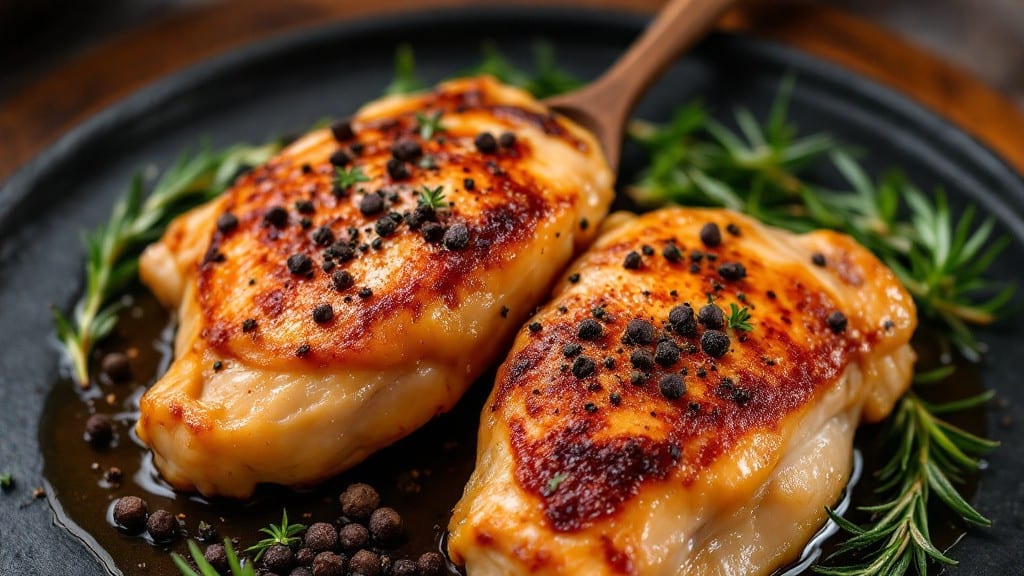
This poached chicken thighs recipe delivers silky skin and juicy centers that transform ordinary weeknight dinners into something special. Growing up in small-town Georgia, I learned that proper cooking techniques preserve moisture—this method ensures every bite stays tender while absorbing rich herbed broth flavors.
The secret lies in precise timing and aromatics that infuse the chicken without overpowering its natural taste.
Perfecting this dish means balancing water-to-broth ratios and cooking times—just 12 to 15 minutes—to guarantee juicy results every time. I use bay leaves, peppercorns, and fresh herbs to create an aromatic broth that enhances rather than dominates the chicken's flavor.
This technique works equally well with bone-in or boneless thighs, making it versatile for any meal.
The outcome is chicken with tender, velvety skin that gives way to succulent meat inside, all infused with subtle herbed notes from the poaching liquid. The broth itself becomes a flavorful base for sauces or can be reduced into a glossy glaze.
This method proves that simple techniques, when executed precisely, yield restaurant-quality results at home.
Whether serving as a main course or using the broth as a base for other dishes, this recipe delivers consistent, foolproof results. The key is maintaining control over heat and timing—no guesswork, just guaranteed tenderness.
Let's get started on creating silky, juicy chicken thighs that will impress even the most discerning guests.
Ingredients for poached chicken thighs
Eleven ingredients transform ordinary chicken into restaurant-quality poached thighs with velvety skin and aromatic herbed broth.
| Ingredient | Amount | Notes |
|---|---|---|
| Bone-In Chicken Thighs 🍗 | 1 ½ lb | Skin-on for velvety texture, trimmed excess fat |
| Water 💧 | 4 cups | Chilled for precise temperature control |
| Fresh Thyme Sprigs 🌿 | 4 whole | Organic preferred for aromatic intensity |
| Fresh Rosemary Sprigs 🌿 | 2 whole | Woodsy flavor profile essential |
| Bay Leaves 🍃 | 2 whole | High-quality dried preferred |
| Black Peppercorns 🌶️ | 1 tbsp | Freshly cracked for optimal aroma |
| Kosher Salt 🧂 | 1 ½ tsp | Diamond Crystal preferred |
| Garlic Cloves 🧄 | 4 cloves | Smash lightly for enhanced infusion |
| Lemon Zest 🍋 | 1 tsp | Brightens overall flavor profile |
| Extra-Virgin Olive Oil 🫒 | 1 tbsp | For skin crisping after poaching |
| Fresh Parsley 🌿 | ¼ cup | Chopped for garnish and freshness |
The chicken thighs are the foundation—bone-in delivers superior flavor and moisture retention. Local butcher shops often carry superior quality cuts compared to grocery store options, particularly when purchasing in bulk. Look for thighs with a vibrant, pink hue and minimal fat marbling; Georgia-grown poultry at specialty markets provides optimal texture. The skin should be intact but not overly thick, as this affects both cooking time and final tenderness. For maximum flavor infusion, consider brining the thighs for 30 minutes prior to poaching using a solution of 1 cup water, 2 tbsp Diamond Crystal kosher salt—this step elevates the dish from good to exceptional without altering the delicate poaching technique.
Fresh herbs elevate the aromatic profile of the poaching liquid without overpowering the chicken's natural taste. Whole Foods Market or Trader Joe's carry premium organic herb bundles that maintain their potency longer than conventional grocery store options. For substitutions, dried herbs work at one-third the quantity but lack the vibrant complexity of fresh. The black peppercorns should be freshly cracked using a mortar and pestle or high-quality grinder—pre-ground pepper loses its aromatic oils within weeks. If fresh thyme or rosemary is unavailable, Penzeys Spices offers high-quality dried alternatives that replicate the fresh herb experience when used judiciously. The garlic cloves should be lightly smashed rather than minced to prevent bitterness while maximizing surface area for infusion.
The poaching liquid retains its flavor for up to 3 days when refrigerated in an airtight container, making it ideal for repurposing into sauces or glaze. The chicken thighs should be consumed within 2 days for optimal texture, though they reheat beautifully when stored properly in the refrigerator. For long-term storage, portion the cooked thighs into freezer-safe containers with a thin layer of the poaching liquid—this preserves moisture and prevents drying during the 3-month frozen storage period. The herbs and aromatics can be removed immediately after poaching or left in the liquid for serving, depending on desired presentation. The lemon zest should be added during the final minute of poaching to preserve its bright citrus notes.
Why You'll Love This Recipe
- Foolproof Simplicity: I swear by this recipe—just toss the thighs in water with thyme and rosemary, bring it to a simmer, and walk away. No flipping, no frying, no stress. The hardest part is remembering to pull them out before they’re done.
- Herb-Infused Magic: That fragrant water? It’s not just for cooking—it’s the secret. The thyme and rosemary steep into the chicken, giving it a bright, earthy depth that tastes like a fancy bistro dish, not a weeknight meal.
- Leftovers That Shine: Poached thighs stay tender for days, so I always make extra. Shred them for tacos, slice them for salads, or toss them into pasta—each time, they’re just as good as the first. (Yes, even on a Tuesday night.)
- Budget-Friendly Luxury: Bone-in thighs are cheaper than breasts, and this method turns them into something special without breaking the bank. Honestly, it’s the kind of recipe that makes me feel like I’m feeding my family something restaurant-worthy—without the price tag.
Step-by-step instructions for poached chicken thighs with herbed broth
Master this gentle cooking technique for tender, juicy chicken thighs with velvety skin preserved.
Prepare the Chicken and Herbed Broth
Pat the 1.5 lb bone-in chicken thighs dry with paper towels, removing any excess fat but leaving the skin intact. This ensures maximum crispness later. In a large, deep skillet or Dutch oven, combine the 4 cups chilled water, 4 whole fresh thyme sprigs, 2 whole fresh rosemary sprigs, 2 whole bay leaves, 1 tbsp black peppercorns, 1.5 tsp kosher salt, and 4 lightly smashed garlic cloves. Bring to a gentle simmer over medium heat.
Here's the key: maintain a gentle simmer—you should see small bubbles breaking the surface but no vigorous boiling. If it boils vigorously, reduce heat immediately. The broth should taste seasoned but not overwhelmingly salty at this stage. The herbs will infuse their aromatic oils into the water, creating the flavor foundation.
Poach the Chicken to Perfect Doneness
Carefully lower the chicken thighs into the simmering broth, skin-side down. They should float near the surface. Cover with a tight-fitting lid and reduce heat to low, maintaining that gentle simmer. Poach for 20-25 minutes until the internal temperature reaches 165°F and the juices run clear when pierced with a meat thermometer.
Don't peek or lift the lid during cooking—this disrupts the even heat distribution and can cause the chicken to cook unevenly. The skin should remain intact and velvety, not breaking apart. If you notice any foam forming, skim it off occasionally to keep the broth clear. The lemon zest can be added during the last 5 minutes of poaching to brighten the flavors.
Finish with Crisp Skin and Garnish
Using a slotted spoon, transfer the chicken thighs to a plate. Increase heat to medium-high and remove the herbs and bay leaves from the broth. Add the 1 tbsp extra-virgin olive oil to the broth and let it heat until shimmering. Carefully place the chicken thighs skin-side down in the hot oil for 1-2 minutes until the skin becomes golden and crispy. This step transforms the velvety poached skin into a delicate crisp.
While the chicken rests for 5 minutes, stir the lemon zest into the remaining broth to infuse its bright citrus notes. Just before serving, sprinkle the chicken with the 0.25 cup chopped fresh parsley. The finished thighs should have a juicy, tender center with a crisp, silky skin and be bathed in a fragrant herbed broth that's perfect for serving over rice or with crusty bread.
Pro Tips For Making Poached Chicken Thighs
- Preheat Water to 160°F: Cold-start poaching is a slow death march for flavor—bring your water to a gentle simmer (160°F) before adding the thighs. I used to toss them in cold water and wonder why the herbs never infused properly; now they hit aromatic water and cook through in 20 minutes instead of 30.
- Trim Thyme Stems Short: Leave thyme sprigs too long, and they’ll turn to mush. Snip stems to 1-inch lengths so they release flavor without falling apart—your broth will taste like summer, not a sad herb salad.
- Don’t Overcrowd the Pot: Stuff too many thighs in there, and the water won’t circulate. Cook them in batches if needed—crowding turns poaching into steaming, and you’ll end up with bland, soggy meat instead of tender, herb-kissed perfection.
- Add Lemon Zest Last: Skip this, and your rosemary and thyme will fight for dominance. Toss in a strip of lemon zest with the last 5 minutes of cooking—it brightens the dish without overpowering the herbs (and hides any watery taste if you’re impatient).
Dietary considerations for this recipe
Gluten-Free Adaptation
This recipe is naturally gluten-free as it doesn't require any wheat-based ingredients. The key is ensuring all your aromatics and seasonings are certified gluten-free. I always use Penzeys Spices for my herbs and Diamond Crystal kosher salt, both of which are certified gluten-free.
The extra-virgin olive oil and fresh herbs are also inherently safe. For the broth, simply omit any potential contaminants—stick to water, fresh herbs, and whole spices. 🌿
Low-Carb Options
To make this dish lower in carbs, focus on the natural ingredients and avoid adding any starchy sides. The poached chicken thighs themselves are already low-carb, containing only about 1 gram of carbs per serving.
The herbed broth can be served over cauliflower rice (about 3 grams net carbs per ½ cup) instead of traditional white rice. For extra flavor without carbs, drizzle with the reduced broth or a sugar-free balsamic glaze made from balsamic vinegar and a touch of erythritol.
The crispy skin adds satisfying texture without any carbohydrate content.
Dairy-Free Serving
This recipe doesn't contain any dairy ingredients, making it naturally suitable for those avoiding lactose or casein. However, if you plan to serve it with sides, be mindful of common dairy-containing accompaniments. Instead of butter-basted vegetables, try roasting with olive oil and fresh herbs.
For a creamy sauce alternative, blend the poaching broth with coconut milk and a splash of lemon juice for a dairy-free version that complements the chicken beautifully. The natural richness of the chicken and herbed broth stands up well to these dairy-free alternatives. 🥥
Allergen-Friendly Adjustments
For those with shellfish allergies or other food sensitivities, this recipe remains safe as it contains no common allergens. However, if you're preparing for someone with multiple allergies, always double-check your ingredients. The fresh herbs, garlic, and lemon zest are typically safe for most people with common allergies.
For added security, I recommend using a separate set of utensils and surfaces if you've recently prepared other allergenic foods. The poaching method itself is gentle enough that it won't trigger reactions from cross-contamination with other proteins.
Protein-Packed Modifications
To increase the protein content without adding carbs, consider adding white beans or lentils to the broth during the final minutes of cooking. These absorb the herbed flavors beautifully while adding about 7-8 grams of protein per ½ cup.
For an even higher protein boost, serve the chicken thighs with a side of Greek yogurt (about 10 grams of protein per ½ cup) mixed with chopped parsley and lemon zest.
The combination of poached chicken and Greek yogurt creates a protein-rich meal that's perfect for muscle recovery or high-protein diets. 💪
Nut-Free Considerations
This recipe is naturally nut-free, making it safe for those with tree nut allergies. However, if you're serving it alongside other dishes that might contain nuts, be mindful of cross-contamination. I always recommend preparing nut-free meals on clean surfaces and with dedicated utensils when possible.
The herbed broth can be served with seed-based crackers (like sunflower or pumpkin seed) for a nut-free crunch option. These alternatives provide similar textures without the allergen risk. Always check labels on any additional ingredients you might add to the dish.
Nutrition facts
Frequently asked questions
Can I use boneless chicken thighs instead of bone-in?
Boneless thighs work perfectly for this method. The cooking time remains the same (20-25 minutes), but you'll get slightly faster heat penetration. Since they're smaller, you might need 1.75 lbs instead of 1.5 lbs to maintain portion size. The skin will still crisp beautifully in the olive oil finish.
What if my chicken skin doesn't get crispy?
This usually happens from two things: not enough oil or insufficient heat. For the crisp finish, use 1 tbsp olive oil per thigh and heat it until shimmering before placing the chicken skin-side down. Increase stove heat to medium-high and cook for 2 full minutes per side. Patience is key—rushing causes steaming instead of crisping.
How can I use the leftover herbed broth?
The aromatic broth is incredibly versatile! Strain and reduce it by half for a glossy sauce, or use it as a base for risotto (replace water with broth). It also makes an excellent soup when combined with vegetables, or can be frozen in ice cube trays for future use. The lemon zest and herbs can be removed before storing.
Is this method safe for slow cookers?
While possible, I don't recommend it for this recipe. Slow cookers struggle to maintain the precise gentle simmer needed for even cooking. The chicken would risk becoming mushy rather than tender. For best results, stick to stovetop control—this method is designed to be quick and foolproof.
Can I make this ahead of time?
Yes! Poach the chicken up to 2 days ahead and store in the refrigerator. Reheat gently in the broth (covered) over low heat until warmed through (165°F). For the crisp skin, simply repeat the olive oil finish step before serving. The broth can be refrigerated separately for up to 3 days.