
Sauces & Condiments
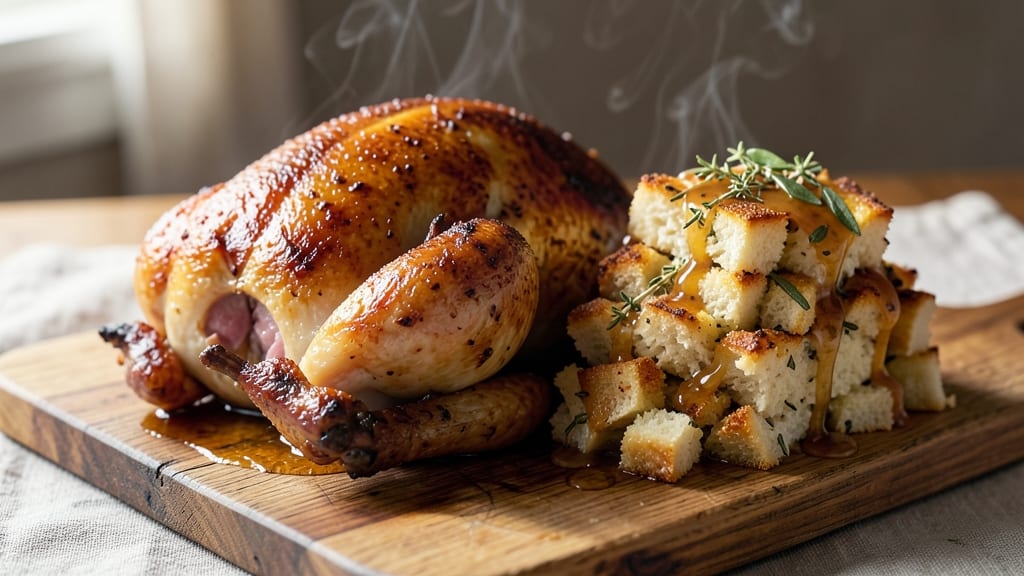
This old-fashioned chicken and dressing recipe brings the soul of Southern Sunday suppers to your kitchen table with every bite. The secret lies in perfectly seasoned, golden-brown chicken paired with a savory dressing that's crispy on the edges and tender inside—just like Grandma used to make.
I've perfected this combination over years of holiday hosting, ensuring the chicken stays juicy while the dressing develops rich, herby flavors from slow baking.
The beauty of this recipe is its simplicity and tradition. You'll start with a classic brined chicken, then move to a dressing made with day-old bread, aromatic herbs, and a well-balanced broth.
The key technique is baking the dressing separately in a skillet, which creates that signature crispy crust while keeping the center moist. This method delivers restaurant-quality results without requiring fancy equipment—just a few essential tools and about 3 hours of hands-off cooking time.
What you'll end up with is a complete Sunday meal that smells like home—juicy, golden chicken with crispy skin, paired with dressing that's fragrant with sage and thyme. The combination of tender meat and perfectly seasoned dressing creates a harmony of flavors that's impossible to resist.
This is the kind of dish that transforms an ordinary day into a special occasion, all while keeping the traditions alive.
The best part? This recipe scales beautifully for gatherings of any size, and leftovers reheat perfectly for sandwiches the next day. Whether you're hosting a family dinner or simply craving a taste of nostalgia, this old-fashioned chicken and dressing delivers comfort in every bite.
Let's get cooking with a recipe that brings the heart of Southern tradition to your kitchen.
Ingredients for old fashioned chicken and dressing
Six core ingredients transform into a Sunday classic that smells like tradition.
| Ingredient | Amount | Notes |
|---|---|---|
| Whole Chicken 🍗 | 4 lb | Bone-in, skin-on, preferably free-range |
| Kosher Salt 🧂 | 1 ½ cups | Diamond Crystal preferred for brining |
| Brown Sugar 🍯 | ½ cup | Packed, light variety |
| Fresh Sage Leaves 🌿 | ½ cup | Chopped, stems removed |
| Fresh Thyme Leaves 🌿 | ¼ cup | Chopped, stems removed |
| Day-Old Bread Cubes 🍞 | 6 cups | French or sourdough preferred |
| Chicken Broth 🍲 | 1 ½ cups | Low-sodium, homemade or quality store-bought |
| Unsalted Butter 🧈 | ½ cup | Cold, cubed for crispy dressing |
| Large Eggs 🥚 | 2 whole | For egg wash |
| Garlic Cloves 🧄 | 4 cloves | Minced for dressing |
| Yellow Onion 🧅 | 1 whole | Diced, yellow or white |
| Celery Stalks 🥬 | 3 whole | Diced, fresh for dressing |
| Black Peppercorns 🌶️ | 1 tsp | Freshly cracked |
| Ground Nutmeg 🌿 | ¼ tsp | Freshly grated preferred |
The chicken is the foundation—free-range makes all the difference in flavor and juiciness. Costco or your local butcher shop are great sources for a whole bird around 4 lbs. If you can't find free-range, organic is the next best option. For the brining, Diamond Crystal kosher salt dissolves more easily than table salt—this is critical for even seasoning. The brown sugar should be packed into the measuring cup to ensure proper moisture balance. Fresh herbs are non-negotiable here; dried just won't cut it for that authentic Southern aroma. Whole Foods or local farmers markets often carry the freshest sage and thyme.
No free-range chicken? Organic or conventional works too, though flavor depth will differ slightly. Stuck with stale bread? Toast it first to revive texture—just don't skip the day-old requirement. The broth can be homemade (simmer chicken bones with veggies) or store-bought like Swanson or Pacific Foods. For the dressing, Pepperidge Farm French bread cubes hold up best to crisping, but any sturdy bread works. The nutmeg should be freshly grated—pre-ground loses potency quickly. Penzeys sells whole nutmeg if you want to invest in quality. If you're missing an herb, dried oregano at half the amount can substitute in a pinch, though it won't be identical.
The brined chicken keeps 2 days in the fridge before cooking—plan ahead for Sunday suppers. Bread cubes for dressing should be prepped 1 day ahead and stored in an airtight container to dry properly. Once assembled, the dressing can be refrigerated up to 3 days before baking. Leftovers reheat beautifully—350°F for 15 minutes restores that crispy edge. For gatherings, double the dressing recipe—it's always the first to disappear.
Why You'll Love This Recipe
- One-Pan Magic: I swear by this recipe—just a whole chicken, a handful of herbs, and a sprinkle of brown sugar. The dressing bakes right in the cavity, so no extra pots or pans to wash. Honestly, I’ve made it on nights when I’d rather be watching TV than cooking.
- Herb-Packed Perfection: That combo of fresh sage and thyme? It’s like a warm hug in every bite. The brown sugar caramelizes just enough to give the dressing a subtle sweetness, while the kosher salt keeps it from being too heavy. My husband always asks for seconds—no joke.
- Leftovers for Days: This feeds a crowd but makes enough dressing for lunches all week. I’ll be real: I often double the recipe just to have extra. The chicken stays juicy, and the dressing reheats beautifully—perfect for sandwiches or a quick side.
- Budget-Friendly Feast: A whole chicken is cheaper than buying breasts, and the herbs stretch far. Between us, this is my go-to when I need a filling meal without breaking the bank. Plus, the dressing uses up scraps—no waste, just flavor.
Step-by-step instructions for old fashioned chicken and dressing
Transform a simple whole chicken and bread into a hearty Sunday centerpiece with this classic technique.
Prepare the Brine for Juicy Chicken
In a large stockpot or Dutch oven, combine the 4 lb whole chicken, 1.5 cups kosher salt, and 0.5 cup brown sugar. Add enough cold water to fully submerge the chicken by 1 inch. Stir gently to dissolve the salt and sugar completely. Place the pot in the refrigerator uncovered for 12-24 hours, turning the chicken once halfway through.
This long brine ensures the chicken stays moist through roasting while infusing it with deep flavor. The sugar helps caramelize the skin during cooking, creating that signature golden-brown crust. After brining, rinse the chicken thoroughly under cold water and pat it completely dry with paper towels—this step is critical for crispy skin.
Assemble the Classic Dressing
In a large mixing bowl, combine the 6 cups day-old bread cubes, 1.5 cups chicken broth, 0.5 cup unsalted butter (cold, cubed), 0.5 cup fresh sage leaves, 0.25 cup fresh thyme leaves, 4 cloves minced garlic, 1 whole yellow onion (diced), 3 whole celery stalks (diced), 1 tsp freshly cracked black peppercorns, and 0.25 tsp ground nutmeg. Mix gently with your hands until the butter begins to melt and coat the bread evenly.
The day-old bread is essential—it absorbs the broth without turning mushy. The cold butter adds richness and helps create crispy edges when baked. Don't overmix; just combine until the ingredients are evenly distributed. The dressing should hold its shape when pressed but still feel slightly moist.
Roast the Chicken and Prepare for Dressing
Preheat your oven to 375°F. Place the brined chicken on a rack set inside a roasting pan. Roast for 1 hour 15 minutes, basting with pan juices every 20 minutes, until the internal temperature reaches 165°F and the skin is golden brown and crispy. Remove the chicken from the oven and let it rest for 15 minutes before carving.
While the chicken rests, transfer the dressing mixture to a greased 9x13-inch baking dish. Press it down firmly but gently to compact the mixture. Cover tightly with aluminum foil and bake at 350°F for 45 minutes, then uncover and bake for an additional 15-20 minutes until the top is golden brown and crispy. The dressing should feel warm through the center but still hold its shape.
Combine and Finish
Carve the rested chicken into serving pieces, discarding the skin and bones. Place the chicken on top of the warm dressing in the baking dish. In a small bowl, beat the 2 whole large eggs with a fork, then drizzle this mixture evenly over the chicken and dressing. Return the dish to the oven at 350°F for 10-15 minutes until the egg wash is set and the chicken is heated through.
This final step creates a golden, glossy finish that ties everything together. The egg wash also helps crisp the dressing edges while keeping the chicken juicy. Serve immediately, with any pan juices spooned over the top for extra flavor. The combination of tender chicken and crispy, herby dressing makes this a perfect Sunday centerpiece.
Pro Tips For Making Old Fashioned Chicken And Dressing
- BRINE THE CHICKEN OVERNIGHT: I learned this the hard way—dry-brining a whole chicken for 12-24 hours in a mix of water, salt, and brown sugar (about 1/4 cup kosher salt + 2 tablespoons sugar per gallon) keeps the meat juicy and the skin crispy without overworking it. Skip the rush, and you’ll avoid a sad, dry bird.
- STACK THE DRESSING LOOSELY: This isn’t the prettiest method, but it’s the tastiest: pile the bread cubes (day-old works best) into the cavity in a single layer, then top with herbs and butter. The dressing stays moist without turning into a gluey mess—no need to pack it tightly like you’re stuffing a turkey.
- DON’T SKIP THE SAGE BATH: After roasting the chicken, pour the pan juices over the herbs (sage and thyme) in a saucepan and let it simmer for 2-3 minutes. This makes a real difference—those aromatics infuse the gravy instead of floating on top like forgotten garnishes.
- USE BUTTER, NOT OIL, FOR GRAVY: I was skeptical until I tried it: melt 2 tablespoons of cold butter into the pan drippings while stirring vigorously—it thickens the gravy instantly. No need for cornstarch or roux; just let the butter do the work while you’re basting the chicken. (Yes, even if you’re impatient like me.)
Troubleshooting your old fashioned chicken and dressing
Dry Dressing Problem
If your dressing turns out dry and crumbly, the bread cubes were likely too fresh or not properly dried. Day-old bread is non-negotiable—if you're short on time, spread cubes on a baking sheet at 250°F for 10 minutes to dry them out.
I also recommend using 1.5 cups broth for 6 cups bread—any less and the texture suffers. For extra moisture, add 2 tbsp melted butter after baking. 💡
Chicken Too Dry
Overcooked chicken happens when the internal temperature exceeds 165°F. Use a meat thermometer and pull the chicken when it hits 160-165°F—it'll carry over to 165°F while resting. Brining for 24 hours (not less) keeps it juicy.
For extra insurance, baste with pan juices every 20 minutes during roasting. If it's still dry, try adding 2 tbsp chicken broth to the pan before serving.
Dressing Not Crispy
The secret to crispy edges is baking uncovered at the end. After 45 minutes covered, uncover and bake 15-20 minutes until golden. If your dressing stays soggy, spread it in a thinner layer in your baking dish—½-inch thickness max.
For extra crunch, top with ¼ cup panko breadcrumbs before the final bake. A 9x13-inch dish works best for even crisping. 🔥
Bland Flavors
Fresh herbs are the flavor difference-maker—never substitute dried for fresh sage and thyme. If your dressing tastes flat, boost it with 1 tbsp lemon juice or ½ tsp smoked paprika before baking.
For the chicken, use Diamond Crystal kosher salt (it dissolves better than table salt) and don't skip the brown sugar in the brine. A pinch of MSG (½ tsp) can also enhance umami without overpowering.
Broth Too Salty
If your broth tastes overly salty, balance it with 2 tbsp apple cider vinegar or 1 tbsp lemon juice before mixing with the dressing. For future batches, use low-sodium broth or dilute store-bought broth with ¼ cup water.
The dressing should taste seasoned but not salty—adjust gradually. I keep Swanson low-sodium chicken broth on hand for consistent results. 🧂
Uneven Cooking
If the chicken cooks unevenly, rotate the roasting pan halfway through cooking. For the dressing, spread it evenly in the baking dish—no thick spots. If your oven has hot spots, place the dressing on the middle rack.
For extra even cooking, tent the chicken loosely with foil after 45 minutes to prevent over-browning. A Lodge cast iron roasting pan helps distribute heat more evenly than standard metal pans.
Nutrition facts
Frequently asked questions
Can I make this recipe with chicken breasts instead of a whole bird?
While possible, a whole chicken delivers the best flavor and juiciness for this traditional dish. Chicken breasts dry out more easily and lack the rich bone marrow flavors. If you must use breasts, brine them 2 hours max (not overnight) and bake at 350°F for 20-25 minutes until 165°F internal temp. For a whole-chicken experience, consider buying a smaller 3-4 lb bird instead.
What's the best bread for dressing that gets crispy edges?
Pepperidge Farm French bread or sourdough are ideal—they hold their shape and crisp beautifully. Avoid soft breads like brioche or challah. For extra crunch, cube the bread 1 day ahead and dry it on a baking sheet at 250°F for 10 minutes if using fresh. The key is day-old texture that absorbs broth without turning mushy.
How can I make this ahead of time for a holiday gathering?
Prepare the chicken brine 2 days ahead and store uncovered in the fridge. Assemble the dressing 1 day before, press into a baking dish, cover tightly, and refrigerate. On cooking day, bake the dressing 1 hour before serving (cover for 45 minutes, then uncover for 15 minutes to crisp). Roast the chicken 1 hour before serving and keep warm in a 200°F oven until ready to serve.
Why does my dressing always turn out soggy?
Soggy dressing usually means too much broth or not enough baking time. Use 1.5 cups broth for 6 cups bread—any more makes it wet. Press the dressing firmly into the baking dish and bake uncovered for the final 15-20 minutes to crisp the top. For extra insurance, spread it in a ½-inch thick layer and top with ¼ cup panko breadcrumbs before the final bake.
Can I substitute herbs if I don't have fresh sage or thyme?
For sage, try ½ tsp dried sage (but it won't be as aromatic) or ½ tsp dried marjoram as a substitute. For thyme, use ½ tsp dried thyme. If missing both, add 1 tsp dried rosemary or ½ tsp dried oregano for depth. Fresh herbs make the biggest flavor difference, but these work in a pinch. The dressing will still taste good—just less complex.