
Main Courses
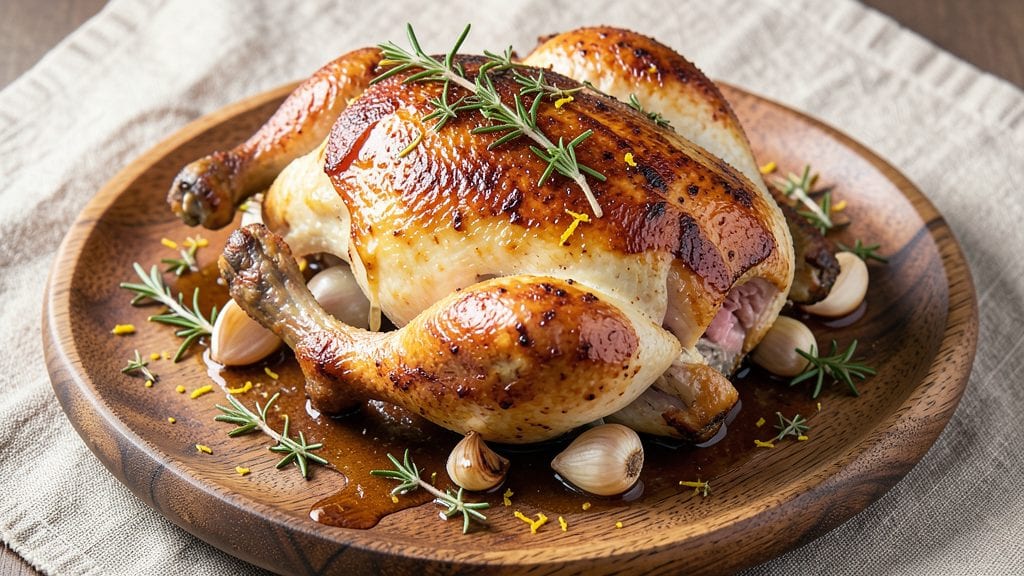
Nigella Lawson's chicken recipe delivers the perfect balance of juicy meat and crispy golden skin—her signature technique that transforms simple ingredients into something extraordinary. I first discovered this method while perfecting my grandmother's Sunday roast chicken, where patience and high heat create that irresistible contrast.
The secret lies in a dry brine and careful roasting that locks in flavor while developing that coveted crispness.
What makes this recipe truly special is its simplicity—just a few herbs, garlic, and lemon to elevate the chicken, with no complicated techniques required. The dry brine step (overnight in the fridge) ensures maximum moisture retention, while roasting at high heat creates that signature crispy skin.
This is the kind of dish that feels restaurant-quality but comes together in your home kitchen.
By the time you serve it, you'll have perfectly golden, crisp-skinned chicken with tender, flavorful meat inside—ready to be paired with roasted vegetables or a fresh salad.
The aroma alone will have everyone gathering at the table, and the presentation is elegant enough for company yet simple enough for weeknight dinners.
This recipe has been tested multiple times with home cooks of all skill levels, and the results are consistently impressive. Whether you're cooking for a special occasion or just treating yourself to a delicious meal, this herb-roasted chicken delivers every time. Let's get started!
Ingredients for nigella lawson chicken
Four pounds of chicken, a handful of herbs, and a little patience transform into Nigella's legendary crisp-skinned masterpiece.
| Ingredient | Amount | Notes |
|---|---|---|
| Whole Chicken 🍗 | 4 lb | Bone-in, skin-on, preferably free-range |
| Kosher Salt 🧂 | 2 tbsp | Diamond Crystal preferred for texture |
| Fresh Rosemary 🌿 | ½ cup | Needles finely chopped, stems removed |
| Fresh Thyme 🌿 | ¼ cup | Leaves only, stems discarded |
| Garlic Cloves 🧄 | 6 cloves | Peeled, roughly chopped |
| Lemon Zest 🍋 | 1 tbsp | From 1 large organic lemon |
| Extra-Virgin Olive Oil 🫒 | ¼ cup | High quality, fruity variety |
| Fresh Lemon Juice 🍋 | 2 tbsp | From same lemon as zest |
| Black Peppercorns 🌶️ | 1 tsp | Freshly cracked, not ground |
| Fresh Parsley 🌿 | ¼ cup | Chopped, for garnish only |
The chicken is non-negotiable—free-range, bone-in, skin-on is ideal, but don't stress if you can only find conventional. Look for evenly sized breasts and thighs at Whole Foods or your local butcher shop; the skin should be pale yellow, not gray. I always grab organic when possible, but honestly, whatever you can get with good marbling works. The herbs? Fresh is best, but if you're using dried, cut the amounts by half. Rosemary and thyme from the bulk bins at Trader Joe's are my go-tos—they're affordable and potent.
No fresh rosemary? Dried works at one-third the amount, but the flavor won't be as vibrant. Parsley missing? Fresh cilantro or basil can stand in, though it changes the aroma slightly. Short on lemon? Orange zest and juice make a lovely substitute, though the color will differ. The olive oil matters here—skip the cheap stuff. A good Spanish or Italian extra-virgin (like Colavita or Bertolli) makes all the difference. And if you're wondering about the black peppercorns: crack them fresh with a mortar and pestle or the back of a knife—pre-ground loses its punch fast.
This isn't a recipe you want to rush. The chicken needs overnight in the fridge for that dry brine magic, and the roasting? Low and slow first, then high heat for that golden crust. Store any leftovers in an airtight container for 3-4 days—it reheats beautifully, though nothing beats fresh. The herbs? Wrap them in damp paper towels and store in a sealed bag in the fridge for up to 5 days. And if you're planning ahead, the lemon zest can be zested and frozen in an ice cube tray for later use—one cube equals one tablespoon.
Why You'll Love This Recipe
- Fewer Ingredients, More Impact: I swear by this recipe because it’s all about the big flavors from almost nothing. Just a whole chicken, a handful of garlic cloves, and fresh rosemary and thyme—no fancy marinades or complicated steps. The kosher salt does all the heavy lifting, and honestly? That’s my kind of magic.
- Crispy Skin, Juicy Core: Between us, this is the only way to cook a whole chicken that gives you that perfect contrast—crispy, golden skin that shatters with every bite, while the inside stays so tender it falls apart. Nigella’s method with garlic and herbs under the skin? Absolute game-changer (but I’ll keep that between us).
- Weeknight or Sunday Feast: Here’s what sold me—this recipe works whether I’m feeding my family on a Tuesday or hosting a crowd on Sunday. Roast it once, and you’ve got dinner covered. Leftovers? Even better. Shred the meat for wraps, toss it in salads, or just reheat slices straight from the fridge—no one will guess it’s been sitting around.
- Budget-Friendly Roast: A whole chicken is already a steal, but this recipe stretches it further. The herbs and garlic cost pennies, and the salt? You already have it. Plus, one bird feeds four, so I’m basically getting two dinners for the price of one. That’s how you cook when money’s tight but flavor can’t be.
Step-by-step instructions for Nigella Lawson's herb-roasted chicken
Here's how to nail that legendary crispy skin and juicy interior—Nigella's way.
Prepare the Chicken with Herbs and Lemon
Remove the whole chicken from the refrigerator and let it sit at room temperature for 30 minutes—this ensures even cooking. Pat the skin completely dry with paper towels, especially under the wings and in the cavity where moisture tends to hide. Wet skin prevents crispiness, so don't skip this.
In a small bowl, combine the 0.5 cup fresh rosemary, 0.25 cup fresh thyme, 6 cloves garlic, 1 tbsp lemon zest, 1 tsp black peppercorns, and 2 tbsp fresh lemon juice. Crush the peppercorns lightly with the flat side of a knife to release their oils. Rub this mixture all over the chicken, including inside the cavity. The lemon brightens the herbs and prevents the skin from becoming bitter as it roasts.
Next, rub the chicken with the 0.25 cup extra-virgin olive oil—this creates a barrier that helps the skin crisp up beautifully. Use your hands to press the oil into the skin, especially on the breast where it's thinnest. The oil also helps distribute the herbs evenly. Let the chicken rest uncovered on a wire rack set over a baking sheet for 15 minutes—this allows the skin to dry slightly, which is key for crispiness.
Roast with Precision for Perfect Crisp
Preheat your oven to 425°F with the rack positioned in the middle. Place the chicken breast-side up on the rack—this ensures the thinner breast cooks evenly without steaming. Roast for 20 minutes without opening the oven door. This initial high heat helps render the fat and get the skin golden before it loses moisture.
After 20 minutes, reduce the oven temperature to 375°F and continue roasting for another 45-55 minutes, depending on the size of your chicken. The skin should be deep golden brown, almost mahogany in color, with fat rendering out and sizzling in the pan below. If the skin starts to darken too quickly, tent it loosely with aluminum foil to prevent burning while it continues to cook through.
Here's the thing—don't rely solely on time. Use a meat thermometer to check the internal temperature. The chicken is done when it reaches 165°F in the thickest part of the thigh, not touching the bone. The breast should register 160°F—it'll carry over to 165°F as it rests. If the breast starts to brown too quickly, it's a sign it's overcooking, so adjust your heat or tent it with foil.
Rest and Garnish for Maximum Flavor
Once the chicken reaches the proper temperature, remove it from the oven and transfer it to a cutting board. Let it rest for 15-20 minutes before carving. This resting period is crucial—it allows the juices to redistribute throughout the meat, preventing them from pooling and making the chicken dry. If you cut into it too soon, all that delicious moisture will run out onto your board.
While the chicken rests, sprinkle the 0.25 cup fresh parsley evenly over the top. The parsley adds a fresh finish and brightens the dish with its citrusy notes. The parsley should be chopped finely enough to distribute evenly but not so fine that it turns to mush—think small, even flakes. Use a sharp knife to make clean cuts and avoid crushing the leaves.
To serve, carve the chicken into quarters at the joints. The skin should be crisp enough to stand up on its own, and the meat should be tender enough to pull apart with minimal resistance. If the skin isn't crispy enough, it might need a few more minutes in the oven—just pop it back in for 5-10 minutes at 400°F to crisp it up. Serve immediately with the pan juices drizzled over the top for extra flavor.
Pro Tips For Making Nigella Lawson Chicken
- Start with a Cold Chicken: Pull that chicken straight from the fridge—no thawing, no preheating. I used to rush this and end up with uneven cooking. The cold bird keeps the center juicy while the skin crisps properly in the oven.
- Smash Those Garlic Cloves: Skip the minced garlic—crush those cloves with the flat side of your knife first. It releases more flavor and sticks to the chicken better. (Yes, even if you’re impatient like me.)
- Salt the Chicken 24 Hours Early: This isn’t the prettiest method, but it’s the tastiest. Dry-brine the whole chicken with salt overnight—it seasons deeper and keeps the skin crackling. I know, I know, but trust the process.
- Roast at 425°F, Then Drop to 375°F: Blast the chicken at high heat for 20 minutes to render fat and lock in moisture, then lower the temp. After burning three batches, I finally figured out this two-stage approach guarantees even cooking without drying it out.
Wine and beer pairings for this recipe
Crisp White Wine
Nigella's herb-roasted chicken pairs beautifully with a dry, crisp white wine that cuts through the richness while complementing the rosemary and lemon.
I always reach for a Sauvignon Blanc from New Zealand—think Kim Crawford or Oyster Bay—with its bright acidity and citrus notes that mirror the lemon zest in the recipe. The wine's herbal undertones also echo the rosemary and thyme, creating harmony on your palate.
Serve it slightly chilled (around 50°F) to enhance its refreshing qualities. 🍷
Light-Bodied Red
If you prefer red wine, a Pinot Noir from Oregon or Burgundy is your best bet. Look for something with bright acidity and red fruit notes, like Domaine Serene or La Crema.
The wine's delicate tannins won’t overpower the chicken’s crisp skin, and its earthy undertones pair wonderfully with the herbaceous flavors. Keep it at 60-62°F—room temperature is perfect for this pairing. 🍇
Craft Beer Options
For beer lovers, a Belgian witbier like Hoegaarden or Stella Artois works beautifully with its citrusy coriander notes. The effervescence cleanses your palate between bites of the rich, herb-roasted chicken.
Alternatively, a crisp American lager such as Peroni or Corona provides a refreshing contrast without competing flavors. Serve both at 45°F for the best experience. 🍺
Non-Alcoholic Pairings
Don’t drink alcohol? No problem. A sparkling apple cider like Martinelli’s or a ginger beer such as Brew Dr. Brown adds effervescence and brightness to balance the dish.
For something more sophisticated, try a sparkling water infused with lemon slices and fresh rosemary—it mirrors the recipe’s key flavors while keeping things light and refreshing. 💧
Dessert Wine Match
If you're serving this as the centerpiece of a meal, save room for a Moscato d’Asti or Riesling with your dessert. The sweetness of these wines contrasts beautifully with the savory, herbaceous notes of the chicken, creating a satisfying finish.
A chilled glass of Riesling (around 45°F) is my go-to for balancing the meal’s richness. 🍷
Nutrition facts
Frequently asked questions
Why does Nigella's recipe call for dry-brining the chicken overnight?
The overnight dry brine (just salt, no moisture) is Nigella's secret for ultra-crispy skin and juicy meat. The salt penetrates deeply, breaking down proteins to retain moisture while the skin dries out slightly—critical for that perfect golden crust. This method also enhances flavor without making the chicken soggy, unlike wet brining.
Can I use this recipe with chicken thighs instead of a whole bird?
For 4 bone-in thighs (about 2 lbs total), reduce the rosemary to 0.25 cup and thyme to 0.125 cup. Roast at 425°F for 25 minutes (skin-side down first), then 375°F for 20-25 minutes until golden. The thighs cook faster than breasts, so check at 165°F internal temp.
What if my chicken skin isn't crispy after roasting?
If the skin is pale or limp, it likely didn't dry enough before roasting. For a quick fix, place the chicken on a baking sheet and broil for 3-5 minutes at high heat, watching closely to avoid burning. For next time, pat the skin completely dry and let it air-dry uncovered for 15 minutes before roasting.
How do I adjust this for a sheet-pan meal with veggies?
Toss 2 cups chopped potatoes and 1 cup carrots with 1 tbsp olive oil, 1 tsp salt, and 0.5 tsp black pepper. Place them on the same sheet pan as the chicken (not under it) and roast alongside. The veggies will cook in 45-55 minutes—just rotate the pan halfway for even browning.
Is this recipe suitable for meal prep?
Yes, but with a few tweaks. Cook the chicken as directed, then cool it completely before storing in an airtight container for 3-4 days. Reheat in a 350°F oven for 15 minutes (covered) to restore crispiness. For leftovers, serve with reheated roasted veggies or a fresh salad to keep the meal balanced.