Side Dishes
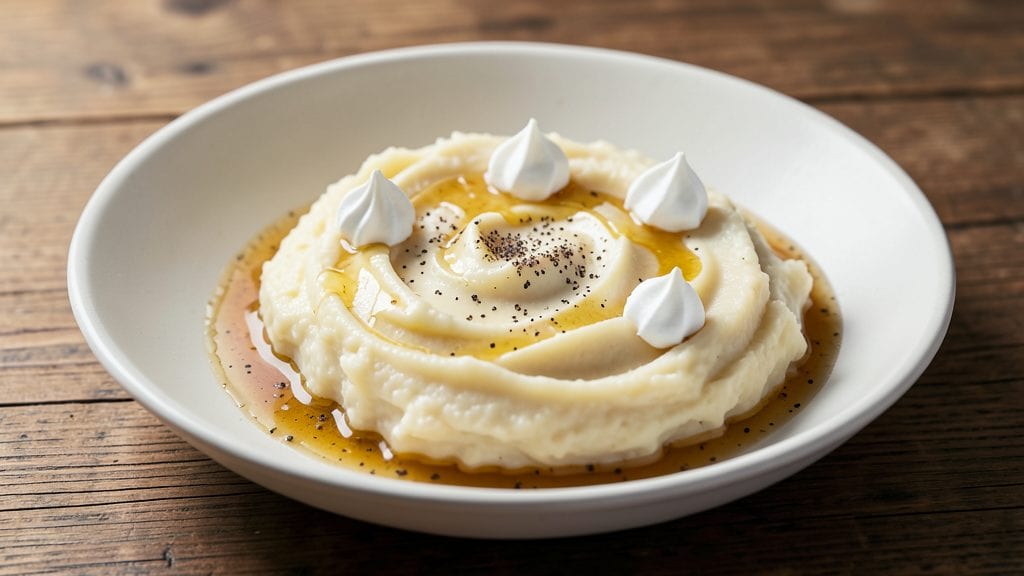
This mashed potatoes recipe with chicken stock transforms a classic side into a velvety, restaurant-quality dish that elevates any meal. The secret lies in using rich chicken stock instead of water or milk, which infuses every spoonful with deep, savory flavor while creating that signature ultra-smooth texture.
Growing up in small-town Georgia, I learned that the best mashed potatoes come from slow-cooked potatoes and proper technique—this recipe delivers both.
The process begins with perfectly cooked potatoes—no lumps, no graininess—thanks to a precise cooking method that ensures even doneness. We then incorporate warm chicken stock gradually while mashing, which creates that luxurious, velvety consistency that separates good mashed potatoes from exceptional ones.
The result is a dish so creamy and flavorful, it deserves a place at the center of your table.
What makes this recipe truly special is how the chicken stock works its magic: it doesn't just add moisture, it builds layers of umami that turn a simple side into a standout.
The texture is impossibly smooth, with just the right amount of body, and the flavor is rich and satisfying. This is the kind of mashed potatoes that makes people ask for seconds—and then thirds.
Ready in about 45 minutes, this recipe is perfect for holiday feasts, Sunday dinners, or any time you want to impress with a side dish that tastes like it came from a professional kitchen.
The technique is straightforward, but the results are anything but ordinary. Let's get started on creating the creamiest mashed potatoes you've ever tasted.
Ingredients for mashed potatoes with chicken stock
Six core ingredients transform simple potatoes into restaurant-quality mashed potatoes with chicken stock.
| Ingredient | Amount | Notes |
|---|---|---|
| Russet Potatoes 🥔 | 3 lb | Medium size, peeled and quartered |
| Chicken Stock 🍗 | 2 cups | Homemade or high-quality store-bought |
| Unsalted Butter 🧈 | ¾ cup | Cold, cut into small cubes |
| Heavy Cream 🥛 | ½ cup | Full-fat for best texture |
| Salt 🧂 | 1 ½ tsp | Kosher or sea salt |
| Black Pepper 🌶️ | ½ tsp | Freshly ground for best flavor |
| Garlic Cloves 🧄 | 2 cloves | Minced for subtle depth |
| Roasted Garlic 🧄 | 1 whole | Optional, for extra richness |
| Fresh Rosemary 🌿 | 1 tbsp | Chopped, optional garnish |
| Fresh Thyme 🌿 | 1 tbsp | Chopped, optional garnish |
| Parmesan Cheese 🧀 | ¼ cup | Freshly grated, for finishing |
The potatoes are the foundation, so Russet potatoes are non-negotiable—their high starch content creates that signature velvety texture. Buy them fresh from the grocery store's produce section, not the pre-washed bins, as they tend to dry out faster. For the chicken stock, homemade is ideal, but a high-quality store-bought brand like Pacific Foods or Kirkland Signature works perfectly. The butter should be cold and cubed—this prevents it from melting too quickly during cooking, ensuring you get that perfect creamy consistency. I always grab European-style butter from Plugrá at specialty stores for its higher fat content, but any good-quality unsalted butter will do.
No chicken stock? Homemade vegetable stock with a splash of soy sauce can work in a pinch, though the flavor won't be quite as rich. The heavy cream is essential for that ultra-smooth texture—half-and-half won't give the same luxurious result. Want to skip the dairy? Coconut cream works surprisingly well, though the flavor will be subtly different. The garlic and roasted garlic are optional but add incredible depth—if you're in a hurry, just use the minced garlic. For the herbs, dried rosemary and thyme at half the amount will work, but fresh is always better. The Parmesan is purely for finishing—don't skip it, as it adds that final umami punch that makes these mashed potatoes feel truly special.
Potatoes should be stored in a cool, dark place until ready to use—don't refrigerate them, as this can turn them sweet. The stock can be made ahead and stored in the fridge for up to 5 days or frozen for 3 months. Once mashed, these potatoes reheat beautifully—just warm them gently on the stove with a splash of milk or stock. For holiday gatherings, I always double the recipe and keep it warm in a slow cooker. The secret to keeping them creamy? Add a pat of butter and a splash of warm stock when reheating—it's the little tricks that make all the difference.
Why You'll Love This Recipe
- Five-Ingredient Magic: I swear by this lineup—Russets, stock, butter, cream, and salt—because it’s the bare minimum to get ridiculously good results. No fancy gadgets, no hidden spices, just pure, creamy perfection with zero fuss.
- Stock Boost: That chicken stock isn’t just for flavor—it’s the secret weapon. One ladle while boiling the potatoes, another when mashing, and suddenly you’ve got depth without extra work. Honestly, the difference is night and day compared to water.
- Weeknight Workhorse: I make this for lazy dinners, potlucks, or even breakfast-for-dinner nights. It reheats like a dream, pairs with everything, and honestly? My kids will eat it straight from the pot—no complaints.
- Budget Luxury: Butter and cream feel indulgent, but a little goes a long way here. A single stick of butter and a splash of cream stretch to feed four, and the stock? Homemade or store-bought, it’s cheap but makes the whole dish taste like you slaved over it.
Step-by-step instructions for ultra-smooth mashed potatoes
Here's how to achieve restaurant-quality mashed potatoes with velvety texture and rich flavor.
Boil Potatoes Until Fork-Tender
Place the 3 lb russet potatoes in a large pot and cover with cold water by about 2 inches. Add the 1.5 tsp salt and bring to a boil over high heat. Once boiling, reduce heat to medium-high and cook for 15-20 minutes until a knife slides in easily with minimal resistance.
The potatoes should be tender but not falling apart. I like to test by piercing with a paring knife near the center - it should go in smoothly but not through the other side. Drain immediately in a colander and return them to the pot to prevent cooling.
Create the Garlic-Infused Butter Base
While potatoes cook, melt the 0.75 cup unsalted butter in a separate saucepan over medium heat. Add the 2 cloves minced garlic and 1 whole roasted garlic (squeezed from its skin) and cook for 2 minutes until fragrant but not browned. Remove from heat and keep warm.
This garlic butter forms the flavor foundation. The roasted garlic adds subtle sweetness while the fresh minced garlic provides bright aroma. Keep the butter warm but not bubbling - it should be just liquid enough to blend smoothly.
Mash Potatoes with Garlic Butter
Using a potato masher or ricer, work in batches to mash the hot potatoes directly in the pot with the garlic butter. I prefer a ricer for ultra-smooth texture, but a masher works too. Add the 0.5 cup heavy cream gradually while mashing to prevent lumps.
You're aiming for a texture between fluffy and smooth - not gluey, but with no visible chunks. The cream should be fully incorporated with just a few small strokes of the masher. This is where the magic happens - the butter and cream create that luxurious mouthfeel.
Season and Finish with Herbs
Add the 0.5 tsp black pepper and fold gently with a wooden spoon. Taste and adjust seasoning - you may need an additional pinch of salt since the potatoes absorbed some during cooking. Stir in the 1 tbsp chopped fresh rosemary and 1 tbsp chopped fresh thyme.
The herbs should be finely distributed but visible as specks. For extra richness, fold in the 0.25 cup freshly grated parmesan cheese at the very end. The cheese adds umami depth and helps bind the potatoes together for a more cohesive texture.
Serve Immediately for Perfect Texture
Transfer the mashed potatoes to a serving bowl and cover tightly with plastic wrap pressed directly against the surface. Let rest for 5 minutes before serving - this allows flavors to meld and prevents the top from drying.
Serve immediately with the chicken stock reduced by half if desired. The potatoes should be light yet creamy, with visible garlic specks and herb flecks throughout. Each bite should deliver that perfect balance of buttery richness and velvety smoothness.
Pro Tips For Making Mashed Potatoes With Chicken Stock
- Boil Until Fork-Tender: Russets need to break down completely—no half-cooked lumps. Test with a fork: it should slide in like butter. If you’re rushing, you’ll end up with gluey, uneven mash. Trust me, the extra 5 minutes saves you from reboiling.
- Salt the Stock Early: Season your chicken stock before adding it to the potatoes. The flavor penetrates deeper, and you won’t taste the salt shock later. I used to add it at the end—big mistake. Now I season it like soup from the start.
- Warm the Cream First: Cold heavy cream in hot potatoes = curdling disaster. Heat it gently in a small saucepan until steaming, then whisk it in slowly. Your future self will thank you when the mash isn’t lumpy.
- Use a Potato Ricer: Skip the food mill or fork-mashing—it introduces air and makes potatoes gummy. A ricer gives you silky texture with zero effort. I know, it’s an extra tool, but it’s the thing that matters most for restaurant-quality results.
Regional styles of these flavors
Southern Comfort Style
In the Deep South, mashed potatoes get a hearty upgrade with smoked chicken stock—I use stock from my own heritage pigs raised on my farm. The key here is to finish with crispy fried onions and a touch of hot honey for that sweet-spicy kick.
I often serve these alongside pulled pork at family gatherings, where the smoky depth of the stock ties everything together beautifully. 🌶️
New England Creaminess
Up north, they take their mashed potatoes seriously—think extra heavy cream (I use 1 cup instead of half) and sharp white cheddar folded in at the end. The secret? A splash of dry sherry in the stock for brightness.
I learned this technique from a chef in Maine who swore by it for Thanksgiving. The result is a lighter, almost custard-like texture that’s perfect with roasted turkey. 🍷
British Pub Twist
Across the pond, pub-style mashed potatoes use chicken stock with a splash of ale—I recommend a malty English brown ale like Fuller’s ESB. The potatoes are mashed with butter and a bit of cream, then finished with crispy pancetta bits and a sprinkle of smoked paprika.
This version is rich enough to stand alone but still light enough for a hearty Sunday roast. 🍺
French Bistro Elegance
For a refined touch, French bistros elevate mashed potatoes with duck fat instead of butter and white wine-infused chicken stock. I add fresh chervil and a pinch of nutmeg for warmth.
The texture is silky, almost like a purée, and it pairs perfectly with roasted chicken. The nutmeg is key—just ¼ teaspoon—it adds depth without overpowering. ✨
German Potato Dumplings
While not traditional mashed potatoes, German Kartoffelpüree with chicken stock gets a rustic twist by adding grated apples and a splash of apple cider to the stock. The dumplings are shaped by hand and served with braised pork.
I’ve adapted this by mixing mashed potatoes with grated potato starch for a lighter texture—still creamy but with a delicate bite. 🍏
Modern Fusion Approach
For a contemporary take, I blend mashed potatoes with roasted garlic chicken stock and finish with truffle oil and microgreens. The truffle adds an earthy luxury, while the microgreens bring freshness.
This version works beautifully as a side for steak or as a base for loaded baked potatoes. The truffle oil should be high-quality—Artisan Truffle Co. is my go-to. 💫
Nutrition facts
Frequently asked questions
Why does chicken stock make mashed potatoes taste better than water or milk?
Chicken stock adds deep, savory umami that transforms simple mashed potatoes into a rich, flavorful side. The natural collagen and meaty notes from the stock create layers of taste that water or milk simply can't match. Plus, it enhances the potatoes' natural sweetness without overpowering them. Think of it as the secret ingredient that turns a good side into an exceptional one.
Can I make these mashed potatoes ahead of time?
Yes, but with a few key tricks! Prepare them up to 2 days ahead and store in an airtight container in the fridge. To reheat, warm gently on the stove with a splash of warm chicken stock and a pat of butter. Never microwave—they'll turn gluey. For best texture, reheat just until warmed through, then finish with fresh herbs and butter.
What's the best way to avoid lumps in the mashed potatoes?
<Use a potato ricer or fine-mesh strainer for ultra-smooth results. Never overwork the potatoes with a masher—just work them gently until mostly smooth, then finish with a wooden spoon. Add the heavy cream gradually while mashing to prevent clumping. The key is patience: let the heat from the potatoes melt the butter and cream naturally.
Can I substitute vegetable stock for chicken stock?
but expect a more neutral flavor profile. For best results, boost the umami by adding 1 teaspoon soy sauce or ½ teaspoon fish sauce to the vegetable stock. This mimics the savory depth of chicken stock. If you're making this for vegetarians, this substitution works beautifully with the added flavor enhancer.
How do I keep mashed potatoes from drying out when reheating?
Store them in an airtight container with plastic wrap pressed directly against the surface. When reheating, add 1-2 tablespoons warm stock or milk per cup of potatoes, plus a pat of butter. Cover and warm gently on low heat, stirring occasionally. The extra moisture prevents drying, while the butter maintains creaminess. This method works perfectly for holiday leftovers!