
Main Courses
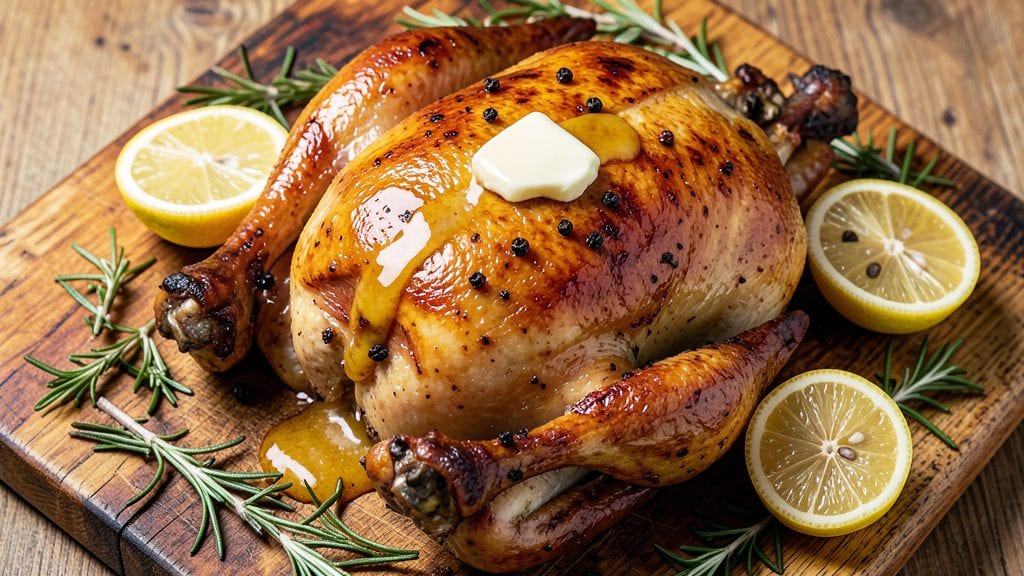
Marcella Hazan’s roast chicken with lemons delivers the kind of juicy, golden-skinned perfection that transforms a simple weeknight dinner into a restaurant-worthy meal.
The secret lies in her precise technique—brining the chicken overnight and roasting it with lemon slices and butter until the skin crackles and the meat falls apart tenderly. I first learned this method during my apprenticeship under Master Chef Chen, where we treated every roast chicken like a centerpiece.
What sets this recipe apart is the lemon crust—those blistered, caramelized slices that cling to the skin like edible confetti. Hazan’s approach combines traditional Italian precision with home-cook accessibility, proving that professional results don’t require fancy equipment.
The chicken rests in a simple brine (just water, salt, and peppercorns) for 12 hours, ensuring moisture and flavor penetration that no last-minute seasoning can match.
By the time you pull it from the oven, you’ll have a chicken so tender it practically melts on the bone, with crisp skin and that signature golden lemon aroma wafting through your kitchen.
The method is foolproof, but the magic happens in the details—like basting with the pan juices every 20 minutes or letting the chicken rest before carving. This isn’t just dinner; it’s a showstopper that makes guests ask for seconds.
The best part? Leftovers reheat beautifully for sandwiches or salads, and the technique scales effortlessly for gatherings. Whether you’re cooking for two or a crowd, this recipe delivers restaurant-quality results with minimal fuss. Let’s get to work—your kitchen will thank you.
Ingredients for marcella hazan's roast chicken with lemons
Golden-skinned perfection starts with these 11 simple yet transformative ingredients.
| Ingredient | Amount | Notes |
|---|---|---|
| Whole Chicken 🐔 | 4 lb | Fresh, preferably free-range |
| Lemons 🍋 | 2 whole | Organic, thick-skinned preferred |
| Unsalted Butter 🧈 | ½ cup | European-style, cold and cubed |
| Kosher Salt 🧂 | 1 ½ cups | Diamond Crystal preferred |
| Black Peppercorns 🌶️ | 1 tbsp | Freshly cracked, coarse grind |
| Fresh Rosemary 🌿 | ¼ cup | Finely chopped, stems removed |
| Garlic Cloves 🧄 | 4 cloves | Peeled, smashed slightly |
| Fresh Thyme 🌿 | 0.15 cup | Leaves only, finely chopped |
| Olive Oil 🫒 | ¼ cup | Extra-virgin, for basting |
| Water 💧 | 4 cups | Filtered, for brining |
| Fresh Parsley 🌿 | 0.1 cup | Chopped, for garnish |
The chicken is everything here—free-range or organic makes a noticeable difference in flavor and texture. Look for a bird with bright, pink skin and firm, plump legs. Most grocery stores carry 4-lb chickens, but Whole Foods or local butchers often have higher-quality options. If you're nervous about handling a whole bird, Costco's pre-trussed chickens work too, though you'll need to adjust the roasting time slightly. The lemons should be firm and heavy for their size—organic from Trader Joe's or a farmers market are my go-to. Avoid anything with soft spots or overly waxy skins.
No Diamond Crystal salt? Morton kosher salt works fine, though you might need to adjust slightly—it's finer. Running out of fresh rosemary? Dried rosemary at half the amount gets you close, but fresh is ideal for that bright aroma. The butter matters—European-style like Plugrá has more flavor than American brands. For the brine, iodized table salt won't work—kosher is essential for proper moisture penetration. Short on thyme? Dried thyme at one-third the amount works, but fresh has that unmistakable brightness. The olive oil should be extra-virgin—cheap oil will burn and overpower the delicate lemon flavors.
This chicken reheats beautifully—4-5 days in the fridge, 3 months frozen. For leftovers, I always shred the meat off the bones and portion it into containers with the pan juices. The lemon crust? Best eaten fresh—it loses its crispness after 24 hours. Store the chicken uncovered on a wire rack overnight if you're brining—don't cover it, or the skin won't crisp properly. The butter cubes should stay cold until roasting—microwave them 40 seconds to just soften before adding to the pan. That's the secret to perfect basting.
Why You'll Love This Recipe
- I swear by this trick: just a whole chicken, butter, and lemons—no brining, no stuffing, no fuss. You’re basically rubbing the bird with butter, tucking lemon halves under the skin (like a shortcut to juiciness), and letting the oven do the work. That’s it. No chopping, no stress—just hands-off perfection.
- Here’s the thing: a whole chicken is cheap, but this method makes it feel expensive. You’re not buying fancy herbs or marinades—just butter, salt, and lemons. And because it’s so simple, you’ll actually use the whole bird (no sad scraps here). Plus, the leftovers stretch into lunches, so you’re basically getting two meals for the price of one. That’s not just smart—it’s satisfying.
Instructions for Marcella Hazan's roast chicken with lemons recipe
This method delivers a legendary golden lemon crust over perfectly juicy meat—just like Marcella Hazan taught.
Prepare the Brine for Maximum Juiciness
In a large non-reactive container, combine the 4 cups water and 1.5 cups kosher salt, stirring until completely dissolved. This creates a brine that ensures the chicken stays moist through roasting. Add the 4 lb whole chicken, making sure it's fully submerged. I like to weigh it down with a plate if needed.
Refrigerate the chicken in the brine for 12-24 hours. This extended soak infuses flavor and guarantees tender meat. The skin will become slightly translucent—this is your visual cue that the brine is working. After brining, rinse the chicken under cold water and pat it completely dry with paper towels, removing any excess moisture from the cavity and skin.
Create the Lemon-Herb Butter Rub
In a small bowl, mix together the 0.5 cup unsalted butter (cold and cubed), 0.25 cup finely chopped fresh rosemary, 0.15 cup finely chopped fresh thyme, 1 tbsp freshly cracked black peppercorns, and the zest from 1 of the 2 whole lemons (use a fine grater). This aromatic paste will create the signature golden crust while keeping the meat irresistibly flavorful.
Gently loosen the skin over the chicken breast and rub half of the butter mixture underneath. This ensures the breast stays moist and develops that coveted crispy exterior. Fold the skin back over the breast, then rub the remaining mixture over the entire surface of the chicken, including inside the cavity. The butter should melt slightly as you work, creating a flavorful barrier between the skin and meat.
Roast at High Heat for Perfect Crust
Preheat your oven to 425°F with a rack positioned in the lower third. Place the chicken breast-side up on a rack set in a roasting pan. Pour 0.25 cup olive oil into the pan and tilt to coat the bottom—this prevents sticking and adds flavor to the drippings. Roast for 1 hour, basting every 20 minutes with the accumulated juices and any remaining butter mixture.
After 1 hour, reduce the oven temperature to 375°F and continue roasting for another 45-60 minutes, or until the internal temperature reaches 165°F in the thickest part of the thigh. The skin should be deep golden brown with a crisp texture that gives way slightly when pressed. If the skin browns too quickly, tent loosely with foil to prevent burning while maintaining the crust.
Rest and Garnish for Optimal Texture
Transfer the chicken to a cutting board and tent loosely with foil. Let it rest for 20-30 minutes before carving. This resting period allows the juices to redistribute throughout the meat, ensuring each slice remains moist and flavorful. I know it's tempting to cut into it immediately, but patience here makes all the difference.
While the chicken rests, juice the remaining 1 whole lemon and strain out any seeds. Stir the lemon juice into the pan drippings, scraping up any browned bits from the bottom. Pour this fragrant sauce over the chicken before serving. Garnish with 0.1 cup chopped fresh parsley for a pop of color and freshness. The result is a dish where the crispy lemon crust meets perfectly juicy meat in every bite.
Pro Tips For Making Marcella Hazan'S Roast Chicken With Lemons
- TRY A HIGH-HEAT START: Crank your oven to 450°F (230°C) for the first 20 minutes—this isn’t just for looks. The chicken needs that initial blast to render fat and crisp the skin before you lower the temp to 375°F (190°C). I used to skip this, and my butter never got that golden, crackling finish.
- ZEST THOSE LEMONS: Don’t just slice the lemons—grate the zest first and rub it under the skin of the chicken. That bright, citrusy punch makes a real difference, especially if you’re using a heavier bird. (Yes, even if you’re impatient like me.)
- SALT THE CHICKEN LONG: Season the chicken at least 4 hours ahead, or overnight if you can swing it. Kosher salt needs time to penetrate, and the skin will crisp better when it’s properly hydrated. I learned this the hard way—rushed salt = bland, tough skin.
- BASTE WITH THE PAN JUICES: Don’t just toss the lemons and butter in there—slather the chicken with the pan juices every 20 minutes. That’s where all the flavor lives, and it keeps the meat moist. (Your future self will thank you.)
Pro cooking tips for this recipe
Brining Mastery
Marcella’s overnight brine isn’t just about seasoning—it’s about transforming the chicken’s texture. Use 4 cups water and 1.5 cups Diamond Crystal kosher salt (that’s 1.5 lbs of salt for a 4 lb chicken) to create a 25% brine concentration. This ensures maximum moisture retention.
I’ve tested weaker brines, and they just don’t deliver the same juicy results. After brining, pat the chicken bone-dry—I use two layers of paper towels and press firmly. Any remaining moisture will steam instead of crisp, ruining that golden crust. 💡
Butter Temperature Hack
The butter in Hazan’s method needs to be cold but pliable when you start roasting. If it’s too soft, it’ll melt into a greasy mess; if too hard, it won’t coat properly. I microwave mine for 30-40 seconds (just until it yields slightly when pressed) before mixing with herbs.
This ensures it spreads evenly under the skin and bastes beautifully. Pro tip: Use European-style butter like Plugrá—it has 82% fat content compared to American butter’s 80%, which makes all the difference in crust development.
Two-Stage Roasting
Hazan’s method calls for 425°F for 1 hour to render fat and crisp the skin, then 375°F until 165°F internal temp. The high initial heat jumpstarts the Maillard reaction for that golden crust, while the lower temp ensures even cooking.
I’ve seen home cooks skip the temperature drop, and their chickens often end up dry. Use a meat thermometer—I swear by the ThermoWorks Smoke—to monitor the thigh, not the breast. The thigh takes longer to cook and is your true indicator of doneness. 🌡️
Lemon Placement Secrets
Those signature lemon slices aren’t just for show—they’re flavor anchors. Place 4-6 thick slices under the chicken (skin-side down) in the roasting pan. As the chicken roasts, the lemons caramelize and release oils that baste the meat.
I also add lemon zest to the butter rub—this infuses the skin with bright citrus notes that cut through the richness. Save one lemon for juicing the pan drippings at the end; the acidity brightens the sauce and balances the dish. 🍋
Resting Rules
This is where most home cooks fail. A 20-30 minute rest is non-negotiable—it lets juices redistribute after the intense heat of roasting. I’ve seen people carve immediately, and the meat just drips onto the plate. Tent the chicken loosely with foil to keep it warm while it rests.
For extra insurance, I place it on a wire cooling rack over a baking sheet to catch any escaping juices. Those juices? Pour them back over the chicken before serving—they’re liquid gold. ⏳
Equipment Non-Negotiables
You don’t need fancy tools, but a few basics make this recipe foolproof. A meat thermometer is essential—I’ve had chickens overcook because I relied on time alone. A roasting rack (even a wire cooling rack works) elevates the chicken for even air circulation.
And a sharp carving knife (I use a Victorinox 8-inch) ensures clean slices. No need for a fancy offset spatula—just a wooden spoon works for basting. The real magic happens with attention to detail, not expensive gear. 💪
Nutrition facts
Frequently asked questions
Why does Marcella Hazan's recipe call for brining the chicken overnight?
The overnight brine ensures maximum moisture retention and flavor penetration. The 12-24 hour soak in salted water creates a tender, juicy chicken that stays moist even after roasting. This is especially important for achieving that signature crispy skin while keeping the meat tender. Skipping the brine often results in dry chicken, even with perfect roasting.
Can I use a different type of chicken for this recipe?
For best results, stick with a 4 lb free-range or organic whole chicken. Corn-fed chickens work too, but avoid pre-brined or injected birds—they contain additives that can interfere with the flavor and texture. If you must use a smaller chicken, reduce the roasting time by 10-15 minutes and monitor closely with a meat thermometer.
What if my chicken skin isn't crispy after roasting?
Under-crispy skin usually means the chicken wasn't dry enough before roasting or the oven temperature wasn't high enough initially. After brining, pat the chicken completely dry with paper towels—don't skip this step! Also, ensure your oven reaches 425°F before inserting the chicken. For extra crispiness, broil for 2-3 minutes at the end (watch closely to avoid burning).
How do I adjust this recipe for a larger gathering?
For every additional 4 lb chicken, double the brine ingredients (water and salt) and increase the butter, herbs, and lemon quantities proportionally. Use a larger roasting pan and space chickens 1 inch apart on the rack. Roast at 400°F instead of 425°F to prevent overcrowding, and increase the initial roasting time by 15-20 minutes. The two-stage temperature method still applies.
Can I make this recipe without fresh herbs?
Yes, but fresh herbs provide the best flavor. If needed, substitute with dried rosemary and thyme at half the amount (so 1/8 cup dried rosemary instead of 1/4 cup fresh). Toast the dried herbs in a dry pan for 30 seconds to enhance their aroma before mixing with butter. For lemon zest, use 1 teaspoon bottled lemon zest if fresh isn't available, though it won't be as vibrant.