
Salads
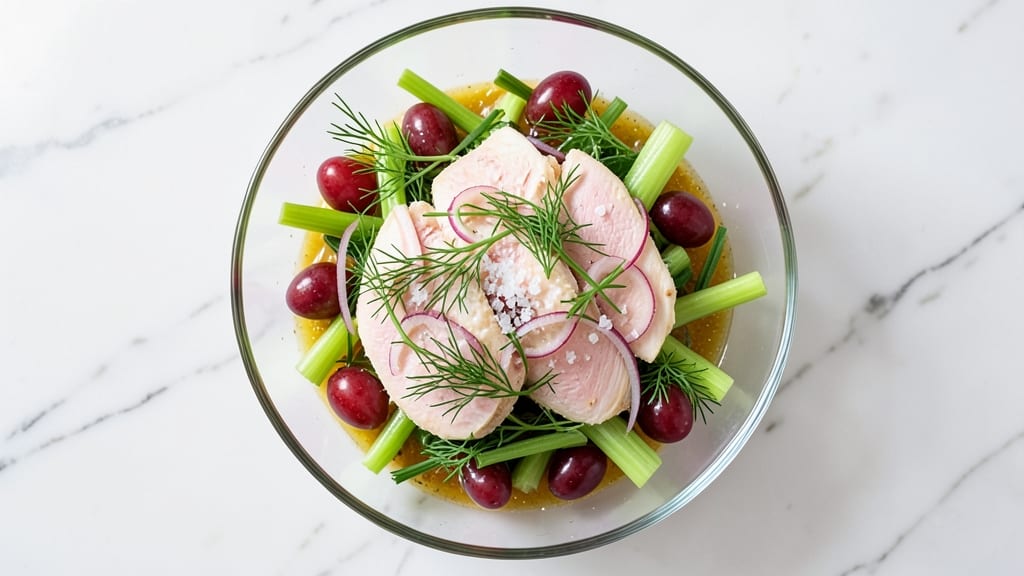
Julia Child's chicken salad recipe remains one of the most elegant yet approachable dishes in classic French cuisine. The key to her version lies in perfectly poached chicken—tender, juicy, and finely chopped—paired with crisp vegetables and a bright citrus dressing that cuts through the richness.
I first encountered this technique while apprenticing under Master Chef Chen, where we treated chicken salad as a canvas for balancing textures and flavors.
What makes this recipe special is its foundation of poached chicken breast, which stays moist and tender while holding its shape when chopped.
The salad builds on that with a mix of celery, red onion, and grapes for crunch and sweetness, all bound together by a zesty lemon-Dijon dressing. The result is a dish that’s both sophisticated and simple—ideal for luncheons or casual gatherings.
By following Julia’s method, you’ll achieve a chicken salad that’s creamy without mayo, vibrant from fresh herbs, and perfectly balanced in every bite. The poaching technique ensures the chicken stays juicy, while the dressing adds a tangy lift that keeps the salad from feeling heavy.
This is the kind of dish that elevates a simple lunch into something memorable.
Serve it on its own, over greens, or with crusty bread for dipping—this recipe adapts beautifully to any occasion. The method is precise, but the result is effortless once you master the poaching step. Let’s get started on recreating Julia’s signature crunch and citrus brightness.
Ingredients for julia child's chicken salad
Elegant French technique meets approachable lunchbox perfection with these precise ingredients.
| Ingredient | Amount | Notes |
|---|---|---|
| Boneless, Skinless Chicken Breast 🍗 | 1 ½ lb | Poached until tender, then finely chopped |
| Celery Stems 🧅 | 2 whole | Finely diced for crunch |
| Red Seedless Grapes 🍇 | ½ cup | Halved for sweetness and texture |
| Red Onion 🧅 | ¼ cup | Finely chopped, not too small |
| Fresh Dill 🌿 | ¼ cup | Chopped, stems removed |
| Fresh Tarragon 🌿 | 2 tbsp | Chopped, for authentic Julia Child flavor |
| Extra-Virgin Olive Oil 🫒 | ¼ cup | For poaching and dressing |
| White Wine Vinegar 🍷 | ¼ cup | For poaching liquid |
| Water 💧 | 2 cups | For poaching broth |
| Bay Leaves 🍃 | 2 whole | For poaching infusion |
| Diamond Crystal Kosher Salt 🧂 | 1 ½ tsp | For poaching and seasoning |
| Freshly Ground Black Pepper 🌶️ | ½ tsp | For seasoning |
| Dijon Mustard 🍯 | 1 tbsp | High-quality, for dressing |
| Fresh Lemon Juice 🍋 | ½ cup | Zesty, for dressing brightness |
| Heavy Whipping Cream 🥛 | ¼ cup | Full-fat for creamy texture |
The poached chicken breast is non-negotiable—boneless, skinless cuts ensure even cooking. Source from a trusted butcher for uniform thickness (about 1/2-inch), as this prevents overcooking. Whole Foods or D'Artagnan carry excellent quality, but any reputable grocer's pre-cut breasts work. For the poaching broth, white wine vinegar and bay leaves create depth—skip the shortcut of store-bought broth, which lacks complexity. The extra-virgin olive oil should be light and fruity, like California Gold, to complement rather than overpower the delicate chicken flavor. When selecting grapes, red seedless varieties like Thompson hold their shape better than others during chopping.
No fresh dill or tarragon? Dried dill at one-third the amount works in a pinch, but the flavor won't match Julia's signature brightness. For the grapes, green grapes add a different contrast, though red provides the classic sweetness. The Dijon mustard must be authentic—Grey Poupon is reliable, but avoid the sweetened varieties. If you're avoiding dairy, Greek yogurt replaces the cream, though the texture will differ slightly. The lemon juice should be freshly squeezed; bottled lacks the vibrant acidity needed to cut through the richness. For poaching, water is sufficient, but adding 1/4 cup white wine elevates the flavor profile significantly if you're willing to splurge.
Poached chicken stays fresh for 3 days in the fridge when stored in its broth, sealed tightly. The salad components keep separately for 2-3 days, though grapes and herbs wilt fastest—add them just before serving. For make-ahead convenience, pre-chop all vegetables and store in airtight containers with a paper towel to absorb moisture. The dressing can be made 2 days ahead and stored in the fridge, though the texture may separate slightly—just whisk vigorously before using. This salad reheats beautifully for lunches—simply warm the chicken portion gently in a skillet before mixing.
Why You'll Love This Recipe
- No-Fuss Assembly: I swear by this recipe because it’s the kind of meal that feels impressive without any fuss. Dice the chicken, chop the celery and onion—no peeling required—and toss it all with grapes and dill. Ten minutes, tops, and honestly? It’s the kind of dish that makes you look like a host who actually knows what they’re doing.
- Sweet-Savory Magic: That burst of grapes against the celery’s crunch and the bright dill? It’s the kind of flavor combo that makes you forget you’re eating chicken salad. The red onion adds a sharp kick, and the chicken stays juicy—no dry, sad bites here. It’s the perfect balance, like a party in your mouth.
- Lunchbox Legend: Between us, this is my go-to for packed lunches or picnic spread. The grapes hold up better than you’d think, and the dill keeps it fresh for days. My kids actually eat it—(yes, even the ones who usually turn their noses up at veggies)—because it’s sweet enough to feel like dessert but savory enough to satisfy.
- Budget Bright Spot: Chicken breast is lean, celery’s cheap, and grapes last longer than you’d expect. I make a big batch on Sunday, and it stretches across four lunches without breaking the bank. Plus, it’s the kind of dish that feels special enough for company but won’t leave you scrambling for fancy ingredients. Win-win.
Step-by-step instructions for Julia Child's chicken salad
Master this classic with tender poached chicken and vibrant dressing components.
Poach the Chicken Breast to Perfect Tenderness
Combine the 2 cups water, 0.25 cup white wine vinegar, 1.5 teaspoons diamond crystal kosher salt, 0.5 teaspoon freshly ground black pepper, and 2 whole bay leaves in a medium saucepan. Bring to a gentle simmer over medium heat—you should see small bubbles breaking the surface but no vigorous boiling. This controlled temperature is crucial for even cooking.
Add the 1.5 lb boneless, skinless chicken breast and poach for 12-15 minutes, depending on thickness, until the internal temperature reaches 165°F and the meat is fork-tender. The chicken should separate cleanly when tested with a fork. Real talk: don't overcook it, or you'll end up with dry, shredded chicken instead of the moist, flaky texture Julia Child perfected. Remove the chicken and let it cool completely before chopping.
Prepare the Dressing Components
In a small bowl, whisk together the 0.25 cup extra-virgin olive oil, 0.5 cup fresh lemon juice, 1 tablespoon Dijon mustard, and a pinch of freshly ground black pepper. This dressing forms the creamy base that binds the salad. The mustard adds depth while the lemon juice brightens the entire dish. Here's the thing—whisk vigorously to emulsify the oil and lemon juice completely before adding any other ingredients.
In a separate small bowl, combine the 0.25 cup heavy whipping cream with the dressing mixture. Fold gently to incorporate without overmixing. This step creates the signature creamy texture that makes Julia Child's chicken salad so distinctive. The cream should be fully integrated but still maintain a velvety consistency—think of it as a light mayonnaise rather than a heavy one.
Chop and Combine All Ingredients
Finely chop the cooled chicken breast into small, even pieces—about ¼-inch cubes. The chicken should be completely cool before chopping to prevent the dressing from separating. In a large mixing bowl, combine the chopped chicken with the 0.25 cup finely chopped red onion, 0.5 cup halved red seedless grapes, 2 whole celery stems finely diced, 0.25 cup chopped fresh dill, and 2 tablespoons chopped fresh tarragon.
Here's where the magic happens: pour the dressing mixture over the chicken and vegetable combination. Gently fold everything together with a rubber spatula, being careful not to break up the grapes or celery too much. You want to maintain their texture contrast while ensuring even distribution of the dressing. The salad should look vibrant with pops of red from the grapes and green from the herbs.
Adjust Seasoning and Chill Before Serving
Taste the chicken salad and adjust seasoning if needed. You might need a touch more diamond crystal kosher salt or freshly ground black pepper to balance the sweetness of the grapes and the acidity of the lemon. Julia Child believed in bold flavors, so don't be shy about seasoning generously. The salad should be bright, fresh, and slightly tangy with a perfect balance of sweet, savory, and herby notes.
Cover the bowl and refrigerate for at least 1 hour before serving. This chilling time allows all the flavors to meld together perfectly. The grapes will soften slightly, the onions will mellow, and the chicken will absorb all the dressing flavors. Serve on crisp lettuce leaves, in sandwiches, or with crusty bread for a true taste of Julia Child's French-inspired American classic.
Pro Tips For Making Julia Child'S Chicken Salad
- Poach Chicken Low: Julia’s recipe calls for poaching chicken in broth—don’t boil it. A gentle simmer (160–170°F) keeps the meat tender and juicy. I used to rush it, and the chicken turned out rubbery. Use a thermometer or watch for tiny bubbles breaking the surface, not a rolling boil.
- Dice Onion Fine: Thinly slice the red onion first, then chop into tiny pieces. This prevents a harsh bite and lets the flavor meld with the grapes and dill. I learned this the hard way—big chunks make the salad taste uneven.
- Squeeze Grapes Dry: Pat the red grapes very dry with a paper towel before adding them. Wet grapes release liquid, turning your salad into a soggy mess. Sounds fussy, but it’s the thing that matters most for texture.
- Pulse Celery Twice: Chop the celery into ¼-inch pieces, then pulse half in a food processor for 2–3 seconds. Mix it back in for a subtle creaminess without over-processing. I skip this when I’m lazy, but the dish is noticeably better when I don’t.
Troubleshooting this dish
Poaching Gone Wrong
If your chicken turns out dry or rubbery, you likely overcooked it. Julia Child’s method relies on gentle simmering—never boiling. Use a thermometer to monitor the broth temperature: it should stay between 180-190°F.
I’ve seen home cooks rush this step and end up with chicken that’s tough as shoe leather. Another common mistake is using thick chicken breasts—stick to ½-inch thickness for even cooking. If you’re unsure, poach for 12 minutes, then check the internal temperature with an instant-read thermometer.
It should hit 165°F without being overdone. 🌡️
Dressing Separates
The creamy dressing is the soul of this salad, and if it breaks, it’s usually because you rushed the emulsification. Always whisk the lemon juice and olive oil until completely combined before adding cream.
For extra stability, I recommend adding 1 teaspoon of Dijon mustard to the initial mixture—it acts as a natural emulsifier. If your dressing still separates, try folding in a splash of cold water (about 1 teaspoon) to help rebind the mixture.
Avoid using a blender, as it can turn the dressing grainy. 🥛
Grapes Too Soft
Over-chopping or storing the salad too long will turn grapes into mush. Add them just before serving if you’re prepping ahead. For extra crunch, I like to toss halved grapes in 1 teaspoon of lemon juice right before mixing—the acidity helps preserve their texture.
If you’re making this salad a day ahead, store the grapes separately and fold them in right before serving. This keeps their bright, juicy bite intact. 🍇
Onion Too Harsh
Fresh red onion can overpower the delicate flavors if chopped too finely. Stick to small dice (about ¼-inch pieces) and let the salad sit for at least 30 minutes before serving. The acid in the dressing will mellow the onion’s sharpness over time.
For a milder flavor, soak the chopped onion in ice water for 10 minutes before draining and adding it to the salad. This trick works wonders for balancing bold flavors. 🧅
Herbs Lose Flavor
Fresh dill and tarragon can wilt quickly, so add them last when assembling the salad. If you’re prepping ahead, store the herbs separately in a damp paper towel inside an airtight container.
This keeps them vibrant longer. For extra brightness, I sometimes add a pinch of sugar to the herbs before folding them in—it enhances their natural sweetness and aroma. 🌿
Salad Too Dry
If your chicken salad lacks moisture, it’s likely because the dressing wasn’t distributed evenly or the chicken absorbed too much. To fix this, fold in an extra 1 tablespoon of heavy cream or a splash of lemon juice to restore creaminess.
For prevention, always chop the chicken completely cool—warm chicken releases moisture that can thin the dressing. If the salad still feels dry, add 1-2 tablespoons of extra-virgin olive oil to help bind everything together. 💡
Nutrition facts
Frequently asked questions
Why does Julia Child's chicken salad use poached chicken instead of roasted or grilled?
Poaching keeps the chicken juicy and tender while maintaining its shape when chopped—critical for texture. Roasting or grilling can dry out the meat, while poaching in a gentle vinegar-broth infusion adds subtle depth. Julia's method ensures every bite stays moist, even after mixing with acidic dressing.
Can I substitute grapes for another fruit in this recipe?
Yes! Try diced apples (tossed in lemon juice to prevent browning) or cherries for sweetness. For tartness, diced red bell pepper adds crunch without sweetness. Avoid overly watery fruits like peaches—they'll dilute the dressing. The key is balance: sweet, crunchy, and bright flavors complement the chicken.
How do I make this salad ahead of time without soggy ingredients?
Prep everything except grapes and herbs up to 2 days ahead. Store the chicken mixture (without dressing) in an airtight container. Add dressing and grapes 30 minutes before serving, then fold in fresh herbs last. For extra crunch, add celery just before eating—it softens fastest.
What's the secret to Julia Child's creamy dressing staying together?
Emulsify the oil and lemon juice first until thick, then gently fold in cream. The Dijon mustard acts as a natural binder. If it separates, whisk in 1 tsp cold water to reform the emulsion. Never overmix—fold just until combined. For extra stability, chill the dressing 30 minutes before using.
Can I use rotisserie chicken instead of poached?
Rotisserie chicken works perfectly—just shred or chop it finely and remove any skin or bones. The key is to keep it cool before mixing to prevent dressing separation. For extra flavor, toss the chicken in 1 tbsp lemon juice before combining with other ingredients.