
Main Courses
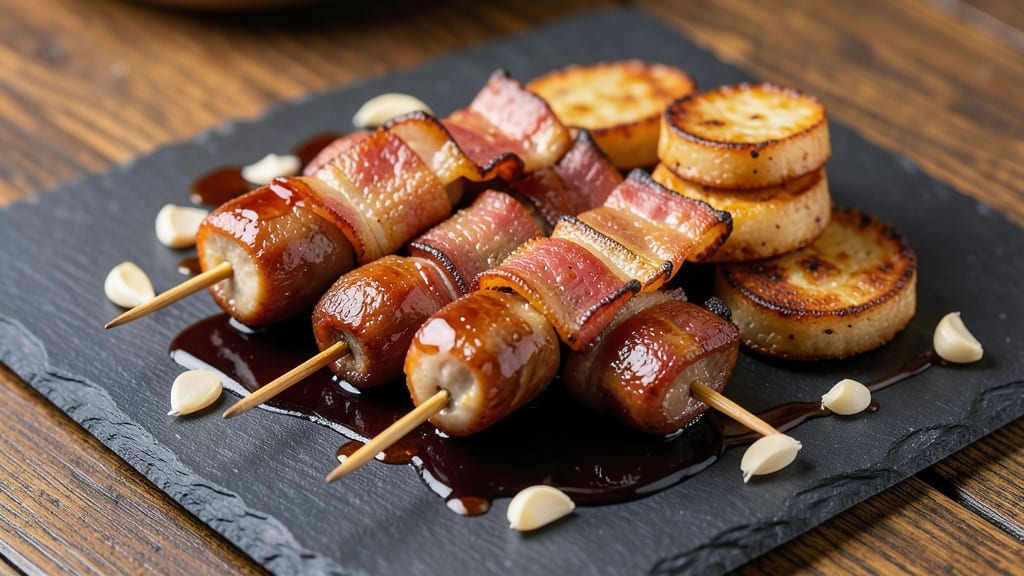
This chicken liver rumaki recipe delivers crispy bacon-wrapped bites with a rich rum-soaked glaze that elevates them from appetizer to showstopper. The technique combines traditional Japanese rumaki preparation with a modern twist—using high-quality bacon and a carefully balanced glaze that caramelizes beautifully.
I developed this version after years of experimenting with different marinades and cooking methods to achieve that perfect balance of crispy, tender, and flavorful.
The secret to success lies in proper preparation: thinly slicing the chicken livers, marinating them briefly in a mixture of soy sauce, rum, and spices, then wrapping them tightly in bacon. This method ensures the livers stay juicy while the bacon crisps to golden perfection.
The rum-soaked glaze adds depth and a subtle sweetness that complements the richness of the chicken and bacon. It’s a dish that feels indulgent yet remains balanced, making it perfect for special occasions or when you want to impress guests.
What you’ll end up with are bite-sized, crispy-edged rumaki that are tender on the inside and packed with flavor.
The glaze adds a glossy finish that makes them look as good as they taste, while the combination of rum, soy, and spices creates a complex flavor profile that’s both savory and slightly sweet. This recipe is designed to be foolproof, ensuring you achieve professional-quality results every time.
Whether you’re serving them as an appetizer or a main course, they’re guaranteed to disappear quickly.
The beauty of this recipe is its versatility—you can adjust the marinade to suit your taste, use different types of bacon, or even make it ahead of time for convenience. The instructions are straightforward, making it accessible for home cooks while still delivering restaurant-quality results.
Let’s get started on creating these irresistible bites that will have everyone asking for the recipe.
Ingredients for chicken liver rumaki
Twelve ingredients transform into restaurant-quality rumaki with crispy bacon and a caramelized rum glaze.
| Ingredient | Amount | Notes |
|---|---|---|
| Fresh Chicken Livers 🍗 | 1 lb | Trimmed of connective tissue |
| Thick-Cut Bacon 🥓 | 8 oz | High-quality, thick-cut preferred |
| Dark Rum 🍹 | ½ cup | High-proof, aged variety |
| Soy Sauce 🍶 | ¼ cup | Japanese-style preferred |
| Honey 🍯 | 2 tbsp | Wildflower or clover variety |
| Garlic Cloves 🧄 | 4 cloves | Minced, fresh preferred |
| Fresh Ginger 🌿 | 1 tbsp | Grated, aromatic variety |
| Olive Oil 🫒 | 1 tbsp | Extra-virgin for richness |
| Diamond Crystal Kosher Salt 🧂 | 1 tsp | Fine grain preferred |
| Freshly Ground Black Pepper 🌶️ | ½ tsp | Coarsely ground |
| Unsalted Butter 🧈 | 2 tbsp | Cold, cubed for glaze |
| All-Purpose Flour 🌾 | 1 tbsp | For thickening glaze |
The chicken livers are the foundation, so source them from a reputable butcher—look for vibrant red color and firm texture. Costco or Whole Foods typically carry high-quality, pre-trimmed livers, but if you're buying whole, trim all connective tissue and membranes meticulously. The bacon should be thick-cut and uncured—Applewood-smoked or hickory varieties from Oscar Mayer or Maple Leaf Farms deliver the best balance of flavor and texture. Fresh ginger and garlic should be brightly colored and aromatic, while the dark rum should be aged at least 3 years—Havana Club 7 or Diplomatico Reserva are excellent choices.
No thick-cut bacon? Regular bacon cut into strips works, but expect less crispiness. Substitute the rum with equal parts bourbon and apple cider vinegar for a non-alcoholic version. The honey can be swapped for maple syrup or agave nectar, though the flavor profile shifts slightly. If you prefer less heat, reduce the black pepper to 1/4 teaspoon. The olive oil and butter in the glaze are non-negotiable—use only extra-virgin olive oil and unsalted butter to maintain balance. For a gluten-free option, replace the flour with cornstarch in the glaze.
Fresh chicken livers should be used within 2 days and stored in the coldest part of the fridge. The bacon can be refrigerated for up to 1 week or frozen for 6 months. Prep the marinade and glaze ingredients 1 day ahead—they keep well in the fridge. Once assembled, rumaki can be refrigerated for 6 hours before cooking, but they’re best served immediately after crisping. The glaze reheats beautifully, so make extra for drizzling over finished bites or pairing with roasted vegetables.
Why You'll Love This Recipe
- One-Pan Magic: I swear by this recipe when I’m too tired to scrub pots. Just sear the livers, wrap them in bacon, and toss the whole thing on a sheet pan—no fussing with pans or timers. The rum glaze caramelizes right there while you sip your drink and pretend you’re not cooking.
- Sweet-Savory Bomb: That honey-soy-rum glaze? It’s the kind of balance that makes you pause mid-bite. The bacon’s smoky bite cuts through the richness of the livers, while the rum adds this deep, almost molasses-like richness that lingers. Honestly, I’ve made it for people who “don’t like offal,” and they’ve come back for seconds.
- Game for Any Gathering: Between us, this is my go-to for game day, book club, or when my in-laws show up unannounced. It’s fancy enough for company but unfussy enough that I can prep it ahead—just reheat and serve. The leftovers? Even better the next day, cold or warmed through.
- Budget-Friendly Luxury: Chicken livers are dirt cheap compared to steak, but they taste like you spent a fortune. A pound of bacon and a bottle of rum stretch across multiple meals, and the soy sauce and honey are pantry staples. I’ll be real: it’s the kind of dish that makes me feel like I’m feeding royalty without breaking the bank.
Step-by-step instructions for crispy bacon-wrapped chicken liver bites
Here's how to achieve perfectly seared, bacon-wrapped chicken livers with a rich rum-soaked glaze.
Prepare the Chicken Livers and Bacon
Begin by trimming any connective tissue from the 1 lb fresh chicken livers and pat them completely dry with paper towels. Remove the thick-cut bacon from the refrigerator and let it sit at room temperature for 10 minutes to soften slightly. This makes it more pliable for wrapping.
Cut the bacon into 16 equal strips, each about 3 inches long. For each piece of bacon, make a small slit along the center and insert one chicken liver through the opening. The liver should be positioned lengthwise through the bacon strip, creating a neat, even wrap. You'll end up with 16 bacon-wrapped liver bites.
Sear the Rumaki Until Golden Brown
Heat a large oven-safe skillet over medium-high heat. Add 1 tablespoon olive oil and allow it to get hot but not smoking. Arrange the bacon-wrapped livers in a single layer in the skillet, leaving a small gap between each piece. Sear for 3-4 minutes on each side until the bacon is golden brown and crispy, and the chicken livers are cooked through.
You'll know they're ready when the bacon releases easily from the pan and the livers show no pink in the center. Transfer the cooked rumaki to a plate and tent loosely with aluminum foil to keep warm. This step is crucial for developing that signature crispy texture and rich flavor.
Prepare the Rum-Soaked Glaze
In the same skillet, reduce the heat to medium and add 2 tablespoons unsalted butter. Allow it to melt completely, then add 4 cloves minced garlic and 1 tablespoon grated fresh ginger. Sauté for 30 seconds until fragrant, being careful not to let the garlic burn.
Pour in 0.5 cup dark rum and 0.25 cup soy sauce, scraping up any browned bits from the bottom of the pan. Bring to a simmer and cook for 3-4 minutes until the liquid reduces by about half. Stir in 2 tablespoons honey and 1 tablespoon all-purpose flour, whisking continuously until the mixture thickens into a glossy glaze. Season with 1 teaspoon diamond crystal kosher salt and 0.5 teaspoon freshly ground black pepper.
Glaze and Finish the Rumaki
Return the cooked rumaki to the skillet with the glaze, spooning the sauce evenly over each piece. Increase the heat to medium-high and cook for an additional 2-3 minutes, basting the rumaki with the sauce until they're fully coated and the glaze has caramelized slightly.
For the final touch, transfer the rumaki to a serving platter and let them rest for 2-3 minutes. This allows the glaze to set slightly and ensures each bite delivers that perfect balance of crispy bacon, tender liver, and sweet-savory rum glaze. Serve immediately while the bacon remains crisp and the glaze is still glossy.
Pro Tips For Making Chicken Liver Rumaki
- Trim the Fat First: Chicken livers bleed like crazy when raw—pat them dry with paper towels, then trim off any visible white fat or connective tissue. I learned this the hard way after my first batch turned into a greasy mess instead of crispy skewers. (Yes, even if they’re fresh from the butcher.)
- Cook Bacon to 180°F: Thick-cut bacon needs to hit 180°F internal temp before wrapping the livers—any less, and it’ll turn rubbery when seared. Use a meat thermometer or cut a strip to test; crispy bacon is non-negotiable here. (Your future self will curse you if you skip this.)
- Marinate Livers 30 Minutes: Toss the livers in the rum-soy-honey mix at least 30 minutes before threading—this tenderizes them and lets the flavors sink in. I used to skip this, and the result was always bland or tough. (Sounds weird, but it works: the alcohol breaks down the protein.)
- Skewer Bacon-Wrapped Livers Tight: Wrap each liver snugly in bacon, then secure with two skewers per piece—one through the center, one perpendicular. Loose wraps unravel mid-cook, and you’ll end up with bacon bits instead of a cohesive bite. (This isn’t the prettiest method, but it’s the tastiest.)
Regional styles of these flavors
Japanese Yakitori Roots
The rumaki technique originated from Japan’s yakitori tradition, where chicken skewers are grilled over charcoal. In this version, chicken livers replace traditional chicken pieces, wrapped in bacon—a fusion twist that blends Japanese precision with Western indulgence.
The name "rumaki" (魯肉) literally means "raw meat," though here it refers to the uncooked wrapped preparation before searing. I first encountered this style in Tokyo izakayas, where chefs would quickly sear these bites over high heat for maximum crispiness. 🔥
American BBQ Twist
Southern US chefs adapted rumaki by swapping traditional Japanese wrapping (like leeks or mushrooms) for thick-cut bacon, creating a smoky, crispy exterior that pairs perfectly with the rum glaze.
The addition of bourbon or whiskey instead of rum is common in barbecue joints, though I prefer the deeper caramel notes of dark rum. In Nashville, these bites are often served as part of a liver and bacon platter with spicy mustard or pickled onions. The key difference?
American versions tend to use more honey for sweetness, balancing the smokiness.
French Bistros' Upgrade
Parisian bistros elevated rumaki by incorporating foie gras or duck liver instead of chicken, but the technique remains identical. The French version often includes a touch of Cognac instead of rum, paired with a reduction of shallots and cream.
I’ve seen these served with a side of cornichons and a crisp white wine like Sancerre. The French approach focuses on luxury ingredients, while the Japanese version prioritizes bold flavors and simplicity. Both methods achieve that perfect sear-to-tender ratio.
Modern Fusion Adaptations
Today’s chefs are reimagining rumaki with global flavors: Korean versions might include gochujang and kimchi, while Mexican adaptations use chorizo instead of bacon. For a fusion twist, try wrapping the livers in prosciutto and glazing with a mix of balsamic vinegar and honey.
I once made a spicy rumaki with chipotle-infused glaze—adding 1 teaspoon chipotle powder to the marinade transformed the dish into a smoky, fiery bite. The possibilities are endless! 🌶️
Regional Serving Styles
In Japan, rumaki are typically served as izakaya snacks with a cold Asahi beer or sake. In the US, they’re often part of a charcuterie board with crackers and cheese. For a festive touch, arrange them on a platter with watercress and drizzle extra glaze over the top.
I love serving these at holiday gatherings—they’re easy to eat and always a crowd-pleaser. The glaze reheats beautifully, so you can make it ahead and warm it gently before serving.
Nutrition facts
Frequently asked questions
Why do chicken livers need to be trimmed before making rumaki?
Trimming connective tissue and membranes prevents bitterness and ensures tender, uniform bites. The livers should be smooth and free of any white or fibrous parts. Use a sharp knife and rinse them well after trimming to remove any residual blood.
Can I make rumaki ahead of time?
You can assemble the bacon-wrapped livers up to 6 hours ahead and refrigerate them, but cook them immediately before serving for the best texture. The glaze is best made fresh, though you can prep the marinade ingredients a day in advance. Never freeze assembled rumaki—the bacon loses its crispiness when thawed.
What if my bacon isn't crispy enough?
Cook the rumaki on medium-high heat until the bacon reaches golden brown (about 3-4 minutes per side). If it's still soft, transfer the skillet to the broiler for 1-2 minutes to finish crisping. Use high-quality, thick-cut bacon—it crisps better than thin slices.
Is there a non-alcoholic version of the rum glaze?
Yes! Replace the 0.5 cup rum with 0.25 cup apple cider vinegar plus 0.25 cup honey to mimic the sweetness and acidity. Add 1 teaspoon vanilla extract for depth. The glaze will still caramelize beautifully, though it’ll lack rum’s rich undertones.
How do I serve rumaki for a crowd?
Arrange them on a platter with watercress or arugula as a bed, then drizzle extra glaze over the top. Serve with toothpicks for easy handling and pair with crusty bread or pickled vegetables. For a festive touch, add a sprinkle of toasted sesame seeds or crushed peanuts.