
Main Courses
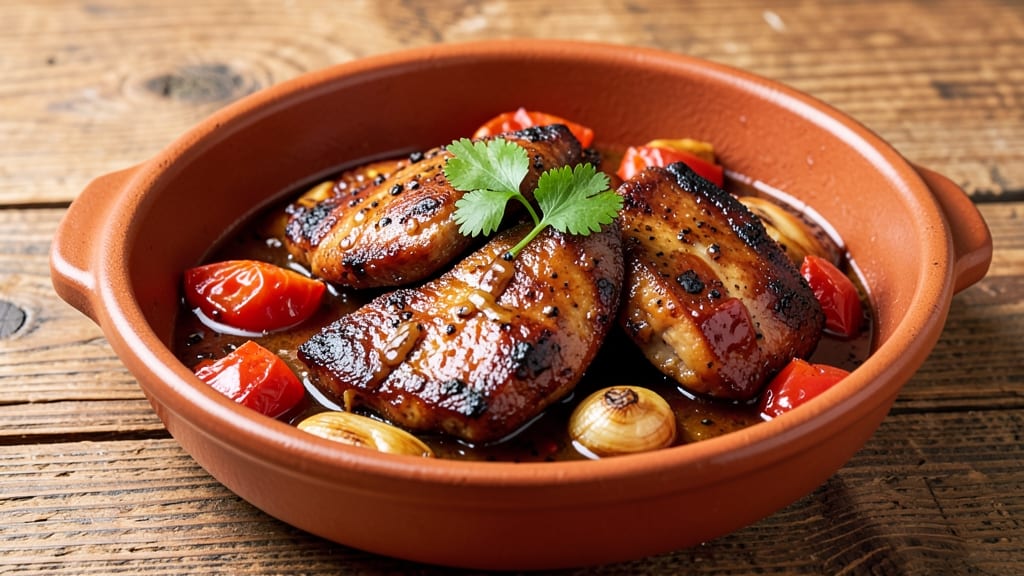
This chicken liver adobo recipe brings the bold, tangy-sweet flavors of Filipino comfort food to your kitchen with a technique that transforms tender livers into a rich, umami-packed dish.
The magic lies in the slow braise with soy sauce, vinegar, and aromatic spices—creating a sauce so deeply flavorful it clings to every bite like a hug from your favorite abuela.
I first made this during a late-night craving for something hearty but not heavy, and it became an instant family favorite.
The beauty of this dish is in its simplicity: just a handful of ingredients work together to create layers of complexity. Chicken livers absorb the adobo marinade beautifully, developing a glossy sheen and tender texture that melts in your mouth.
The key is patience—letting the flavors meld over low heat for 30 minutes ensures a sauce that's balanced between tangy, savory, and slightly sweet, with just the right amount of heat from black peppercorns. This isn't just a recipe; it's a taste of home.
By the time you serve this, you'll have a dish that pairs perfectly with steamed rice to soak up every last drop of that deeply caramelized sauce. The livers will be fork-tender, glistening under the light, while the sauce reduces to a velvety consistency that coats each bite.
It's the kind of meal that feels special enough for company but simple enough for a weeknight—proof that restaurant-quality Filipino flavors belong in your kitchen.
For those who love to experiment, try adding a splash of coconut milk at the end for extra richness or swapping in chicken thighs for a more substantial main. The technique stays the same, but the possibilities are endless. Let's get cooking—this dish is worth every minute of the wait.
Ingredients for chicken liver adobo
Pantry staples meet Filipino flavors—just 12 ingredients for restaurant-quality adobo.
| Ingredient | Amount | Notes |
|---|---|---|
| Chicken Livers 🍗 | 1 lb | Fresh, trimmed of connective tissue |
| Canned Tomatoes 🍅 | 1 can | 15 oz, San Marzano preferred |
| White Vinegar 💧 | ½ cup | Distilled for tanginess |
| Soy Sauce 🍶 | ¼ cup | Japanese or Filipino preferred |
| Garlic Cloves 🧄 | 6 cloves | Peeled, smashed for aroma |
| Black Peppercorns 🌶️ | 1 tbsp | Crushed for heat |
| Bay Leaves 🌿 | 2 whole | Fresh if available |
| Onion 🧅 | 1 whole | Yellow, sliced |
| Olive Oil 🫒 | 2 tbsp | Extra-virgin for richness |
| Salt 🧂 | 1 ½ tsp | Kosher or sea salt |
| Fresh Ginger 🌿 | 1 tbsp | Finely grated, fresh |
| Brown Sugar 🍯 | 1 tbsp | Light or dark |
The chicken livers are the star, so pick the freshest you can find—they should be bright red, not grayish. Most grocery stores carry them in the meat section near the chicken. Trader Joe's and Whole Foods usually have them pre-trimmed, which saves time. If buying whole, trim off any connective tissue or gristle—it's worth the extra minute. The canned tomatoes? San Marzano is ideal for its sweetness, but any good-quality crushed tomatoes will work. For the vinegar, distilled white vinegar is the standard, but apple cider vinegar adds a fruity twist if you're feeling experimental.
No soy sauce? Coconut aminos or tamari work in a pinch—just know the flavor will be slightly different. Fresh ginger not on hand? Ground ginger at half the amount gets you close, but it lacks the bright zing. The brown sugar can be swapped for white, but it won't caramelize as beautifully. For the garlic, roasted garlic adds a sweet depth if you're not in the mood for raw. The black peppercorns should be crushed just before adding—they release more aroma that way. And if you're short on bay leaves, dried thyme at one-third the amount is a decent stand-in.
This sauce gets better the next day—make extra and store it in the fridge for up to 5 days. The livers reheat beautifully in the sauce, so portion them out for easy lunches. For longer storage, freeze the sauce (without the livers) for up to 3 months. Just thaw and reheat on the stove. If you're prepping ahead, trim and refrigerate the livers in a sealed container for up to 2 days—they'll stay fresh and ready to braise.
Why You'll Love This Recipe
- Pantry Magic: I swear by this recipe when I forget to shop. Canned tomatoes, vinegar, and soy sauce? That’s my pantry’s way of saying, “We’ve got you.” No fresh herbs or fancy prep—just chop garlic, simmer, and let the acidity work its charm.
- Garlic Bomb: Between us, the garlic in this dish is the star. Those cloves caramelize into something rich and sweet while the vinegar cuts through the richness—like a flavor hug for your taste buds. (Yes, even on a Tuesday night.)
- Leftovers That Lie: I make this on Sundays and pretend it’s “planned” when it’s really just me being smart. The sauce thickens beautifully, so reheating it later? Still packed with that tangy, umami punch. My kids don’t even know they’re eating something “fancy.”
- Budget Power Move: Chicken livers are cheap, but they taste like a splurge. A pound feeds four, and the adobo sauce stretches for days. Honestly, it’s the kind of dish that makes me feel like I’m feeding a houseful without breaking the bank.
Step-by-step instructions for chicken liver adobo
Here's how to transform simple ingredients into a rich, tangy-sweet adobo with deep umami flavor.
Prepare the Chicken Livers
Rinse the 1 lb chicken livers under cold water and pat them completely dry with paper towels. This step is crucial—any moisture will prevent proper browning later. Trim away any visible connective tissue or silver skin, then slice the livers into ½-inch thick pieces. I like to keep them uniform in size so they cook evenly throughout.
Place the sliced livers in a bowl and season generously with the 1.5 tsp salt and 1 tbsp black peppercorns. Toss gently to coat evenly. Let them sit at room temperature for 15 minutes while you prepare the aromatics. This brief resting period helps the seasoning penetrate the meat and prevents them from curling up during cooking.
Build the Flavor Base
Heat the 2 tbsp olive oil in a large, heavy-bottomed skillet over medium heat. Add the sliced 1 whole onion and cook for 5-6 minutes until softened and beginning to caramelize at the edges. This develops sweetness that balances the tangy adobo sauce.
Add the 6 cloves garlic cloves and 1 tbsp finely grated fresh ginger to the skillet. Cook for 30 seconds until fragrant but not browned—this preserves their bright flavors. Be careful not to let them burn, as garlic can turn bitter quickly. The aroma should fill your kitchen, signaling it's time to move to the next step.
Sear the Chicken Livers
Increase heat to medium-high and add the seasoned chicken livers in a single layer. Cook undisturbed for 1-2 minutes per side until they develop a deep golden-brown crust. This sear creates the rich, caramelized flavor that forms the foundation of the dish. Don't overcrowd the pan—work in batches if needed, keeping the first batch warm while you cook the rest.
Once all livers are browned, transfer them to a plate and set aside. You'll notice they'll continue cooking slightly from their residual heat, so remove them while they still have a bit of pink in the center. This ensures they'll finish cooking perfectly in the braising liquid.
Create the Braising Sauce
Return the skillet to medium heat and add the 1 can canned tomatoes, breaking them up with a wooden spoon. Stir in the 0.5 cup white vinegar, 0.25 cup soy sauce, and 1 tbsp brown sugar. The mixture will bubble vigorously as the vinegar begins to cook off.
Add the 2 whole bay leaves and let the sauce simmer for 5-7 minutes until it thickens slightly and the raw vinegar smell mellows into a bright tang. You're looking for a sauce that coats the back of a spoon but still has some body. This is where the magic happens—the vinegar tenderizes the livers while creating that signature adobo tanginess.
Braise to Perfection
Return the chicken livers to the skillet and pour in just enough water to barely cover them—about ½ cup. Bring to a gentle simmer, then reduce heat to low. Cover and let it cook for 10-12 minutes, stirring occasionally, until the livers are fork-tender and the sauce has thickened into a glossy consistency.
The livers are done when they're just tender enough to pierce easily with a fork but still hold their shape. Taste the sauce and adjust seasoning if needed—you might want to add a splash more soy sauce for saltiness or a touch more vinegar for brightness. Remove the bay leaves before serving, as they can be quite bitter when chewed.
Pro Tips For Making Chicken Liver Adobo
- Sear Livers First: Hit the livers with a screaming-hot pan—no oil needed. They’ll render their own fat if you let them sit undisturbed for 2-3 minutes, turning golden before you even think about adding vinegar. I learned this the hard way after swimming in grease for three batches.
- Blot Those Livers Dry: Pat them thoroughly with paper towels—wet livers steam instead of sear. The difference between a crispy edge and a sad, gray lump is how much moisture you remove. (Yes, even if you’re impatient like me.)
- Simmer, Don’t Boil: After adding vinegar and tomatoes, keep the heat at a gentle simmer. Livers cook fast—5-7 minutes max—and boiling turns them rubbery. If it’s bubbling hard, drop the heat. Your future self will thank you.
- Toast the Garlic: Bloom the minced garlic in the pan after the livers release their fat, not before. Let it sizzle until it smells like a forest—this adds depth the raw garlic never will. (And skip the pre-minced garbage; fresh is non-negotiable.)
Essential equipment for this recipe
Skillet Essentials
The right pan makes all the difference with adobo—you need a heavy-bottomed skillet that handles high heat without warping. I swear by a 12-inch cast iron skillet like the Lodge Pre-Seasoned—it retains heat beautifully and develops a natural nonstick surface over time.
For a lighter option, a stainless steel skillet with a copper core (like All-Clad) distributes heat evenly and responds quickly to temperature changes. Avoid nonstick—it can't handle the high heat needed for proper browning. 🔥
Precision Tools
An instant-read thermometer (I use the ThermoWorks Thermapen) ensures your livers reach 165°F internal temperature without overcooking. A wooden spoon helps stir the sauce without scratching your pan, and a sharp chef's knife is essential for cleanly slicing onions and trimming livers.
Don't skip the fine-mesh strainer—it's perfect for rinsing livers and draining any excess liquid before searing. 🌡️
Filipino Kitchen Staples
While not strictly essential, a few Filipino-specific tools elevate your adobo game. A mortar and pestle lets you crush black peppercorns fresh for maximum aroma, while a bamboo steamer keeps rice perfectly fluffy on the side.
For authentic presentation, a banana leaf can wrap the dish for serving—just heat it briefly to soften. If you're serious about Filipino cooking, a clay pot (kalinga) for braising adds earthy depth to the flavors. 🌿
Budget-Friendly Swaps
No cast iron? A high-quality stainless steel Dutch oven (like Le Creuset) works perfectly for braising. Skip the thermometer? Use the finger test—livers should be tender but still slightly firm to the touch.
Need a vinegar substitute? Lemon juice in a 1:1 ratio works in a pinch, though it lacks the depth of white vinegar. A cheap microplane can grate ginger just as well as a fancy zester. Every kitchen has these basics—you just need to know how to use them. 💡
Sauce Thickening Tools
For that perfect adobo sauce consistency, keep a wire whisk handy to break up any tomato clumps. A small saucepan lets you reduce the sauce separately if you prefer it thicker.
For extra richness, a handheld immersion blender can purée the sauce slightly after cooking—just pulse for 10 seconds to create a silky texture. I also keep a fine-mesh sieve nearby to strain out bay leaves before serving. 🍲
Nutrition facts
Frequently asked questions about chicken liver adobo
Why do chicken livers need to be patted completely dry before cooking?
Any moisture on the livers causes them to steam instead of sear, resulting in a pale, rubbery texture rather than the beautiful golden crust you want. Patting them thoroughly ensures they develop that rich, caramelized flavor that's essential to adobo.
Can I use chicken thighs instead of livers for this recipe?
Chicken thighs work beautifully and are more forgiving for beginners. Simply increase cooking time to 20-25 minutes covered on low heat, and adjust the sauce quantity to 1 cup instead of ½ cup water. The same braising technique applies—just monitor closely to avoid overcooking.
What's the secret to balancing the tangy-sweet flavor in adobo?
The key is in the sauce reduction. Simmer the vinegar and tomatoes until the raw acidity mellows into a bright tang (5-7 minutes), then add the brown sugar to deepen the caramelization. Taste as you go—adjust with more soy sauce for saltiness or vinegar for acidity. The sauce should coat the back of a spoon but remain glossy, not syrupy.
How do I prevent chicken livers from becoming rubbery?
Overcooking is the main culprit. Remove livers from the pan when they're just tender (still slightly pink inside) and let them finish cooking in the braising liquid. Also, never crowd the pan during searing—work in batches if needed. The 10-12 minute covered braise time is critical for perfect doneness.
Can I make this recipe ahead of time?
This dish actually tastes better the next day! Store the cooked livers and sauce separately in the fridge for up to 5 days. Reheat gently in a skillet with a splash of water to restore moisture. For longer storage, freeze the sauce (without livers) for 3 months