Main Courses
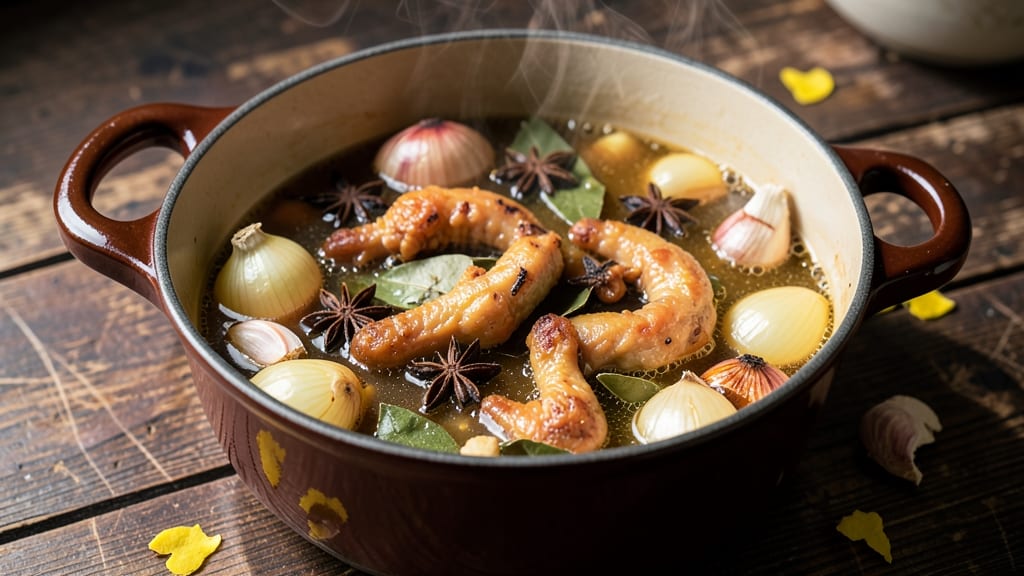
Transforming chicken feet into a deep umami stock unlocks flavors that elevate soups, braises, and broths to restaurant-quality depth. This recipe builds on traditional techniques to create a rich, gelatinous base perfect for pho, hot pot, or braised dishes—where every spoonful delivers complexity.
The process requires patience but rewards you with a stock that transforms simple meals into something extraordinary.
The secret lies in slow simmering the cleaned feet with aromatics like ginger, star anise, and bay leaves for 4-6 hours, allowing collagen to break down into velvety texture.
Unlike quick stocks, this method develops layers of savory richness that store-bought versions can't match. Each step—from soaking to straining—preserves maximum flavor while ensuring clarity.
By the end, you'll have a golden, aromatic stock with a natural gloss that signals depth of flavor. The gelatinous body clings to noodles, clings to vegetables, and transforms even humble ingredients into something luxurious. This isn't just a supporting recipe—it's the foundation that makes your dishes unforgettable.
Use it immediately in recipes like pho or hot pot, or freeze for future use. The versatility makes it a professional kitchen essential that deserves a place in any home cook's repertoire. Let's create this flavor powerhouse step by step.
Ingredients for chicken feet stock
Four pounds of chicken feet and twelve aromatic ingredients transform into a velvety, umami-rich stock foundation.
| Ingredient | Amount | Notes |
|---|---|---|
| Chicken Feet 🦶 | 2 lb | Fresh, cleaned, trimmed of excess skin |
| Yellow Onion 🧅 | 1 whole | Quartered, skin on for color |
| Garlic Cloves 🧄 | 6 cloves | Smashed, skin left on |
| Fresh Ginger 🌿 | 2 oz | Unpeeled, sliced into thick coins |
| Star Anise Pods 🌟 | 4 whole | Lightly crushed for aroma release |
| Bay Leaves 🍃 | 2 whole | Dried, standard supermarket variety |
| Black Peppercorns 🌶️ | 1 tbsp | Crushed, not ground |
| Water 💧 | 8 cups | Filtered or spring water preferred |
| Apple Cider Vinegar 🍏 | 1 tbsp | For initial soaking |
| Diamond Crystal Kosher Salt 🧂 | 1 ½ tsp | For seasoning, not iodized |
| Extra-Virgin Olive Oil 🫒 | 1 tbsp | For initial searing |
| Dried Shiitake Mushrooms 🍄 | 4 whole | Rehydrated in hot water |
| Cinnamon Stick 🌳 | 1 whole | Optional, for depth |
The chicken feet are the heart of this stock, and their quality determines the final result. Source from a reputable butcher or Asian market—look for feet that are plump, not dried out, with minimal odor. Costco or specialty meat counters often carry them pre-cleaned, which saves significant prep time. Fresh ginger and shiitake mushrooms should be vibrant—ginger should snap when bent, and mushrooms should have a rich, earthy aroma. Star anise and cinnamon can be found in the spice aisle of Whole Foods or Penzeys for optimal quality. The Diamond Crystal kosher salt is essential for proper seasoning without overpowering the delicate umami notes.
Substitutions are possible but may alter the stock's depth. No fresh ginger? Substitute with 1 teaspoon of ground ginger, though texture will differ. Star anise can be omitted but consider adding a pinch of anise seed or a bay leaf for complexity. Dried shiitake mushrooms can be replaced with cremini mushrooms, though the umami impact will be less pronounced. For a quicker version, pressure cook the stock for 1.5 hours instead of simmering, though gelatinous texture will be reduced. The apple cider vinegar is non-negotiable for initial soaking—it helps break down proteins for maximum extraction.
This stock develops best when simmered uncovered for 4-6 hours, allowing surface evaporation to concentrate flavors. Store in glass jars in the refrigerator for up to 5 days or freeze in 1-cup portions for up to 6 months. The gelatinous body thickens upon refrigeration, so reheat gently on low heat. For restaurant-quality results, strain through a fine-mesh sieve or cheesecloth to remove all impurities. The stock's versatility makes it ideal for pho, hot pot, or braised dishes where depth of flavor is paramount.
Why You'll Love This Recipe
- No-Fuss Simmer: I swear by this—just toss the chicken feet, onion, garlic, and ginger into a pot with water, add those star anise pods, and let it bubble. No peeling, no fancy prep, just set it and forget it while you handle the rest of dinner. Honestly, the hardest part is remembering to stir occasionally.
- Umami Bomb: That first sip? Chef’s kiss. The chicken feet break down into this rich, gelatinous goodness that’s deeper than any store-bought broth. The star anise and ginger add a warm, earthy kick—like a hug in a bowl, but way more flavorful.
- Stockpile Secret Weapon: Make a big batch and freeze it in ice cube trays. Need instant flavor for ramen, braising, or even soups? Pop a few cubes into your dish—no measuring, no waste. My freezer’s always stocked, and my wallet thanks me.
- Budget Magic: Chicken feet are dirt cheap compared to whole chickens, but they pack just as much flavor. A single batch stretches into multiple meals, and the leftovers? Perfect for risotto or stir-fries. I’ll be real: it’s my go-to for stretching groceries without skimping on taste.
Step-by-step instructions for chicken feet stock
Master this technique and you'll unlock a deep umami foundation for soups and braises that rivals commercial stocks.
Prepare and Blanch the Chicken Feet
Begin by rinsing the 2 lb chicken feet under cold water to remove any debris, then pat them thoroughly dry with paper towels. This step is crucial—moisture on the feet will prevent proper browning later. In a large Dutch oven, heat the 1 tbsp extra-virgin olive oil over medium-high heat until shimmering. Add the chicken feet in a single layer, working in batches if needed, and sear for 5-6 minutes per side until they develop a deep golden-brown crust. The color transformation signals the release of collagen and Maillard reactions that form the stock's rich flavor.
Once browned, remove the chicken feet and set them aside. Add the quartered yellow onion to the same pot and cook for 3-4 minutes until the cut edges soften slightly and begin to caramelize. This develops additional depth of flavor that will infuse the stock. Transfer the onions to a plate and reserve both the chicken feet and onions for the next step.
Soak and Simmer the Initial Stock
Return the Dutch oven to medium heat and add the 1 tbsp apple cider vinegar. The vinegar helps break down proteins and extract more gelatin from the chicken feet. Pour in the 8 cups water and bring to a boil. Add the 1 tbsp crushed black peppercorns, 4 lightly crushed star anise pods, 2 whole bay leaves, and the 1 whole cinnamon stick (if using). Stir gently to combine, then carefully add the browned chicken feet and onions back to the pot.
Reduce heat to maintain a gentle simmer—you should see small bubbles breaking the surface but no vigorous boiling. Skim any foam or impurities that rise to the surface during the first 15 minutes of cooking. This ensures a clear, clean stock. Let the mixture simmer uncovered for 1 hour, allowing the flavors to meld and the collagen to begin extracting from the chicken feet.
Add Aromatics and Shiitake Mushrooms
After the initial hour, add the 6 smashed garlic cloves (skin left on) and 2 oz sliced fresh ginger (unpeeled) to the pot. These aromatics will infuse the stock with their signature flavors. For the dried shiitake mushrooms, place the 4 whole mushrooms in a heatproof bowl and pour just enough hot water to cover them. Let them soak for 10 minutes while the stock continues to simmer gently. This rehydration process unlocks their umami-rich depth.
Using a slotted spoon, transfer the rehydrated mushrooms to the stock pot, discarding their soaking water. Increase heat to maintain a steady simmer and cook for an additional 3-4 hours. The longer simmering time is essential—it allows the chicken feet to fully break down, releasing collagen that will later gel the stock when chilled.
Season and Strain the Stock
When the stock has simmered for a total of 4-5 hours, it should have reduced slightly and developed a rich, golden color. Add the 1.5 tsp diamond crystal kosher salt and stir to dissolve. Taste the stock and adjust seasoning if needed—it should be well-seasoned but not overly salty, as you can always add more salt later when using the stock in recipes.
Line a fine-mesh strainer with cheesecloth or a coffee filter to catch any fine particles. Carefully pour the stock through the strainer into a large bowl or clean containers, pressing gently on the solids to extract all the flavorful liquid. The resulting stock should be clear with a deep amber hue and an intense aroma of umami, garlic, and ginger. Let it cool to room temperature before refrigerating or freezing for future use.
Store and Use the Finished Stock
The stock will continue to develop flavor as it cools. Once at room temperature, transfer it to airtight containers, leaving about 1 inch of headspace to allow for expansion if frozen. For best results, use the stock within 4-5 days when refrigerated or up to 3 months when frozen. When ready to use, thaw the stock in the refrigerator overnight and reheat gently on the stove.
This stock forms the backbone of rich pho, hearty braises, and velvety soups. Its deep umami flavor comes from the chicken feet's collagen and the concentrated aromatics. For even more depth, consider reserving some of the solids to make a quick umami paste by blending with a bit of the stock and oil.
Pro Tips For Making Chicken Feet Stock
- BLEACH THE FEET FIRST: Skip the raw smell by soaking chicken feet in cold water with 1 tablespoon baking soda for 20 minutes before cooking—it cuts the funk without masking flavor. (Yes, even if you’re impatient like me, this step makes a real difference.)
- CRUSH GINGER HARD: Use the flat side of a knife to smash fresh ginger into a paste—no peeling needed—so it releases flavor faster than thin slices. My grandmother swore by this, and she was right: the stock tastes deeper when the ginger’s juices blend in.
- SIMMER LOW AND SLOW: After the initial boil, reduce to the gentlest simmer you can manage—barely bubbles, like a lazy Sunday morning. I learned this the hard way: rushing it turns the stock cloudy and bitter.
- STRAIN TWICE FOR CLARITY: First strain through a fine-mesh sieve, then pour through a coffee filter or cheesecloth for extra smoothness. Sounds weird, but it works: the second pass catches the tiny bits that make stock look murky. (Your future self will thank you.)
Make-ahead tips for this chicken feet stock
Prep Ahead Strategy
Start by cleaning and blanching the chicken feet up to 3 days ahead—store them in a sealed container in the fridge. This saves time on cooking day and ensures they're ready to sear immediately.
I like to label containers with the date to track freshness. The blanching step (boiling for 10 minutes) removes impurities and preps them for browning. 💪
Slow Cooker Option
For hands-off cooking, transfer all ingredients (except salt) to a 6-quart slow cooker after searing. Cook on low for 8-10 hours or high for 5-6 hours, skimming foam periodically.
This method works perfectly for busy weeknights—just add salt at the end. The slow cooker maintains gentle heat, ideal for collagen extraction.
Freezer-Friendly Base
Make a double batch and freeze half immediately in 1-cup ice cube trays. Once frozen, transfer cubes to a labeled freezer bag. This portion control makes it easy to grab just what you need for recipes like pho or braises.
The cubes thaw quickly in the fridge overnight, ready for use. I keep a dedicated bag in my freezer labeled "Chicken Feet Stock" for easy access. ❄️
Stock Booster Kit
Prep your aromatics ahead by slicing ginger, crushing star anise, and quartering onions. Store them in a separate airtight container in the fridge for up to 5 days. When ready to cook, simply add them to the pot along with the pre-seared chicken feet.
This "booster kit" approach cuts cooking day prep time by 20 minutes while keeping flavors fresh.
Multi-Use Solids
After straining, don't discard the solids! Rinse them briefly and store in a sealed container for up to 3 days. These can be blended with a splash of stock and oil to make a quick umami paste for sauces or marinades.
I've used them to elevate simple stir-fries—just toss 1 tbsp paste with 1 tsp soy sauce and 1 tsp rice vinegar for instant depth. 💡
Weekly Stock Rotation
Plan to make stock every 2 weeks and freeze in 1-quart portions. Label each batch with the date—this ensures you always have fresh stock on hand. I keep one quart in the fridge for immediate use and rotate the freezer stock monthly.
This system prevents waste and guarantees you'll never run out when making pho or hot pot. The freezer stock maintains quality for 3 months if stored properly.
Nutrition facts
Frequently asked questions
Why do chicken feet create such a rich stock?
Chicken feet are packed with collagen and connective tissue that breaks down during slow cooking, creating a naturally gelatinous texture. The long simmering time (4-6 hours) transforms these elements into rich, umami-packed flavor that's impossible to replicate with chicken bones alone. This collagen also gives the stock its signature velvety body that clings beautifully to noodles and vegetables.
Can I use frozen chicken feet instead of fresh?
Yes, but with proper preparation. Thaw the frozen feet completely in cold water first, then follow the same cleaning and searing process as fresh. Frozen feet may release more impurities during cooking, so you'll need to skim more frequently during the first 30 minutes of simmering. The flavor difference is minimal when prepared this way.
How do I know when the stock is ready?
Your stock is ready when it develops a deep golden color and has reduced by about 20-25% from the original volume. The aroma should be intensely aromatic with notes of garlic, ginger, and umami. For best results, let it simmer until it passes the "gel test"—when chilled, it should form a slight jelly-like consistency when refrigerated for 2 hours.
What if my stock smells fishy?
This usually means the chicken feet weren't cleaned properly or the stock boiled too vigorously. To fix it, strain the stock immediately and return it to the pot. Add fresh aromatics (1 extra bay leaf, 1 crushed star anise) and simmer gently for another 30 minutes. The fishy odor should dissipate as the new aromatics overpower it. Always skim foam aggressively during the first 20 minutes to prevent this.
Can I make this stock without a Dutch oven?
Use a large stockpot with at least 8-quart capacity. The key is maintaining a gentle simmer—never let it boil vigorously. If your pot is too small, work in batches: brown half the chicken feet first, then add them to the simmering stock in stages. A heavy-bottomed pot helps prevent scorching, which can create bitter flavors.