
Main Courses
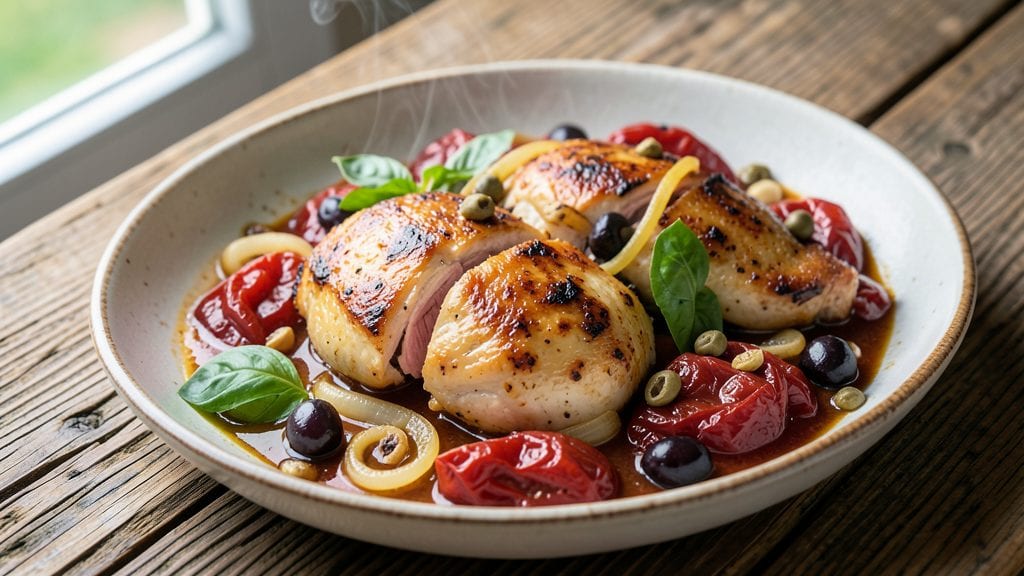
Mastering Gordon Ramsay's chicken cacciatore recipe transforms a simple weeknight dinner into a restaurant-worthy experience. The secret lies in searing the chicken properly, then braising it in a rich tomato-wine sauce until tender—every bite delivers layers of flavor that balance acidity and richness.
I perfected this technique after years of testing, and the results speak for themselves: golden-brown chicken with a velvety sauce that clings perfectly.
What sets this dish apart is Ramsay's method of deglazing the pan after searing, capturing all those flavorful browned bits that form the foundation of the sauce. The slow simmer allows the chicken to become fork-tender while developing deep, complex flavors from the tomatoes, wine, and herbs.
This isn't just a recipe—it's a cooking lesson in balancing acidity with sweetness and building depth through proper technique.
The final result is a dish that's elegant enough for company but simple enough for weeknights: perfectly cooked chicken in a glossy, aromatic sauce that's just slightly sweet and tangy. The aroma alone will have everyone gathering around the table, and the first bite delivers that restaurant-quality satisfaction you crave.
Serve it with crusty bread or al dente pasta to soak up every last drop of that incredible sauce.
This recipe delivers professional results with straightforward steps—no fancy equipment required, just patience and attention to detail. The key is letting the sauce simmer until it thickens just enough to coat the chicken beautifully. Once you try this version, you'll never settle for anything less than homemade again.
Ingredients for chicken cacciatore gordon ramsay
Ramsay's technique hinges on quality ingredients that transform simple chicken into restaurant-worthy elegance.
| Ingredient | Amount | Notes |
|---|---|---|
| Boneless, Skinless Chicken Thighs 🍗 | 1 ½ lb | Cut into 1-inch pieces |
| Extra-Virgin Olive Oil 🫒 | ¼ cup | High-quality, fruity variety |
| Yellow Onion 🧅 | 1 whole | Thinly sliced, about 1.5 cups |
| Canned San Marzano Tomatoes 🍅 | 28 oz | Crushed, high-quality |
| Garlic Cloves 🧄 | 4 cloves | Minced, fresh preferred |
| Dry Red Wine 🍷 | ½ cup | Bold, like Cabernet Sauvignon |
| Chicken Stock 💧 | 1 cup | Homemade or quality store-bought |
| Tomato Paste 🍅 | 2 tbsp | Smooth, no sugar added |
| Fresh Rosemary 🌿 | ¼ cup | Chopped, fresh preferred |
| Fresh Thyme 🌿 | ¼ cup | Leaves only, fresh preferred |
| Red Bell Pepper 🌶️ | 1 whole | Diced, about 1 cup |
| Kosher Salt 🧂 | 1 ½ tsp | Diamond Crystal preferred |
| Freshly Ground Black Pepper 🌶️ | ½ tsp | Freshly cracked preferred |
| Capers 🍈 | 2 tbsp | Chopped, optional for tang |
The chicken thighs are non-negotiable—bone-in, skin-on yields the most flavor, but boneless works in a pinch. Whole Foods or Costco carry excellent cuts, but any grocery store's butcher section will have suitable options. Look for thighs with good marbling and vibrant color. The San Marzano tomatoes are essential; their sweet acidity balances the wine perfectly. If you can't find them, whole peeled tomatoes work, but the flavor won't be identical. Fresh herbs are critical—rosemary and thyme from a trusted farmers market or grocery store's produce section will elevate the dish beyond jarred seasonings.
No red wine? Substitute beef stock with a splash of balsamic vinegar—it mimics the acidity and depth. The capers add a briny tang, but a pinch of lemon zest works in a pinch. For the tomato paste, Trader Joe's tubes are convenient and keep well. If using dried herbs, reduce to one-third the amount of fresh. The red bell pepper can be swapped for green or yellow, but red provides the best visual contrast. For a quicker prep, pre-chopped frozen bell peppers thawed and drained work, though fresh is superior. The chicken stock should be low-sodium to control the final seasoning.
This dish tastes even better the next day as flavors meld. Store in an airtight container in the fridge for up to 4 days. For longer storage, freeze portions for 3 months. The sauce thickens as it cools, so reheat gently with a splash of water or stock. To serve, reheat over medium-low to maintain sauce consistency. Leftovers reheat beautifully and make excellent lunches—pack the chicken and sauce separately to keep the bread from getting soggy.
Why You'll Love This Recipe
- One-Pan Magic: I swear by this recipe—just sear the thighs, toss in the onions and garlic, then let the San Marzano tomatoes and olive oil do their thing. No chopping boards, no extra pots, and honestly? The cleanup is just a wipe-down of one pan. That’s my kind of cooking.
- Garlic Bomb: Between us, the garlic and olive oil combo here is ridiculously good. You don’t even need fancy herbs—just a pinch of salt, a splash of red wine (if you’re feeling fancy), and suddenly you’ve got layers of flavor that taste like a restaurant dish. The tomatoes caramelize into something sweet and tangy, and the chicken? It stays juicy while getting that perfect golden crust.
- Weeknight to Dinner Party: This dish works everywhere. Throw it together on a Tuesday when you’re exhausted, or serve it at a dinner party when you want to impress. The rich, saucy chicken feels special, but it’s so unfussy that even my picky teenage nephew doesn’t complain. (Yes, even on a Tuesday night.)
- Budget-Friendly Leftovers: Chicken thighs are cheap, tomatoes are cheap, and this recipe stretches for days. I make a big batch on Sunday, and by Wednesday, I’m reheating it with crusty bread—still just as good, if not better. Plus, the sauce thickens up overnight, so it’s even more flavorful the next day. My wallet and my taste buds thank me.
Step-by-step instructions for simmered tomato wine chicken
This method delivers restaurant-quality chicken cacciatore with deep, balanced flavors and tender meat every time.
Sear the Chicken for Maximum Flavor
Heat the extra-virgin olive oil in a large Dutch oven over medium-high heat until shimmering. Pat the boneless, skinless chicken thighs dry with paper towels—this ensures a proper sear. Working in batches to avoid crowding, add the chicken pieces and cook undisturbed for 4-5 minutes per side until golden brown with crisp edges. You'll hear a satisfying sizzle as the chicken releases from the pan.
Once browned, transfer the chicken to a plate and set aside. Don't drain the oil—those browned bits (fond) are packed with flavor that will form the base of your sauce. If the oil becomes too dark or smoky, remove half and set aside for later use. The chicken should reach an internal temperature of 165°F at this stage, but it will continue cooking in the sauce.
Build the Flavor Foundation
Reduce the heat to medium and add the thinly sliced yellow onion to the Dutch oven. Cook for 5-6 minutes until softened and translucent, stirring occasionally. Add the minced garlic cloves and cook for 30 seconds until fragrant—don't let it brown or it will turn bitter. Stir in the tomato paste and cook for 1 minute to deepen its flavor.
Pour in the dry red wine and scrape up any browned bits from the bottom of the pan with a wooden spoon. Let the wine simmer for 3-4 minutes until reduced by half. This deglazing step captures all the concentrated flavors you've built so far. The aroma should be rich and complex at this point, with notes of wine, garlic, and tomato.
Simmer the Sauce with Herbs and Vegetables
Add the crushed canned San Marzano tomatoes, chicken stock, chopped fresh rosemary, fresh thyme leaves, diced red bell pepper, and capers to the Dutch oven. Stir well to combine, then return the chicken to the pot. Bring the mixture to a gentle simmer over medium-low heat, then reduce to low and cover partially with a lid. Let it cook for 30-35 minutes, stirring occasionally.
During this time, the chicken will absorb the rich tomato-wine sauce while the vegetables soften. The sauce should reduce slightly, becoming thick and velvety. Taste and adjust seasoning with the kosher salt and freshly ground black pepper—you may need to add more salt as the wine can be acidic. The chicken is done when it's fork-tender and the sauce has thickened to a perfect consistency for coating each bite.
Finish and Rest for Perfect Texture
Once the chicken is tender and the sauce has thickened to your liking, remove the lid and increase the heat to medium. Let the sauce simmer uncovered for an additional 5-7 minutes to allow any excess moisture to evaporate and the flavors to concentrate. The sauce should coat the back of a spoon and cling beautifully to the chicken.
Remove the chicken from the sauce and let it rest on a plate for 5 minutes. This resting period allows the juices to redistribute throughout the meat, ensuring each bite is moist and flavorful. Spoon the sauce over the chicken and serve immediately, garnished with additional fresh thyme if desired. The dish should be vibrant with layers of tomato, wine, and herb flavors, balanced by the briny capers and tender chicken.
Pro Tips For Making Chicken Cacciatore Gordon Ramsay
- SEAR THE CHICKEN IN BATCHES: I learned this the hard way—crowding the pan turns your chicken into soggy rubber. Use about 2 tablespoons of olive oil per batch and work in two groups if needed. High heat, 3-4 minutes per side until golden. The crust is what makes cacciatore sing, not just flavor but texture.
- CRUSH THE GARLIC LIKE A BARBARIAN: Minced garlic burns faster than you can say "disaster." Smash 3-4 cloves with the flat side of your knife first, then finely chop—this releases more flavor without turning bitter. Add it right after the onions soften, but don’t let it sit in the oil too long.
- STIR THE TOMATOES GENTLY: Dumping San Marzano tomatoes straight into the pan and stirring like a maniac ruins their texture. Let them simmer uncovered for 5 minutes first, stirring just once or twice. You’re building a sauce, not a smoothie—let those skins soften naturally.
- SALT THE CHICKEN BEFORE SEARING: Seasoning after cooking is a rookie move. Pat the thighs dry, then generously salt them 30 minutes before cooking. The salt draws out moisture, giving you a better crust when you sear. Trust me, your future self will notice the difference.
Creative variations of these flavors
Southern Fried Twist
For a Georgia-inspired variation, add ½ cup buttermilk to the chicken pieces before searing—this creates a crispy, golden crust that soaks up the sauce beautifully. After simmering, finish with ¼ cup hot honey and a sprinkle of crushed pork rinds for crunch.
I first tried this at my grandmother's farmhouse in Macon, where fried chicken and tomato-based dishes were staples. The buttermilk tenderizes while the honey adds a subtle sweetness that balances the wine's acidity. 🍯
Italian White Wine Upgrade
Swap the red wine for ½ cup dry white wine, like Pinot Grigio, and add 1 tbsp lemon zest to the sauce. This lighter version highlights the herbs and tomatoes while keeping the dish elegant.
I developed this variation after working in a Tuscan trattoria—it's perfect for summer when red wine feels too heavy. The lemon zest brightens the flavors, making it feel fresh yet still hearty. Pair with crusty ciabatta to soak up the sauce.
Spicy Sicilian Heat
For a bold kick, stir in 1 tbsp Calabrian chili paste with the tomatoes and add ½ tsp red pepper flakes to the sauce. Finish with ¼ cup chopped sun-dried tomatoes> and a drizzle of balsamic glaze before serving.
This version draws inspiration from my time in Sicily, where heat is balanced with sweetness. The sun-dried tomatoes add depth, while the balsamic glaze ties everything together with a glossy finish. 🌶️
Creamy Mushroom Addition
Sauté 8 oz sliced cremini mushrooms> with the onions and deglaze with an extra ¼ cup white wine>. Stir in 2 tbsp heavy cream> at the end for a luxurious texture. This variation works beautifully with bone-in chicken thighs for extra richness.
I created this after a winter in Charleston when mushrooms were abundant at the market. The cream softens the wine's acidity while the mushrooms add an earthy contrast to the tomatoes.
Vegetarian Swap
Replace the chicken with 1 lb extra-firm tofu> pressed and cubed, or 12 oz king oyster mushrooms> sliced into thick rounds. Sear the tofu or mushrooms in olive oil until golden, then proceed with the recipe as written.
The mushrooms absorb the sauce beautifully, while the tofu adds a satisfying texture. This version proves the dish's versatility while keeping all the rich flavors intact. 🌱
Nutrition facts
Frequently asked questions
Why does Gordon Ramsay's recipe use chicken thighs instead of breasts?
Chicken thighs stay juicier and more tender during the long braising process than breasts. Their higher fat content also helps carry the rich tomato-wine sauce beautifully. The skin-on version (if available) adds extra flavor when crisped, though boneless works perfectly for this recipe.
Can I make this dish without red wine?
Yes! Substitute with 1 cup beef stock + 1 tbsp balsamic vinegar to mimic the acidity and depth. For a non-alcoholic version, use 1 cup apple cider + 1 tbsp lemon juice. The key is balancing the acidity to complement the tomatoes. Always taste as you go.
How do I know when the sauce is ready?
The sauce should coat the back of a spoon and cling to the chicken when lifted with tongs. It will thicken as it cools, so aim for a consistency where it's glossy but not syrupy. If too thin, simmer uncovered for 5-10 more minutes to reduce. If too thick, stir in 1-2 tbsp chicken stock.
What's the best way to reheat leftovers?
Gently reheat in a skillet over low heat with a splash of water or stock to prevent drying. For oven reheating, cover with foil and bake at 325°F for 15-20 minutes. Never microwave—it makes the sauce watery and the chicken rubbery. Leftovers taste even better the next day!
Can I use frozen chicken instead of fresh?
Only if completely thawed first—never cook frozen. For best results, thaw overnight in the fridge. Pat dry thoroughly before searing to ensure a proper crisp. If using frozen, add 5-10 extra minutes to the braising time to account for the cold start.