
Sauces & Condiments
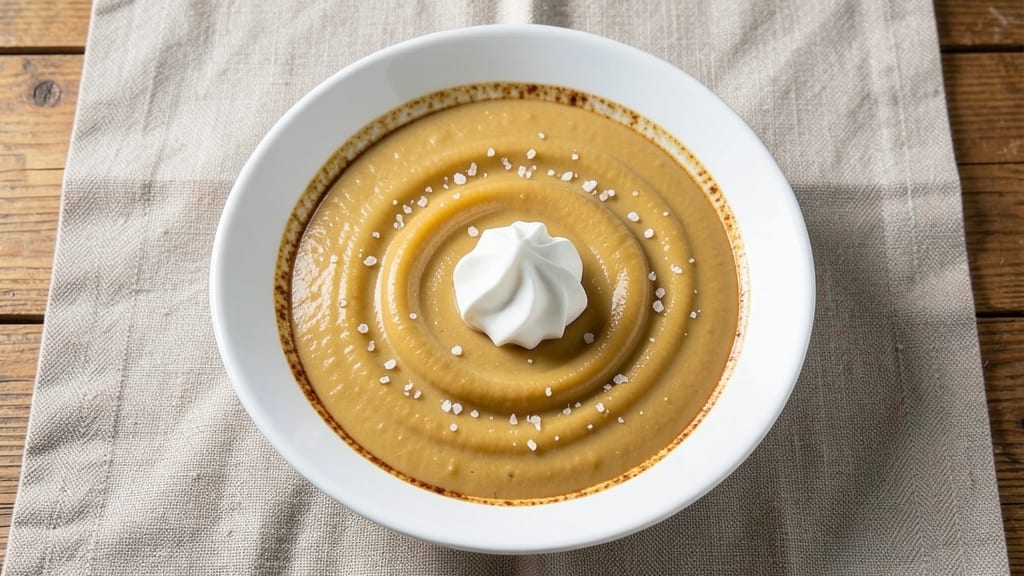
Creating a Campbell's-style cream of chicken soup gravy at home delivers that same velvety, comforting richness without the can—just five simple ingredients and a few minutes of work.
The secret lies in a proper roux and gradual thickening, transforming basic broth into a luscious sauce that elevates everything from roasted chicken to mashed potatoes. This version maintains the classic flavor profile while offering control over thickness and seasoning.
What sets this gravy apart is its foolproof technique—no lumps, no waiting for soup to simmer for hours. A light flour-butter roux forms the foundation, while chicken broth and cream blend together until perfectly smooth.
The result is a sauce that’s thick enough to coat but still pours gracefully, with a depth of flavor that rivals the canned version. Seasoning adjustments let you customize it for any dish.
Use this gravy to drizzle over roasted vegetables, pour over creamy casseroles, or serve alongside holiday meals—it’s versatile enough for everyday cooking yet impressive enough for special occasions.
The best part? It keeps well in the fridge for up to a week or freezes perfectly for future use. Let’s make this rich, velvety sauce from scratch.
For those who love the classic flavor but want to experiment, try adding a splash of lemon juice for brightness, sautéed mushrooms for earthiness, or fresh herbs for a garden-fresh twist. The possibilities are endless while staying true to the original comfort of cream of chicken soup gravy.
Ingredients for campbell's cream of chicken soup gravy
Five core ingredients transform into velvety Campbell's-style gravy with professional technique.
| Ingredient | Amount | Notes |
|---|---|---|
| Unsalted Butter 🧈 | ½ cup | Cold, cubed for even cooking |
| All-Purpose Flour 🌾 | ½ cup | Sifted for smooth roux |
| Chicken Broth 🍲 | 2 cups | Low-sodium preferred |
| Heavy Cream 🥛 | ½ cup | Full-fat for richness |
| Diamond Crystal Kosher Salt 🧂 | ½ tsp | Adjust to taste |
| Ground White Pepper 🌶️ | ¼ tsp | Freshly ground preferred |
| Garlic Powder 🧄 | ¼ tsp | For subtle depth |
| Onion Powder 🧅 | ¼ tsp | Enhances savory notes |
The butter and flour form the gravy's foundation—opt for European-style unsalted butter for higher fat content and smoother texture. King Arthur or Bob's Red Mill flour yields the best results due to their protein balance, preventing a gritty roux. Chicken broth should be homemade or high-quality low-sodium store-bought—the flavor difference is noticeable. For the cream, Hormel or Schär brand heavy cream provides consistent richness without separating. Store these staples in airtight containers: butter in the fridge, flour in a cool pantry, and broth frozen in ice cube trays for portion control.
No butter? Olive oil or coconut oil works in a pinch, though flavor will differ slightly. Gluten-free? Substitute white rice flour or cornstarch at 1:1 ratio, but expect a slightly thinner consistency. Short on broth? Chicken stock or even turkey broth maintains the savory profile. The powdered spices can be swapped for fresh: 1/4 tsp minced garlic and 1/4 tsp finely diced onion sautéed in butter before adding flour. For a dairy-free version, replace cream with full-fat coconut milk or cashew cream—though texture will be lighter.
This gravy thickens as it cools, so test consistency immediately after removing from heat. Store in glass jars or airtight containers in the fridge for 5-7 days—the flavor deepens overnight. For longer storage, freeze in 1/4 cup portions with parchment between layers to prevent freezer burn. Reheat gently over low heat, stirring constantly to avoid lumps. The roux base can be pre-made and frozen separately for up to 3 months, saving time during busy meal prep.
Why You'll Love This Recipe
- Pantry Magic: I swear by this recipe when I’ve got nothing but butter, flour, and a can of soup in the house. Three ingredients—plus broth and cream—transform into something richer than takeout.
- Velvet Smooth: That slow simmer with the roux? It’s the secret. The butter and flour create this silky base, while the cream adds depth—no lumps, no bitterness, just pure, creamy satisfaction in every spoonful.
- Weeknight Hero: Drizzle it over mashed potatoes when you’re exhausted, use it to glaze roasted veggies for a fancy touch, or even toss it with rice for a last-minute dinner. It’s my go-to when I need flavor fast.
- Budget Luxury: A single can of Campbell’s soup stretches into multiple meals—leftovers reheat like a dream, and the cost per serving is laughably cheap. Honestly, it’s the kind of recipe that makes frugality feel indulgent.
Step-by-step instructions for creamy chicken soup gravy
This method delivers a velvety, restaurant-quality gravy using simple pantry staples.
Create a Smooth Roux
Melt the 0.5 cup unsalted butter in a medium saucepan over medium-low heat. Once fully melted and foaming subsides, add the 0.5 cup all-purpose flour all at once. Immediately whisk vigorously for 1-2 minutes until the mixture forms a smooth, peanut-butter-like paste.
This roux is the foundation of your gravy—don't rush it. You'll know it's ready when it's uniformly colored and coats the back of a spoon without graininess. If it darkens too quickly, reduce the heat slightly to prevent burning. The roux should smell nutty and toasty, not acrid.
Whisk in Chicken Broth Gradually
Slowly pour in the 2 cups chicken broth while whisking continuously to prevent lumps. The mixture will thicken dramatically as it comes to a gentle simmer. Keep whisking for 3-4 minutes until the gravy thickens enough to coat the back of a spoon.
This gradual addition is crucial—adding broth too quickly creates lumps that are nearly impossible to fix. If the gravy looks too thick, whisk in 1-2 tablespoons of broth at a time until you reach your desired consistency. The gravy should coat a spoon but still flow smoothly when tilted.
Season and Finish with Cream
Reduce heat to low and stir in the 0.5 tsp diamond crystal kosher salt, 0.25 tsp ground white pepper, 0.25 tsp garlic powder, and 0.25 tsp onion powder. Let the seasonings bloom for 1 minute, allowing their aromas to develop fully.
Remove the pan from heat and gently whisk in the 0.5 cup heavy cream. The cream will immediately lighten the color and add luxurious richness. Return to low heat for 1-2 minutes just to warm through—never boil the cream or it will curdle. The finished gravy should be velvety with a glossy sheen and perfect coating ability.
Rest and Adjust
Transfer the gravy to a clean saucepan and let it rest for 5 minutes to allow flavors to meld. Taste and adjust seasoning—you may need an additional pinch of salt or pepper, depending on your broth's saltiness. For extra smoothness, strain through a fine-mesh sieve if any flour specks remain.
This resting period is often overlooked but makes a significant difference. The gravy will slightly thicken as it cools, so if you prefer it thinner, simply whisk in 1-2 tablespoons of warm broth or water. Serve immediately over mashed potatoes, biscuits, or roasted chicken for maximum richness.
Pro Tips For Making Campbell'S Cream Of Chicken Soup Gravy
- Melt Butter Slowly: I learned this the hard way—dumping cold butter into the pan and ending up with butter blobs instead of a smooth roux. Warm the butter in the pot first, then whisk in the flour. This guarantees a lump-free base every time.
- Use Cold Heavy Cream: Adding heavy cream straight from the fridge might seem counterintuitive, but it prevents curdling when you pour in the hot broth. Let it sit out for 10 minutes first if you’re nervous, but cold works just fine.
- Salt in Stages: If you salt the broth upfront, you’ll either end up with bland gravy or a salt bomb. Taste the roux before adding broth, then add salt in two batches—half with the broth, half at the end.
- Simmer, Don’t Boil: This isn’t a race. Let the gravy bubble gently at the lowest simmer you can tolerate—boiling turns it gluey. A steady, quiet simmer keeps it silky and lets the flavors meld properly.
Troubleshooting this dish
Lumpy Gravy Fix
If your gravy develops lumps during cooking, immediately remove the pan from heat and whisk in 1-2 tablespoons of cold water or broth while stirring vigorously. The cold liquid breaks down the flour proteins, dissolving the lumps.
For stubborn clumps, strain the gravy through a fine-mesh sieve into a clean saucepan, then whisk in 1 teaspoon additional flour—this creates a new, smoother base. Always whisk continuously when adding liquid to prevent future lumps. 💡
Too Thick or Thin?
If your gravy is too thick, thin it by whisking in 1 tablespoon warm broth or water at a time until you reach a pourable consistency.
For gravy that's too thin, remove from heat and whisk in 1 teaspoon cornstarch mixed with 1 tablespoon cold water—simmer for 1 minute to thicken. The key is gradual adjustments—adding too much at once can ruin the texture.
I always test consistency by tilting the spoon to see if it coats evenly.
Grainy Texture?
A grainy texture usually means your roux wasn't cooked long enough or wasn't whisked properly. If this happens, strain the gravy through a fine-mesh sieve to remove any flour specks. For future batches, cook the roux for 2-3 minutes—it should be smooth like peanut butter before adding broth.
Using a high-quality flour like King Arthur also helps prevent grittiness. The roux should smell nutty, not floury, when ready. 🌾
Curled Cream?
If your cream curdles, it was heated too quickly or boiled. To salvage it, immediately remove the pan from heat and whisk in 1 tablespoon cold heavy cream—this helps stabilize the remaining cream.
For prevention, never let the gravy boil after adding cream—keep heat at low—and whisk constantly. If the curdling is severe, strain through a fine-mesh sieve to remove lumps, then whisk in 1 teaspoon additional cream—the texture will be slightly lighter but still usable.
Blending Flavors
If your gravy tastes flat or lacks depth, try blooming your spices in the butter before making the roux. Sauté 1/4 teaspoon garlic powder and onion powder in the butter for 30 seconds—this enhances their flavors.
For extra richness, whisk in 1 tablespoon chicken fat—the natural fat from roasted chicken adds incredible depth. If the flavor is too mild, a pinch of Worcestershire sauce—about 1/4 teaspoon—adds umami complexity without overpowering.
Storage Issues
If your gravy separates after refrigeration, simply reheat it gently on the stovetop while whisking constantly. The cream may rise to the top—just whisk vigorously until fully combined. For future storage, cool the gravy quickly by placing the saucepan in an ice bath while stirring.
Store in airtight containers—glass jars work best—and leave 1/2 inch headspace—to prevent oxidation. If mold appears, discard it—never risk food safety for a few spoonfuls. ❄️
Nutrition facts
Frequently asked questions
Can I make this gravy without heavy cream?
Yes! For a lighter version, substitute the 0.5 cup heavy cream with 0.5 cup whole milk or 0.5 cup evaporated milk. The texture will be slightly thinner but still rich. For a dairy-free option, use 0.5 cup full-fat coconut milk or 0.5 cup cashew cream—though the flavor will differ slightly. The key is to add it off-heat to prevent curdling.
How do I adjust the thickness for different uses?
For a pourable sauce—like for casseroles, drizzle over 1-2 tablespoons warm broth until smooth. For thick gravy—like for mashed potatoes, simmer uncovered for 2-3 minutes after adding cream to reduce slightly. Always test by tilting a spoon—it should coat evenly but still flow. The gravy will thicken more as it cools, so adjust while warm.
Can I add vegetables or herbs to this gravy?
For extra flavor, sauté 1/4 cup finely diced mushrooms or shallots in the butter before making the roux. Fresh herbs like thyme or parsley—about 1 teaspoon each—add brightness. For a creamier texture, whisk in 1/4 cup sour cream—but reduce the cream to 0.375 cup to maintain balance. Always add delicate ingredients like herbs at the very end to preserve their flavor.
Why did my gravy turn out too salty?
This usually happens if your chicken broth is high-sodium or you over-salted during seasoning. To fix it, whisk in 1-2 tablespoons warm water or unsalted broth to dilute the saltiness. For prevention, use low-sodium broth and taste as you go—remember, you can always add more salt later, but you can't remove excess. A splash of lemon juice—about 1/2 teaspoon—can also brighten overly salty gravy.
How long can I store this gravy?
In the fridge, this gravy keeps for 5-7 days in an airtight container. For longer storage, freeze in 1/4 cup portions with parchment between layers to prevent freezer burn. Thaw overnight in the fridge—never at room temperature. Reheat gently over low heat, whisking constantly to restore smoothness. The flavor actually improves after 24 hours in the fridge as ingredients meld.