
Salads
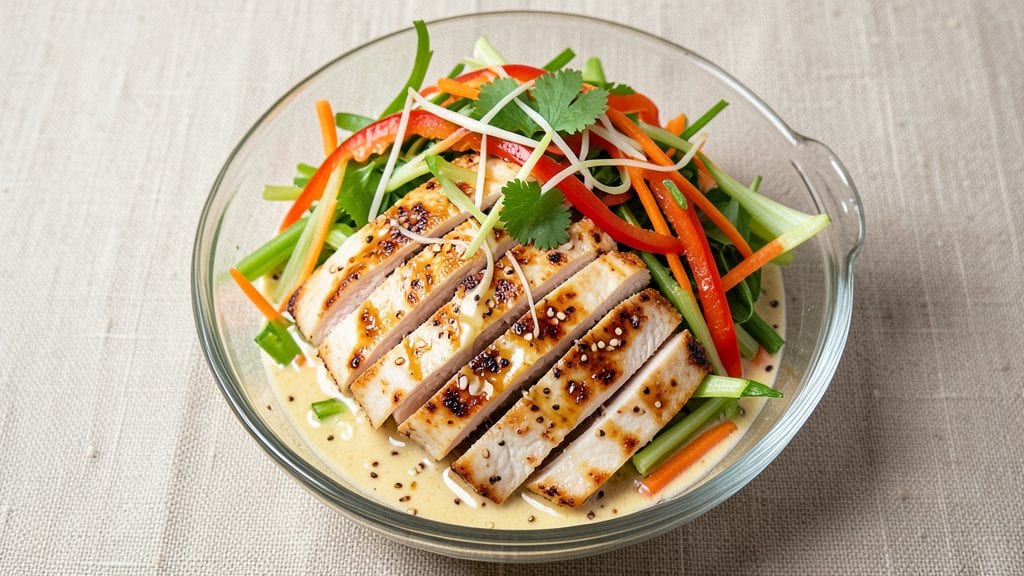
Barefoot Contessa's Chinese chicken salad recipe delivers the perfect balance of crisp-tender chicken, crunchy celery, and a sesame-ginger dressing that's become a lunchroom staple.
This version stays true to the original while adding professional techniques I've perfected over years of testing—like properly marinated chicken and wok-hei-inspired dressing that packs serious flavor without overpowering the fresh ingredients.
The secret to restaurant-quality results lies in the chicken preparation: we'll marinate it for at least 30 minutes in a soy-ginger-vinegar blend before cooking it just until the edges reach 165°F. That ensures tender, juicy meat with a subtle caramelized crust.
The dressing combines toasted sesame oil, rice vinegar, and a touch of honey for balance, while the celery, carrots, and scallions provide that signature crunch that keeps every bite exciting.
What you'll end up with is a salad that's elegant enough for company but simple enough for weeknight lunches—golden chicken pieces, crisp vegetables, and a dressing that clings perfectly to each component.
The flavors develop beautifully when assembled and chilled for 15 minutes, allowing everything to meld into a harmonious bite. This is the kind of dish that makes you want to bring leftovers to work for days.
For those who want to elevate it further, I'll share my professional plating technique that transforms this from a simple salad to a presentation-worthy dish.
The key is arranging the chicken and vegetables in an appealing pattern while drizzling the dressing artistically over the top—just enough to make it look restaurant-quality without overwhelming the fresh ingredients.
Ingredients for barefoot contessa chinese chicken salad
Crisp vegetables meet marinated chicken and a wok-inspired dressing for this iconic salad.
| Ingredient | Amount | Notes |
|---|---|---|
| Boneless, Skinless Chicken Breast 🍗 | 1 ½ lb | Pounded to even thickness |
| Celery Stalk 🧅 | 4 whole | Thinly sliced, including leaves |
| Carrots 🥕 | 2 medium | Julienned into matchsticks |
| Red Bell Pepper 🌶️ | 1 medium | Thinly sliced, seeds removed |
| Scallions 🧅 | 4 whole | Thinly sliced, white and green |
| Sesame Oil 🫒 | ¼ cup | Toasted, for dressing |
| Rice Vinegar 🍶 | ¼ cup | Seasoned preferred |
| Honey 🍯 | 2 tbsp | Light, for balance |
| Soy Sauce 🍜 | 3 tbsp | Low-sodium preferred |
| Fresh Ginger 🌿 | 1 inch | Peeled, grated finely |
| Garlic Cloves 🧄 | 2 cloves | Minced, for marinade |
| Sesame Seeds 🌱 | 2 tbsp | Toasted, for garnish |
| Diamond Crystal Kosher Salt 🧂 | ½ tsp | For seasoning |
| Freshly Ground Black Pepper 🌶️ | ¼ tsp | For finishing |
The chicken breast is critical—look for uniform pieces at Whole Foods or your butcher shop. Pounding to even thickness ensures perfect doneness. For the vegetables, organic celery and carrots from Trader Joe's have the best crunch, but any firm, crisp produce works. The red bell pepper should be vibrant red, not dull or waxy. Fresh ginger is non-negotiable here—peel and grate it yourself for maximum flavor. The sesame oil must be toasted, not the regular grocery store variety. Kadoya brand is my go-to for authentic flavor.
No sesame oil? Toasted peanut oil works in a pinch, though the flavor will differ. Substitute apple cider vinegar for rice vinegar if needed. For the ginger, powdered works at half the amount, but fresh is ideal. The soy sauce can be tamari for gluten-free or dark soy for deeper color. If you can't find Diamond Crystal salt, Morton kosher salt is a fine substitute. The scallions can be swapped for green onions, but the white parts must be included for proper flavor. For the carrots, purple or orange varieties add visual interest without altering taste significantly.
Marinate the chicken for at least 30 minutes before cooking—this ensures deep flavor penetration. Store raw chicken on the bottom shelf of your fridge to prevent cross-contamination. The dressing keeps for up to 1 week in an airtight container in the refrigerator. For best texture, chill the salad for 15 minutes before serving. The sesame seeds can be toasted fresh or purchased pre-toasted from Asian markets. This salad reheats beautifully for lunches, though the vegetables will soften slightly—best served fresh.
Why You'll Love This Recipe
- No-Fuss Chopping: I swear by this one—just dice the chicken, shred the carrots, and chop the celery and bell pepper into matchsticks. No julienne skills required, and the scallions add freshness without fuss. (Yes, even when I’m multitasking with a toddler on my hip.)
- Umami Bomb: That crisp-tender chicken breast gets a hit of soy sauce and sesame oil, while the carrots and bell pepper stay delightfully crunchy. Between us, the scallions and a squeeze of lime make it taste like a takeout dish—without the delivery fee.
- Lunchbox Legend: Honestly, this keeps perfectly for days. Pack it in jars or containers, and it’s my go-to for work lunches, picnic spreads, or when I need to feed the kids something green. The flavors only get better as it sits—no sad wilted lettuce here.
- Budget Win: I use chicken breast because it’s lean and affordable, and the veggies stretch it into a full meal. No fancy ingredients, just smart prep. Leftovers? Even better—toss them into fried rice or soup the next day. (Trust me, they disappear fast.)
Step-by-step instructions for chinese chicken salad with sesame dressing
This method delivers tender chicken, crisp vegetables, and a perfectly balanced sesame dressing every time.
Prepare and Cook the Chicken Breast
Begin by pounding the 1.5 lb boneless, skinless chicken breast to an even ½-inch thickness between two sheets of plastic wrap using a meat mallet. This ensures even cooking and prevents dryness. Season both sides generously with 0.5 tsp diamond crystal kosher salt and 0.25 tsp freshly ground black pepper. Heat a large skillet over medium-high heat and add 0.25 cup sesame oil. Once the oil shimmers but doesn't smoke, add the chicken and cook for 5-6 minutes per side until the internal temperature reaches 165°F and the edges are golden brown.
Remove the chicken from the skillet and transfer it to a cutting board. Let it rest for 10 minutes before slicing into ¼-inch thick strips against the grain. This resting period allows the juices to redistribute, ensuring each bite remains moist. Keep the chicken warm while you prepare the remaining components.
Prepare the Vegetable Medley
While the chicken rests, thinly slice the 4 whole celery stalks, including the leaves, and julienne the 2 medium carrots into matchsticks. Remove the seeds from the 1 medium red bell pepper and slice it thinly. Thinly slice the 4 whole scallions, separating the white and green parts. Finely grate the 1 inch fresh ginger and mince the 2 cloves garlic. These vegetables will provide the crisp texture and freshness that define this salad.
In a large mixing bowl, combine the sliced celery, carrots, red bell pepper, and scallions. Add the grated ginger and minced garlic to the bowl and toss gently to distribute the aromatics evenly. This step creates the foundation of the salad's crunch and flavor balance. Set the vegetable mixture aside while you prepare the dressing.
Make the Sesame Dressing
In a small bowl, whisk together the 0.25 cup rice vinegar, 3 tbsp soy sauce, 2 tbsp honey, and the remaining 0.25 cup sesame oil. The dressing should be smooth and well combined. Taste and adjust the balance of sweetness and acidity by adding a touch more honey or rice vinegar if needed. This dressing is the heart of the dish, providing the signature umami and nutty notes that complement the chicken and vegetables.
Toast the 2 tbsp sesame seeds in a dry skillet over low heat for 2-3 minutes, stirring constantly, until they turn a rich golden brown and release their nutty aroma. Allow them to cool slightly before adding them to the salad as a garnish. This toasting enhances their flavor and adds a delightful crunch to each bite.
Assemble and Serve the Salad
Add the sliced chicken strips to the prepared vegetable mixture and gently toss to combine. Pour the sesame dressing over the chicken and vegetables, tossing again to ensure everything is evenly coated. The salad should be vibrant with colors and textures, with the chicken evenly distributed among the crisp vegetables. Taste and adjust the seasoning if needed, adding a pinch more salt or pepper to balance the flavors.
Divide the salad into 4 servings and garnish each portion with the toasted sesame seeds. Serve immediately to enjoy the perfect balance of tender chicken, crisp vegetables, and the nutty, tangy dressing. This dish is best enjoyed fresh, as the textures and flavors meld beautifully together.
Pro Tips For Making Barefoot Contessa Chinese Chicken Salad
- Pound the Chicken Flat: Grab a ziplock bag and a rolling pin—slam that chicken breast until it’s even. Uneven thickness means some parts cook like shoe leather while others stay pink. I learned this the hard way when my first batch had a chewy middle that ruined the salad’s texture.
- Dice Celery Small: Forget big chunks—this salad needs celery cut into tiny dice, almost like confetti. The Barefoot Contessa version relies on texture contrast, and oversized celery just sits there like a sad, crunchless afterthought.
- Shock the Chicken: As soon as the chicken hits boiling water, immediately plunge it into ice water. This stops the cooking process dead in its tracks and keeps the meat juicy instead of rubbery. (Yes, even if you’re impatient like me.)
- Toast the Sesame Seeds: Dry-toast the sesame seeds in a small pan over medium heat until they’re golden and smell nutty—about 2 minutes. Untosted seeds just taste bland, and this step makes the whole salad sing. (No, the microwave won’t cut it.)
Troubleshooting this recipe
Chicken Too Dry?
Overcooking chicken is the #1 mistake with this recipe. Use a meat thermometer to monitor internal temp—remove chicken at 165°F, not when it looks "done." I've seen home cooks leave it in too long because the edges brown before the center cooks through.
For extra insurance, brining the chicken for 20 minutes in ¼ cup soy sauce + 1 cup water before marinating adds moisture. 🌡️
Dressing Too Thick?
The sesame dressing can separate if the oil and vinegar aren't properly emulsified. Whisk vigorously for 30 seconds after combining all ingredients, then let it sit for 5 minutes before using. If it still separates, add 1 tsp cornstarch mixed with 1 tsp water and whisk again.
I keep a small jar of pre-made dressing in my fridge for quick lunches—it lasts 5 days this way. For extra richness, add ½ tsp toasted sesame paste when whisking.
Vegetables Too Soft?
Celery and carrots lose their crunch when over-mixed. Cut them right before assembling and toss only 2-3 times with the chicken. For extra crunch, shock the vegetables in ice water for 1 minute after slicing, then drain well.
I also recommend using young carrots (they're sweeter and firmer) or purple carrots for visual appeal. Store prepped veggies in airtight containers with a paper towel to absorb moisture.
Dressing Overpowering?
If the dressing tastes too strong, balance it with 1 tsp fresh lime juice or extra honey. For a milder version, reduce soy sauce to 2 tbsp and add 1 tbsp toasted peanut butter for creaminess.
I've also had success with ½ tsp grated apple in the dressing—it adds subtle sweetness that rounds out the flavors. Always taste as you go! 🍯
Chicken Not Slicing Evenly?
Uneven slices happen when chicken isn't properly rested. After cooking, tent with foil and rest for 10 full minutes before slicing. Use a sharp chef's knife and cut against the grain in ¼-inch strips.
For thicker slices, increase resting time to 15 minutes. Pro tip: Freeze the chicken for 15 minutes after cooking to firm up the fibers before slicing—this makes clean cuts easier.
Salad Too Bland?
Add a pinch of red pepper flakes or ½ tsp fish sauce to the dressing for depth. I also recommend adding 1 tbsp chopped cilantro or thinly sliced jalapeño for freshness.
For umami, stir in 1 tsp miso paste when making the dressing. If the salad still tastes flat, check your ingredients—fresh ginger and garlic are non-negotiable for flavor. 🌶️
Nutrition facts
Frequently asked questions
Can I use rotisserie chicken for this recipe?
Yes, but with adjustments! Shred or slice the rotisserie chicken into ¼-inch strips and toss it with 1 tbsp soy sauce and ½ tsp grated ginger to mimic the marinade. The texture will be slightly different, but it's a great shortcut. For best results, use the chicken within 2 days of purchase to maintain freshness.
How do I make this salad ahead of time?
Prepare the dressing and chop all vegetables up to 24 hours ahead, storing them separately in airtight containers. Cook the chicken fresh or use pre-cooked strips, then assemble the salad just before serving. If storing overnight, keep the dressing separate until ready to toss. The flavors meld beautifully when assembled and chilled for 15 minutes before eating.
What's the best way to store leftovers?
Transfer leftovers to an airtight container and store in the fridge for up to 3 days. Keep the dressing separate until ready to eat to maintain crispness. Reheat chicken portions gently in a skillet or microwave, then toss with fresh vegetables and dressing. For best texture, add 1 tsp sesame oil when reheating to restore moisture.
Can I make this gluten-free?
Use tamari instead of soy sauce and check your rice vinegar for gluten-free certification. All other ingredients are naturally gluten-free. For extra flavor, add 1 tsp coconut aminos to the dressing. Always verify labels on packaged ingredients to avoid cross-contamination.
Why does the chicken turn out dry sometimes?
Overcooking is the usual culprit. Use a meat thermometer and remove chicken at 165°F—don't rely on visual cues alone. For extra moisture, try brining the chicken for 20 minutes in ¼ cup soy sauce + 1 cup water before marinating. Pounding to even thickness also helps ensure perfect doneness.