
Main Courses
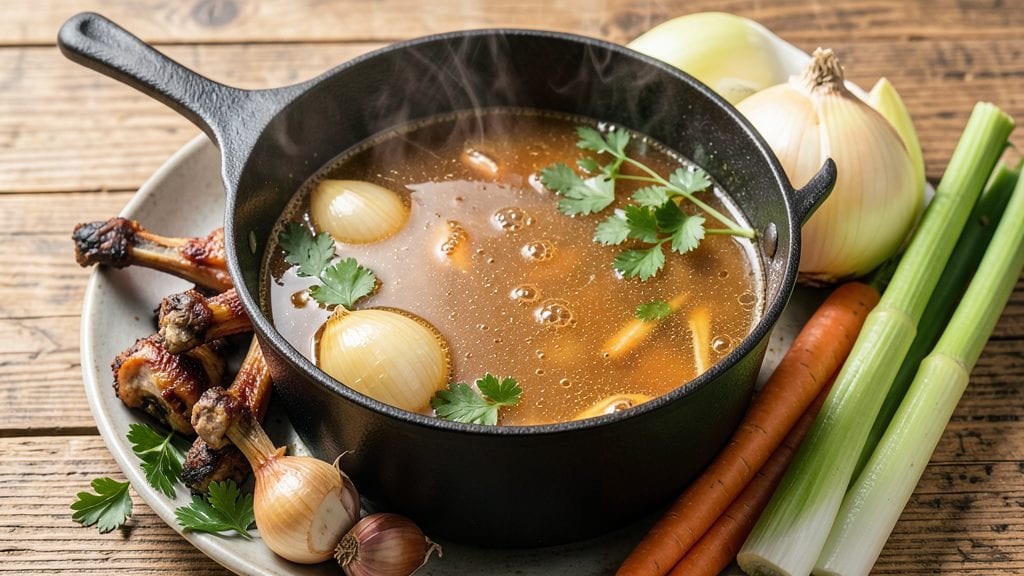
Alton Brown’s chicken stock recipe transforms simple scraps into a rich, golden broth that forms the backbone of countless dishes. The secret lies in precise ratios—chicken bones, aromatics, and herbs simmered low and slow—creating depth that store-bought versions can’t match.
I’ve adapted this method over years of professional cooking, and it never fails to deliver restaurant-quality results at home.
What sets this recipe apart is the technique: roasting the bones first to deepen flavor, then simmering for hours to extract every nuance. The process may seem time-consuming, but the payoff—a velvety, aromatic stock—is worth every minute.
This isn’t just a broth; it’s a flavor foundation that elevates soups, sauces, and braises to new heights.
The beauty of this method is its versatility. Whether you use a stovetop pot or a pressure cooker, the principles remain the same: patience and precision. Store it properly, and you’ll have a pantry staple ready to transform any meal. Let’s build this essential recipe step by step.
Once mastered, this stock becomes the cornerstone of your cooking—think of it as the difference between a good dish and a great one. The techniques here will serve you for years, turning simple ingredients into something extraordinary.
Ingredients for alton brown chicken stock
Transform scraps into restaurant-quality broth with these 13 simple yet powerful ingredients.
| Ingredient | Amount | Notes |
|---|---|---|
| Chicken Bones 🍗 | 4 lb | Raw or roasted for deeper flavor |
| Yellow Onion 🧅 | 1 whole | Quartered, peel on for color |
| Carrot 🥕 | 4 whole | Large, cut into chunks |
| Celery Stalk 🌿 | 4 whole | Cut into 2-inch pieces |
| Garlic Cloves 🧄 | 8 cloves | Smash slightly for release |
| Fresh Parsley Sprigs 🌿 | ½ cup | Stems included for texture |
| Fresh Thyme Sprigs 🌿 | 6 whole | Stems intact for aroma |
| Black Peppercorns 🌶️ | 1 tbsp | Crushed for intensity |
| Bay Leaves 🌿 | 2 whole | Dried, standard size |
| Kosher Salt 🧂 | 1 tbsp | Plus additional for seasoning |
| Cold Water 💧 | 16 cups | Filtered preferred |
| Lemon Juice 🍋 | 1 tbsp | Freshly squeezed |
| Extra-Virgin Olive Oil 🫒 | 2 tbsp | For roasting bones |
The bones are non-negotiable—chicken backs or necks yield the richest flavor, but any clean bones work. Costco or local butchers often sell them pre-cut for convenience. For maximum depth, roast them first at 425°F for 20 minutes until golden. The aromatics—onion, carrot, celery—form the flavor base, so don’t skimp. Organic produce from the grocery store’s fresh section works best, but frozen is fine in a pinch. Fresh herbs like thyme and parsley add brightness, but dried will do if you’re short on time. The key is balance: equal parts onion, carrot, and celery by volume.
No fresh herbs? Dried thyme at one-third the amount works, but fresh is ideal. Running low on bones? Pork or veal bones add complexity, though the flavor profile shifts. The olive oil is for roasting—avocado oil works too if you prefer a higher smoke point. Short on time? Skip the roast and simmer directly, though flavor will be slightly less developed. The lemon juice brightens the finished stock, but white wine vinegar at half the amount works in a bind. For a deeper color, leave the onion skins on during roasting—just remove them before simmering.
Store properly to preserve flavor. Cool the stock quickly by placing the pot in an ice bath, then transfer to airtight containers. It keeps for 5 days in the fridge or 6 months frozen. For best results, freeze in 1-cup portions—perfect for single use. Label containers with the date and freeze flat to save space. When reheating, bring to a gentle simmer only—boiling can make the stock cloudy. This stock is the ultimate pantry workhorse, so make extra if you can.
Why You'll Love This Recipe
- Here’s what sold me: I always have chicken bones, a few veggies, and garlic on hand. No last-minute grocery runs, no wasted ingredients—just pure, budget-friendly flavor from scraps I’d toss otherwise.
- No Chopping Chaos: I swear by this recipe because you can literally toss in whole onions, carrots, and celery—peels and all—no fancy dicing required. The bones render all that flavor without needing a knife marathon.
- Umami Bomb: That crispy browned chicken skin? Absolute magic. When it dissolves into the stock, you get this deep, rich taste that turns your soup or risotto into something restaurant-worthy.
- Freezer Gold: Make a big batch—it’s my go-to for lazy Sundays or when I’m prepping for a week of soups. Just freeze it in ice cube trays for the perfect single-use portion.
Step-by-step instructions for alton brown's chicken stock recipe
Here's how to transform simple scraps into rich, flavorful chicken stock with professional precision.
Roast the Chicken Bones for Maximum Flavor
Preheat your oven to 425°F and position a rack in the middle position. Arrange the 4 lb chicken bones on a rimmed baking sheet in a single layer. Drizzle evenly with the 2 tbsp extra-virgin olive oil and toss to coat completely.
Roast for 30-40 minutes until the bones develop a deep golden-brown color and begin to smell intensely aromatic. This roasting step caramelizes the proteins and fats, creating a flavor foundation for your stock. Stir the bones once halfway through cooking to ensure even browning. The bones are ready when they're uniformly golden and the oven smells rich and savory.
Prepare the Aromatic Vegetables and Herbs
While the bones roast, peel and quarter the 1 whole yellow onion, removing any bruised spots. Cut the 4 whole carrots into 2-inch chunks and the 4 whole celery stalks into similar pieces. Smash the 8 cloves garlic lightly with the side of your knife to release their flavor without mincing.
Crush the 1 tbsp black peppercorns in a mortar and pestle or with the flat side of a knife for maximum intensity. Tear the 6 whole fresh thyme sprigs in half to expose their leaves, and keep the 2 whole bay leaves intact. Chop the 0.5 cup fresh parsley sprigs, including stems, into rough pieces about 1 inch long. These aromatics will infuse your stock with layers of flavor.
Build the Stock Base in a Large Pot
Transfer the roasted chicken bones to a large stockpot with a capacity of at least 8 quarts. Add the prepared vegetables, herbs, and spices. Pour in the 16 cups cold water and bring to a boil over medium-high heat. Once boiling vigorously, reduce heat to medium-low to maintain a gentle simmer.
Skimming is crucial at this stage. Use a fine-mesh skimmer or large spoon to remove any foam or impurities that rise to the surface during the first 15 minutes of simmering. This ensures a crystal-clear stock. The liquid should bubble gently with occasional small bursts—this indicates proper simmering rather than a rolling boil.
Simmer for Deep Flavor Development
Partially cover the pot with a lid (leave a small gap for steam to escape) and simmer for 3-4 hours. Check the water level periodically and add hot water as needed to maintain the original volume. The stock should develop a rich, amber color and an intense chicken aroma.
After 2 hours, remove any vegetable pieces that have softened significantly, leaving only the more resilient carrots, celery, and onions. This prevents bitterness from overcooked vegetables. The stock is ready when it has reduced by about 25% and the chicken bones can be easily separated from the meat.
Strain and Finish the Stock
Carefully strain the stock through a fine-mesh sieve or cheesecloth-lined colander into a large bowl or clean pot. Discard the solids. Return the strained stock to the pot and stir in the 1 tbsp lemon juice and 1 tbsp kosher salt. The acidity brightens the flavor while the salt enhances all the developed tastes.
Let the stock cool to room temperature, then refrigerate overnight. The next day, skim off any solidified fat that has risen to the surface. The stock should now have a rich, golden color and an intense chicken flavor. It will keep refrigerated for up to 5 days or can be frozen for longer storage. This method yields about 4 quarts of deeply flavorful chicken stock perfect for soups, sauces, and braising.
Pro Tips For Making Alton Brown Chicken Stock
- Brown the Bones First: Skip the raw chicken straight into the pot—Alton’s recipe relies on deep flavor from the Maillard reaction. Pat the bones dry, then sear them in batches over medium-high heat until they turn golden brown (about 5-7 minutes per side). I learned this the hard way when my stock tasted bland—don’t rush this step, even if you’re eager to add liquids.
- Chop Mise Evenly: The onion, carrot, and celery should be cut into roughly ½-inch chunks—not too small (they’ll dissolve) and not too large (they’ll stew unevenly). My grandmother swore by this: "Uniform pieces mean uniform flavor extraction." Use a knife skill you’re comfortable with, but consistency matters more than speed here.
- Simmer, Don’t Boil: Once everything’s in the pot, keep the heat low enough that you see tiny bubbles at the edges, not a rolling boil. Boiling scatters impurities and makes the stock cloudy. I was skeptical until I tried it—my stock went from murky to crystal-clear overnight. A gentle simmer is non-negotiable.
- Strain Twice: After simmering, strain the stock through a fine-mesh sieve first, then a cheesecloth or coffee filter for a silky texture. The second straining catches the tiny bits that slip through the sieve. Sounds tedious, but it guarantees a stock so clean it’ll make you question why you ever skipped it. (Your future self will thank you.)
Flavor customization for this dish
Herb Variations
Swap the classic thyme and parsley for rosemary and tarragon—just 2 sprigs each—for a French-inspired stock with piney depth. I’ve used this variation when making coq au vin, and it adds a sophisticated herbal note.
For a Mediterranean twist, add 1 sprig each of oregano and marjoram alongside the thyme. Always adjust quantities by half when using dried herbs instead of fresh. 🌿
Spice Infusions
For a smoky depth, toast ½ tsp ground coriander and ¼ tsp smoked paprika with the peppercorns before adding to the pot. This works beautifully with chicken and rice dishes or tacos.
If you prefer warmth, add 3-4 whole cloves and 1 cinnamon stick—remove them after 1 hour of simmering to avoid bitterness. These spices infuse the stock subtly but memorably. 🌶️
Vegetable Boosts
Add mushrooms for umami: slice 8 oz cremini mushrooms and sauté them in olive oil until golden before adding to the pot. For a spring variation, include 1 leek (white and light green parts) and 1 fennel bulb (quartered).
Both add sweetness and complexity. I’ve also used 1 small zucchini (halved) in summer for a lighter, brighter stock—just remove it after 1.5 hours to prevent mushiness. 🥕
Protein Swaps
Replace chicken bones with turkey necks for a richer, slightly gamey stock—ideal for Thanksgiving leftovers. For a lighter option, use chicken feet (soaked overnight) or wings (roasted separately). I’ve made duck confit stock by roasting duck bones with orange peel and juniper berries—the results are luxurious.
Always adjust simmering time: turkey and duck need 4-5 hours, while chicken feet shorten to 2 hours. 🦆
Acid Brighteners
Beyond lemon juice, try 1 tbsp apple cider vinegar for a tangy edge or ½ cup white wine (simmered off first) for a French bistro touch. For Asian-inspired stocks, add 1 tbsp rice vinegar and a 1-inch ginger slice (removed after 1 hour).
These acids balance richness and extend shelf life. I’ve even used 1 tsp fish sauce in a pinch—just a whisper adds depth without overpowering. 🍋
Pressure Cooker Speed-Up
Use an Instant Pot to cut simmering time to 90 minutes on high pressure. Add all ingredients as directed, then pressure cook for 60 minutes. Quick-release the valve and strain immediately. The stock will be slightly less reduced but still deeply flavorful.
For extra richness, brown the bones in the pot first using the Sauté function before adding liquids. This mimics oven roasting perfectly. ⚡
Nutrition facts
Frequently asked questions
Can I use chicken feet instead of regular bones for this stock?
Chicken feet add incredible gelatin and depth to stock. Soak them overnight to remove impurities, then roast at 425°F for 20 minutes before adding to the pot. Simmer for just 2 hours—they cook faster than other bones but deliver maximum flavor. The result is a richer, almost jelly-like texture perfect for pho or ramen.
Why does my homemade stock turn cloudy after refrigerating?
Cloudiness usually means the stock didn't cool properly or was contaminated. Always cool it quickly in an ice bath, then refrigerate within 2 hours. If it's already cloudy, strain it again through cheesecloth and reheat gently—never boil. For crystal-clear stock, skim off any fat and impurities during simmering, and avoid stirring with metal utensils which can introduce particles.
What's the best way to store leftover stock?
For short-term storage, keep stock in airtight containers in the fridge for up to 5 days. For long-term, freeze in 1-cup portions using ice cube trays or silicone molds for single-use convenience. Label containers with dates and freeze flat to save space. When reheating, warm gently on low heat—never microwave directly from frozen to avoid skin formation.
Can I make this stock in a slow cooker instead of stovetop?
Yes! Use the same ingredients and roast the bones first. Add everything to the slow cooker, cover, and cook on low for 8-10 hours or high for 4-5 hours. The gentle heat works perfectly for extracting flavors. Just remember to skim foam during the first hour and remove softened vegetables after 3 hours to prevent bitterness. The result will be just as rich as stovetop.
How do I know when the stock is done?
Your stock is ready when it's reduced by about 25% and the bones separate easily from the meat. The color should be deep amber with a rich chicken aroma. For maximum flavor, simmer until the stock coats the back of a spoon thickly. If using a meat thermometer, bones should reach 200°F internally. Taste test is key—it should be deeply savory without bitterness.